
Leadership expectations in the U.S. continue to shift as organizations face rapid change in AI, digital progress, hybrid work, and rising pressure around trust, inclusion, and purpose. This article highlights key trends shaping leadership in 2024 and 2025 and outlines practical insights for boards, senior leaders, and leadership development teams. Leadership trends refer to evolving mindsets, behaviors, structures, and talent practices that help leaders support performance, engagement, and resilience.
Trend 1: Leadership is in the age of AI and digital acceleration
1.1 The widening AI leadership gap
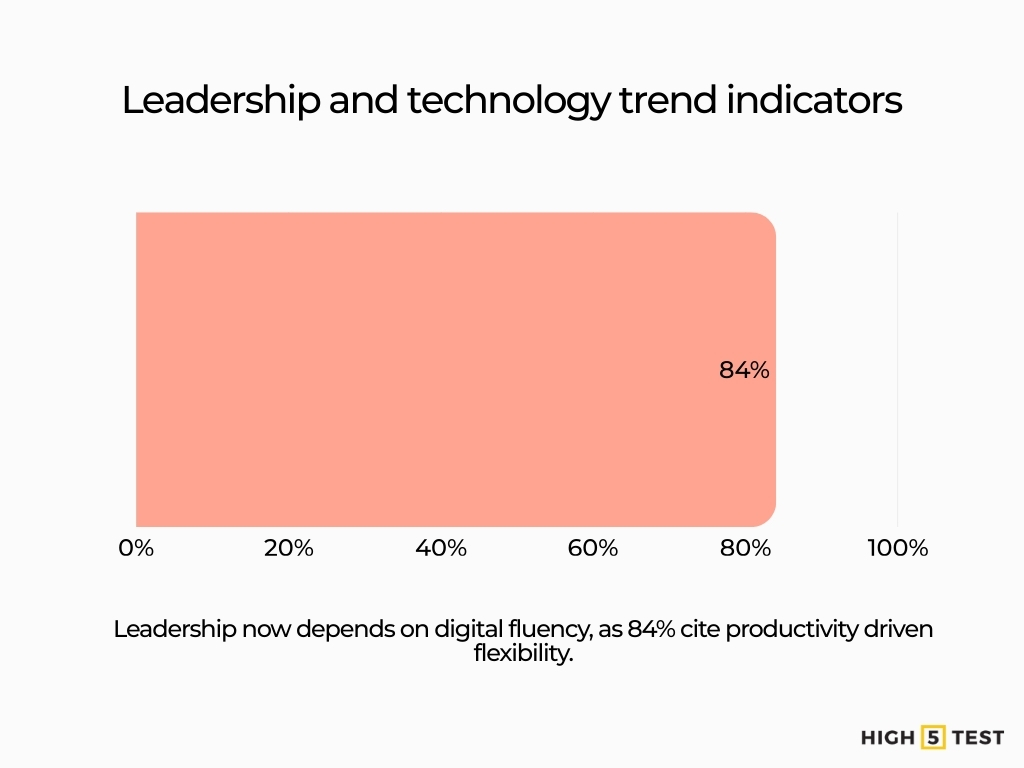
Technology is moving from a support function to a central leadership skill set. Leaders must work confidently with AI and digital tools. For example, one survey shows that 84% of business executives say more flexible approaches are driven by higher productivity, showing the intersection of tech, work models, and leadership.
Another study reports that the pace of change has risen by 183% in the past four years.
1.2 From automation to augmentation
Leaders now need to focus on using technology to guide better decisions. Human judgment, purpose, and data must work together. Research highlights the importance of this balance.
Source: NJCPA
1.3 Skills and mindsets leaders need
A recent study shows that 70% of learning and development professionals believe leaders must sharpen a broader set of behaviors to meet current and future demands. This shift calls for stronger digital fluency, ethical use of AI, and confident decision-making in complex environments.

Source: Harvard Business Impact
Trend 2: Hybrid work, remote leadership, and workforce flexibility is still important
2.1 A more flexible work model
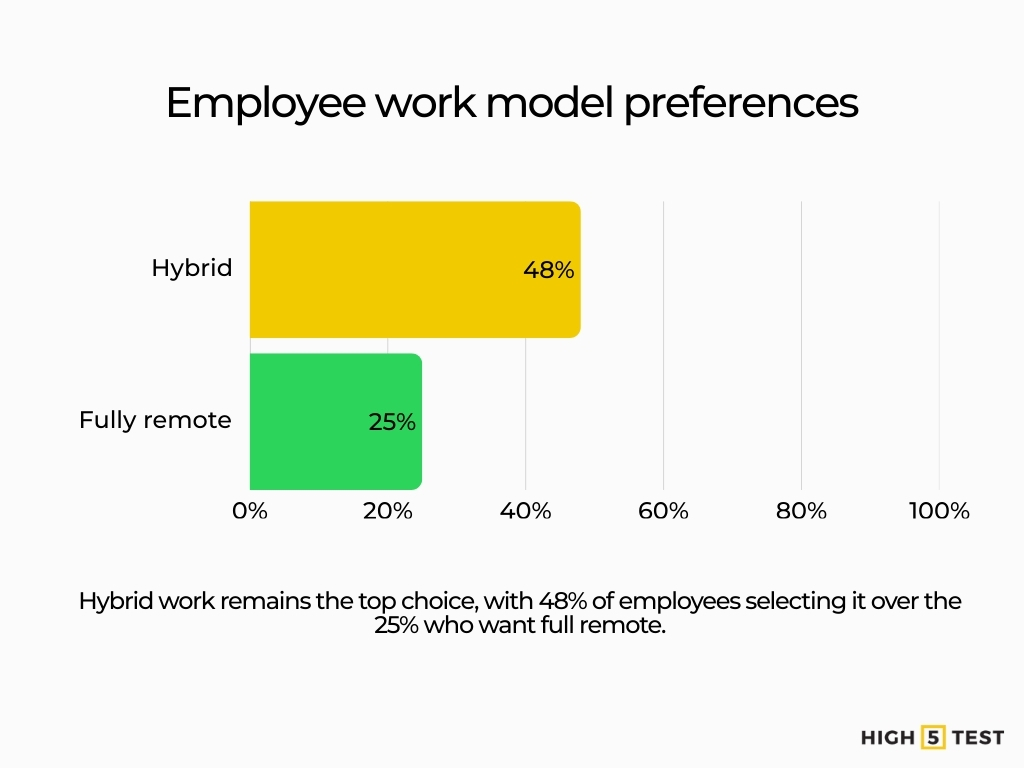
Hybrid work continues to grow. Research shows that 48% of employees prefer hybrid work, while only 25% fully remote arrangements.
Source: Korn Ferry
2.2 Leadership challenges in hybrid settings
Leading dispersed teams requires clear communication, trust building, and steady alignment. Without these skills, team cohesion and performance suffer.
2.3 Key metrics and practices
Leaders must track indicators such as psychological safety, team connection, effective asynchronous collaboration, and retention of top talent.
Trend 3: Trust, empathy, and human-centered leadership are more important than ever
3.1 Trust as a core leadership expectation
Research shows that leaders need to reset organizational priorities and foster psychological safety to drive human performance.
Source: Deloitte
3.2 Empathy and inclusive behavior
Human-centered leadership remains a top trend for 2025. Empathy, emotional awareness, and inclusive habits help leaders build stronger teams. Organizations that do not invest in leader development place both their talent and long-term stability at risk.
Source: Development Dimensions International, Inc.
3.3 Managing polarization, well-being, and burnout
Leaders now face rising levels of burnout and fragmentation across teams. Supporting wellbeing and clarity is essential for stable performance.
Trend 4: Agility, adaptability, and continuous learning bring results
4.1 Adaptive leadership
In uncertain conditions, leaders must be flexible and ready to change direction. A study notes that adaptive leadership and innovation drive high-performing teams.
Source: MDPI Article
4.2 Expanding leadership skill sets
As noted earlier, many learning and development professionals believe leaders must broaden their behaviors and skills to keep pace with shifting demands.
4.3 Building a learning culture
Organizations that support experimentation, rapid learning, and practical refinement tend to perform more strongly in changing conditions.
Trend 5: Diversity, equity, and inclusion as an integrated practice
5.1 From initiative to integration – DEI as business imperative
Inclusive leadership continues to gain attention as a core business requirement. Research highlights that inclusive cultures support stronger organizational outcomes.
Source: SHRM
5.2 Performance gains from diverse leadership teams
Studies consistently show that teams with diverse leadership outperform peers. Leaders must encourage equitable opportunities, inclusive habits, and accountability.
Source: Forbes
5.3 Metrics that support inclusion
Development plans should include clear DEI metrics, such as representation, promotion equity, and belonging indicators.
Trend 6: Purpose-driven leadership and human sustainability
6.1 The rise of human-centered performance
A study highlights human sustainability as a growing priority. Leaders must support both business outcomes and people outcomes.
Source: Deloitte
6.2 Balancing business, human, and societal impact
Leadership expectations extend beyond financial results. Employees, investors, and customers expect attention to wellbeing, long-term resilience, and environmental impact.
6.3 Accountability through purpose initiatives
Purpose-driven leadership now links to daily decisions and long-term planning.
Trend 7: Data-driven leadership and metrics for impact
7.1 Using analytics to guide leadership decisions
Leaders rely on data that reflects sentiment, agility, pipeline health, and readiness. A survey reports that leader and manager development is the top priority for HR executives in 2025.
Source: Gartner
7.2 Expanding KPIs for leadership performance
Organizations are adding leadership metrics like bench strength, internal mobility, psychological safety, and innovation speed.
7.3 Technology supporting leadership insights
AI and analytics platforms now track leadership readiness, succession depth, and culture health.
Implications for U.S. organizations: What leadership means for 2024–2025
8.1 Actions for boardrooms, senior leaders, and HR teams
- Boards should align leadership expectations with digital progress and purpose-driven strategies.
- Senior leaders and HR teams must strengthen leadership pipelines, hybrid leadership capabilities, human-centered mindsets, and DEI outcomes.
- Leadership development must be ongoing, measurable, and tied to real business needs.
8.2 Building the leadership pipeline
- Identify future leadership skills such as digital fluency, hybrid team leadership, inclusive habits, and agile thinking.
- Use metrics to track readiness, bench strength, mobility, and psychological safety.
- Offer continuous learning through micro learning, AI coaching, and peer networks.
- Integrate DEI and purpose into leadership behaviors and expectations.
8.3 Pitfalls to avoid
- Relying on outdated, top-down leadership models.
- Ignoring the demands of hybrid teams.
- Treating DEI as a checklist.
- Failing to use analytics to inform leadership development.
- Underestimating the speed of change is reflected in recent studies.
The future of leadership in the U.S.
Leadership in 2024 and 2025 focuses on capability, purpose, adaptability, empathy, and strong use of data. AI and digital tools now shape how leaders think and act. Hybrid work calls for trust and flexibility. Empathy, inclusion, and continuous learning help teams stay strong and aligned. Data and analytics reveal which leaders create real impact.
Organizations that invest in leadership development today will progress faster in 2026 and beyond. Building leadership readiness now prepares teams for the demands ahead.