
The U.S. coaching industry is growing and getting more professional. Demand is rising across life, career, executive, and business coaching. Digital delivery and corporate spending continue to shape how coaching is bought and delivered.
This overview summarizes market size, segment growth, practitioner data, buyer trends, and 2025 outlook. It is written for coaches, coaching businesses, and organizational buyers who want a fast, data-grounded reference. Let’s dive in.
10 most interesting coaching statistics
- The U.S. business coaching market is estimated at ~$20 billion in 2025, making it one of the largest segments in the entire coaching industry.
- Executive coaching reports an average 788% ROI, making it one of the highest-return professional development investments.
- There are approximately 232,000 coaching businesses in the U.S. (2025), signaling intense competition.
- The U.S. life coaching market was valued at $1.6 billion in 2024.
- The U.S. life coaching market is projected to reach $2.6 billion by 2034 (~5.2% CAGR), indicating steady long-term growth.
- The U.S. virtual life coaching segment generated $885.5 million in 2024, confirming digital delivery as mainstream.
- The U.S. health and wellness coaching market is valued at $22.04 billion in 2025, larger than many traditional coaching categories.
- Coaches who specialize in a niche grow 30% faster than generalists.
- 59% of coaches expect revenue growth in the coming year, reflecting strong industry optimism.
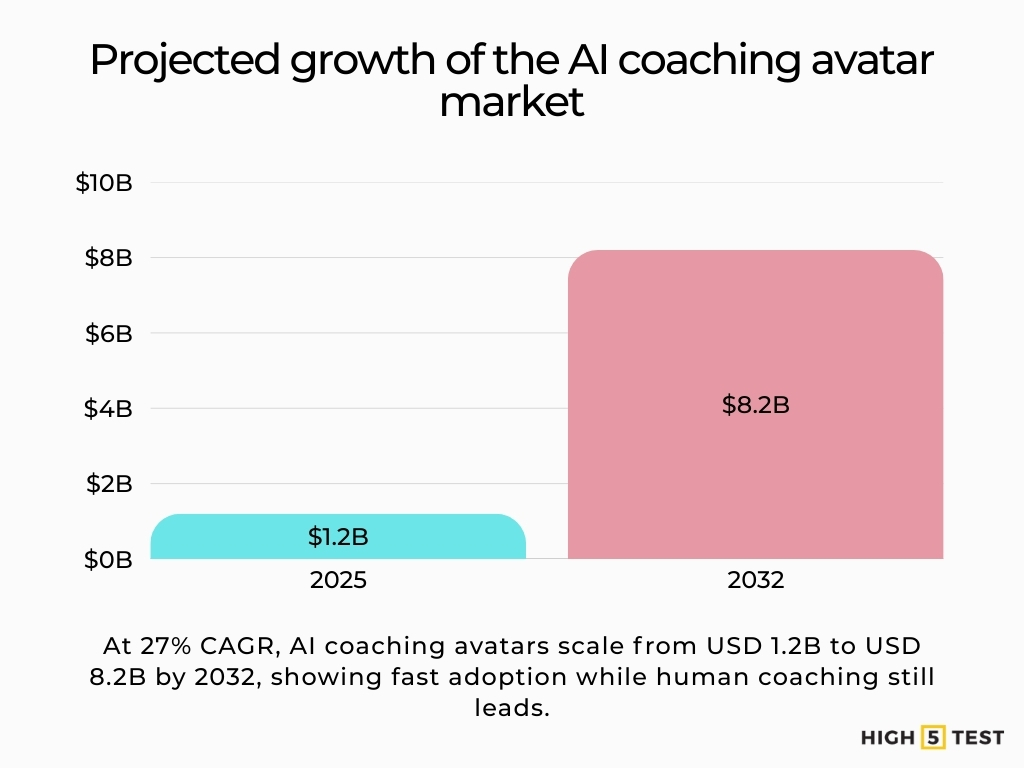
- The AI coaching avatar market is projected to grow at 27% CAGR (2025–2032), making it the fastest-growing emerging segment.
40+ coaching statistics in the U.S. (2024/2025)
U.S. coaching industry market size
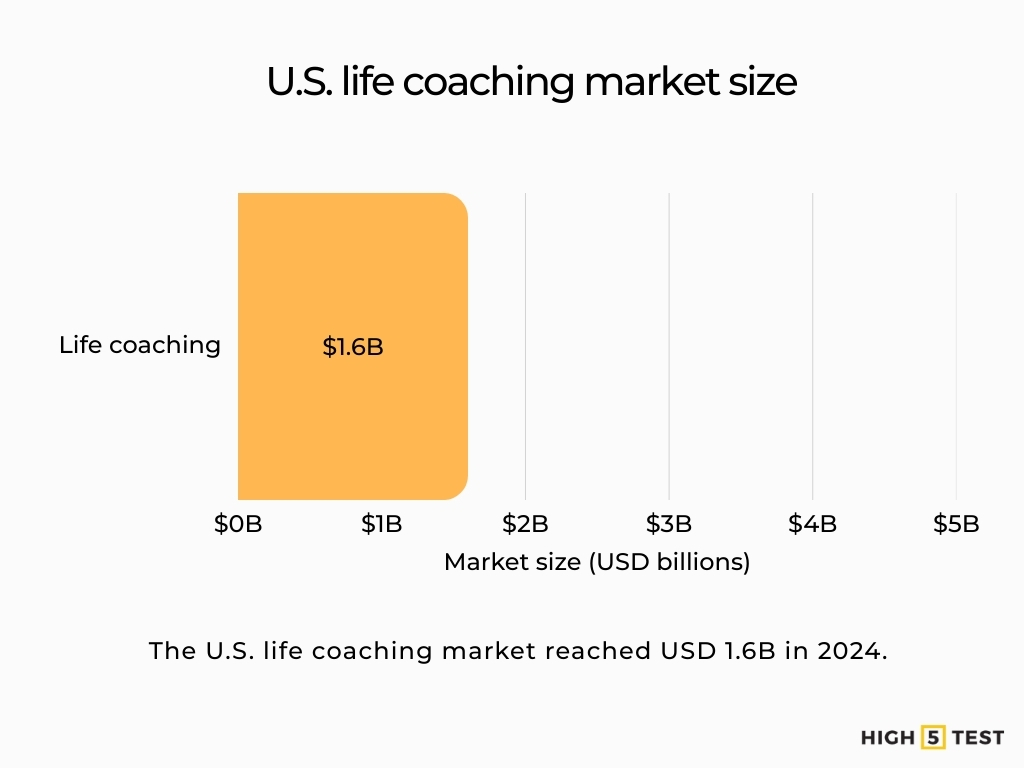
The U.S. life coaching market was valued at USD 1.6 billion in 2024. This points to a large consumer-facing category with steady demand.
Source: Global Market Insights Inc.
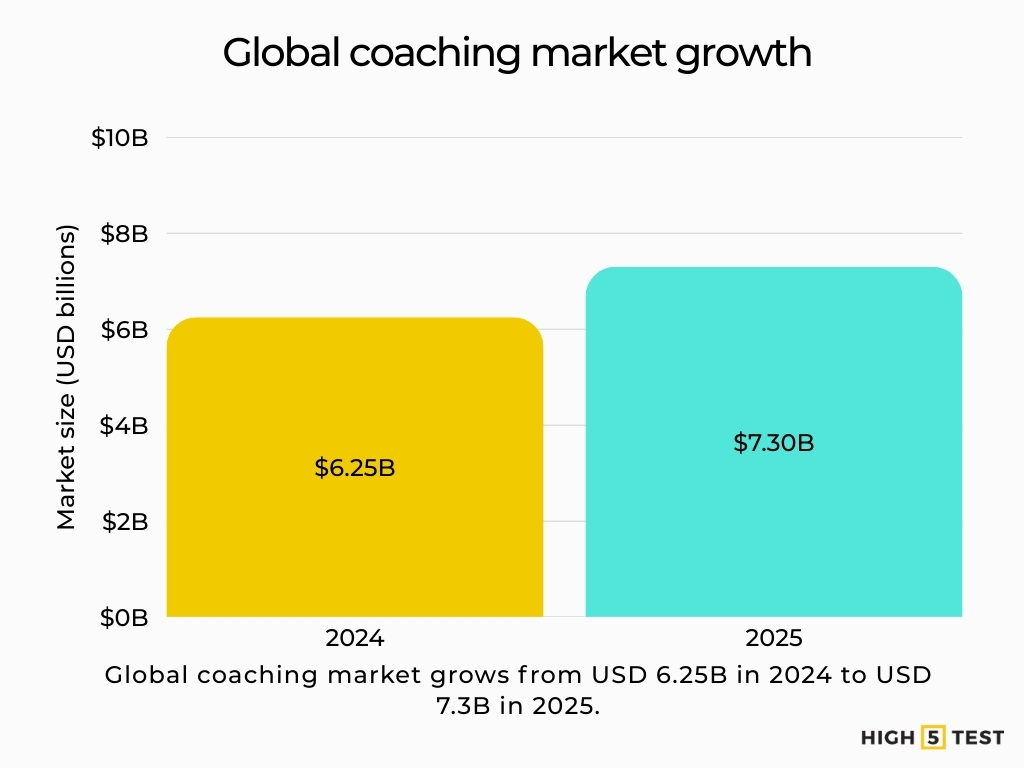
A global estimate puts the overall coaching market at USD 6.25 billion in 2024, with a projection of USD 7.3 billion in 2025. This signals continued global expansion, which often lifts U.S. visibility and buyer confidence, too.
Source: Robin Waite
Some estimates place the U.S. business coaching services market at about USD 20 billion by 2025. That figure highlights how much of the U.S. spend sits on the business side rather than consumer life coaching.
Source: IBIS World
U.S. coach practitioner count and growth
Globally, coach practitioners increased to about 122,974 in 2025, up 15% since 2023. The talent pool is expanding, which raises competition and pushes for clearer positioning.
Source: International Coaching Federation
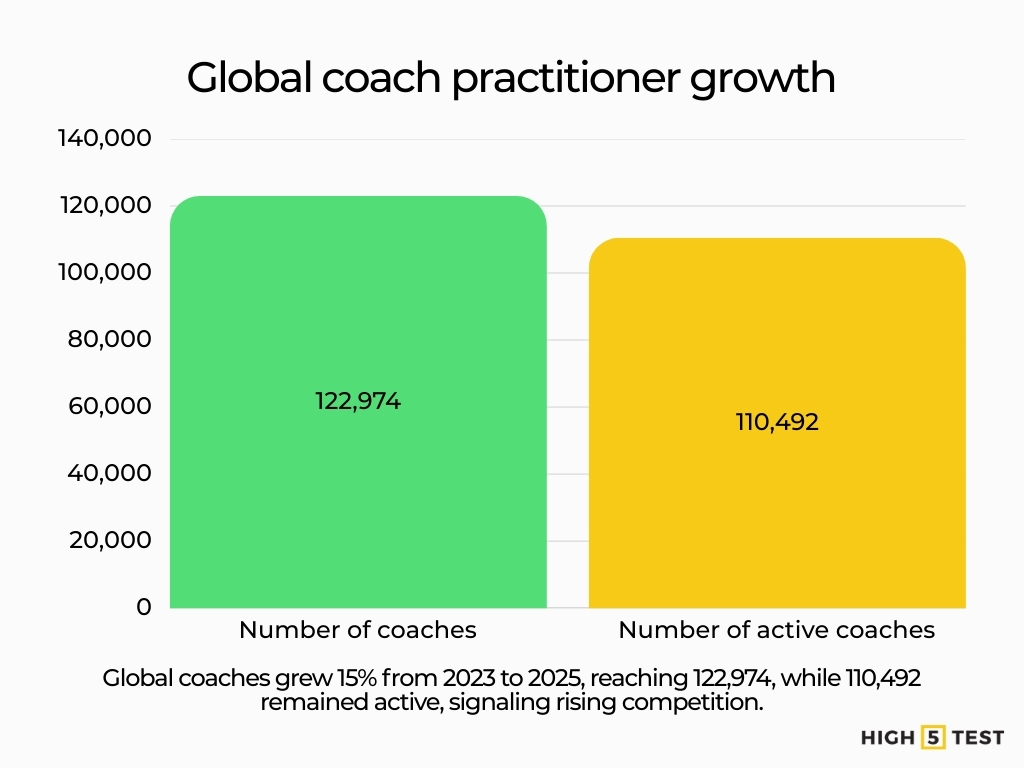
The number of active coaches worldwide is 110,492 in 2025.
Source: International Coaching Federation
The U.S. life coaching market is forecast to grow at about a 5.2% CAGR from 2025 to 2034. This is steady growth that rewards strong sales systems and client retention.
Source: Global Market Insights Inc.
Future outlook
59% of coaches expect their annual revenue to increase over the next year. Optimism is common, but many coaches will need stronger lead flow to reach that outcome.
Source: International Coaching Federation
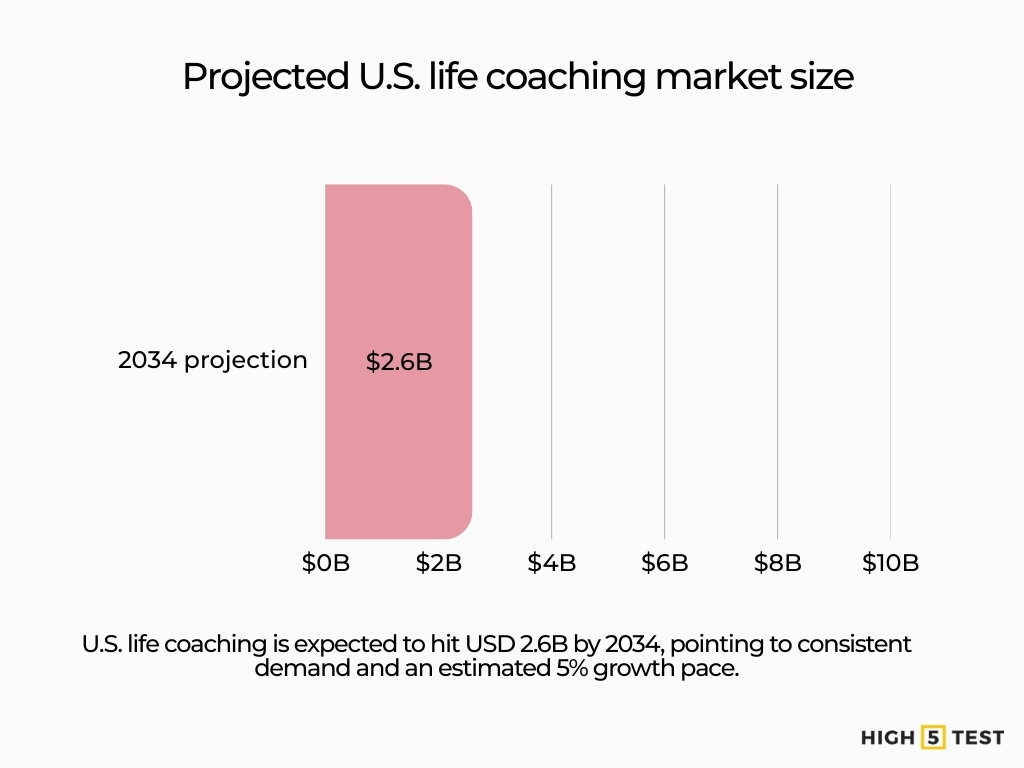
The U.S. life coaching market is projected to reach about USD 2.6 billion by 2034. The long-range view supports planning for durable demand instead of short spikes.
Source: Global Market Insights Inc.
Online/virtual delivery in coaching is accelerating. The U.S. virtual life-coaching segment generated USD 885.5 million in 2024.
Source: Global Market Insights Inc.
Key insight: Growth continues, but it looks more like steady expansion than a sudden surge. Coaches win by standing out and scaling with care.
Segment breakdown: Coaching types
Life coaching
The U.S. life coaching market size was USD 1.6 billion in 2024. This supports life coaching as a stable core segment with broad consumer demand.
Source: Global Market Insights Inc.
The personal life coaching segment is projected to reach USD 837.1 million by 2034. That projection suggests personal coaching stays strong even as niches expand.
Source: Global Market Insights Inc.
A separate estimate places the U.S. life coaching market at USD 1.98 billion in 2024, with a projection of USD 3.08 billion by 2033 at about 5.05% CAGR.
Source: Grand View Research
Business/executive coaching
The U.S. business coaching market is estimated at about USD 20 billion in 2025 with about 4.5% CAGR. This is where many higher-budget buyers sit, especially in corporate settings.
Source: IBIS World
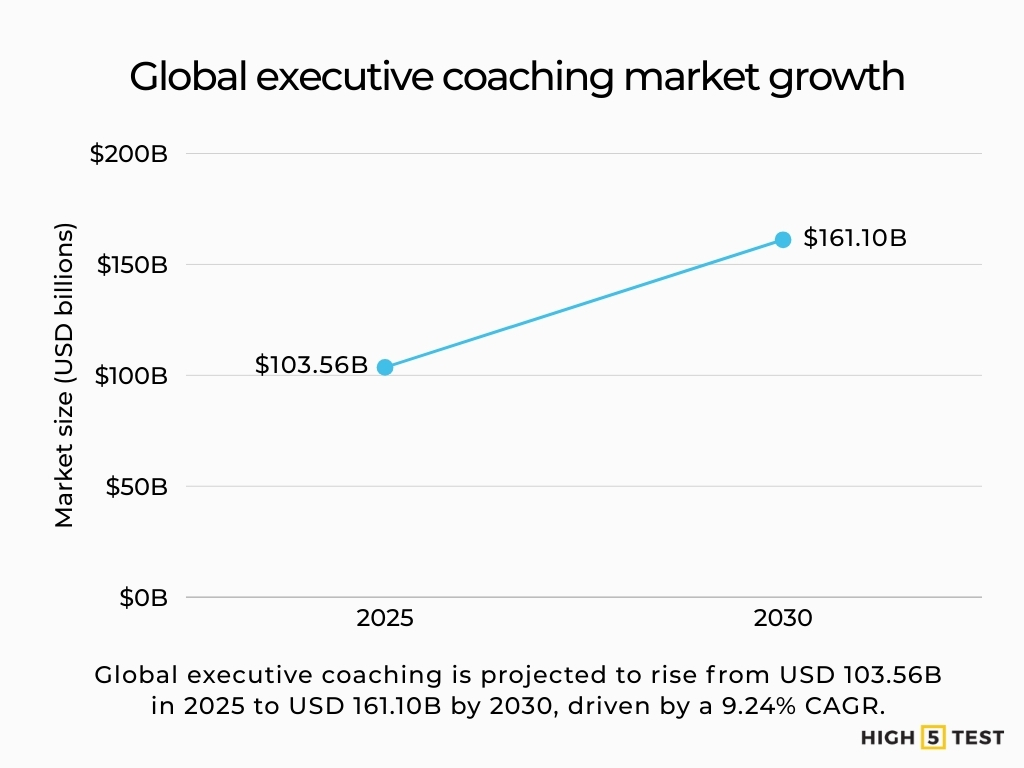
Executive coaching globally is projected to grow from ~USD 103.56 billion in 2025 to ~USD 161.10 billion by 2030, expanding at a 9.24% CAGR. (though this is global, not U.S. only).
Source: Mordor Intelligence
Health and wellness coaching
The U.S. health and wellness coaching market is reported to be at USD 22.04 billion in 2025. This number shows wellness coaching often sits in broader health services budgets, not just coaching budgets.
Source: The Business Research Company
Globally, the health and wellness coaching market size for 2025: USD 20.1 billion, CAGR ~7.32%.
Source: Precedence Research
Career coaching
The U.S. career coaching market, including job training and career counseling, is estimated at USD 16.9 billion in 2024. This reflects a large market that blends coaching with education and training services.
Source: IBIS World
U.S. career coaching revenue is estimated at about USD 17.1 billion in 2025 with about 1.1% CAGR. Slower growth means providers often compete on specialization and outcomes.
Source: IBIS World
Online and platform-based coaching
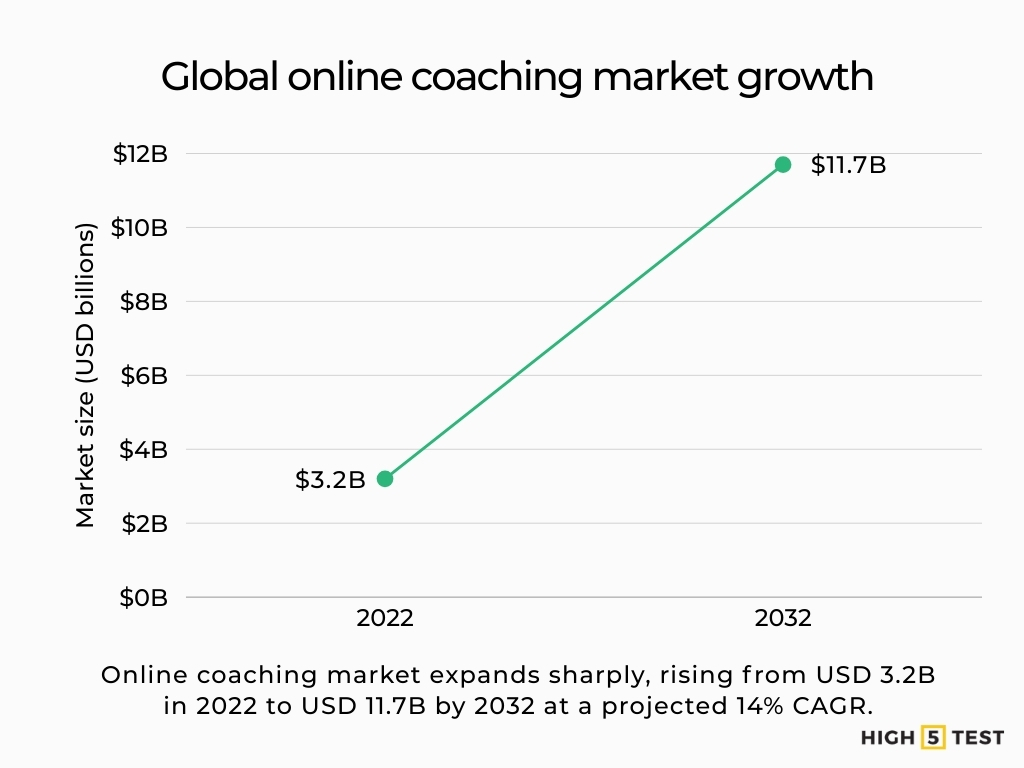
The global online coaching market was valued at about USD 3.2 billion in 2022 and is projected to reach about USD 11.7 billion by 2032 at about a 14% CAGR. Platforms keep pulling demand toward packaged, scalable offers.
Source: Allied Market Research
The U.S. virtual life coaching segment generated USD 885.5 million in 2024. Virtual delivery is now a mainstream purchase option for U.S. clients.
Source: Global Market Insights Inc.
Key insight: Practitioners should target sub-segments (e.g., health/wellness, digital delivery) with higher growth rates and stay aware that older “generalist” models are less likely to differentiate.
Data on practitioner and industry demographics in coaching
Average revenue/income and session fees
The ROI for executive coaching was reported at 788%.
Source: American University
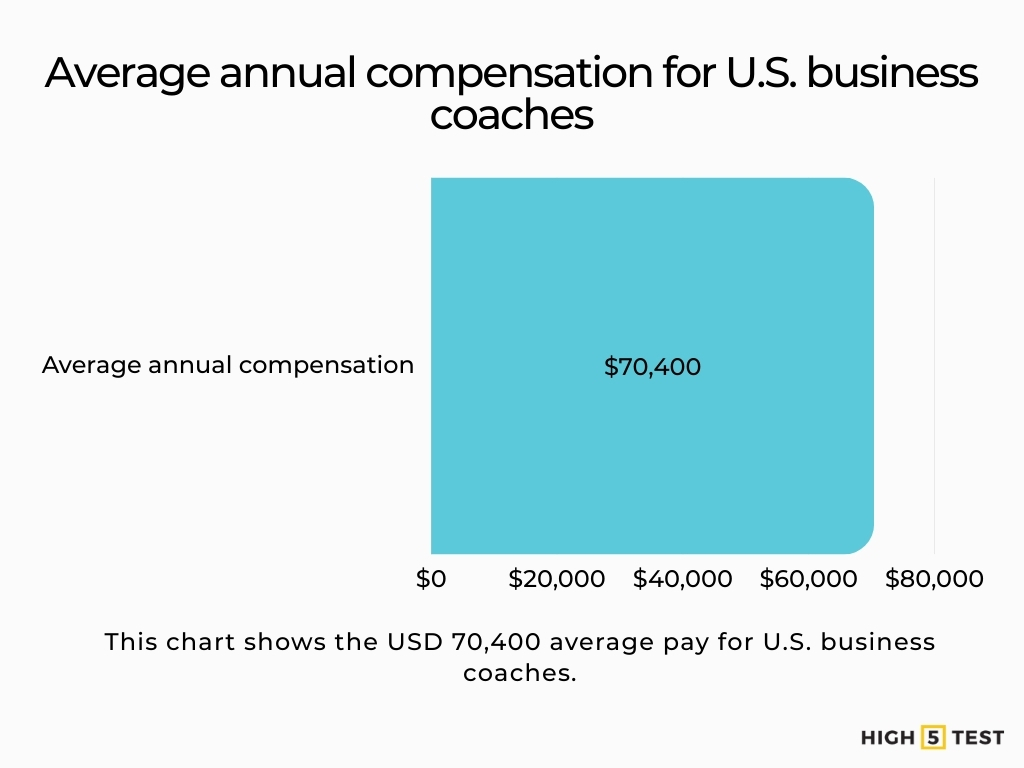
Average annual compensation for business coaches in the U.S. is reported at USD 70,400. Income varies widely, so consistent lead generation and retention matter as much as skill.
Source: PayScale
Gender/age/certification of coaches
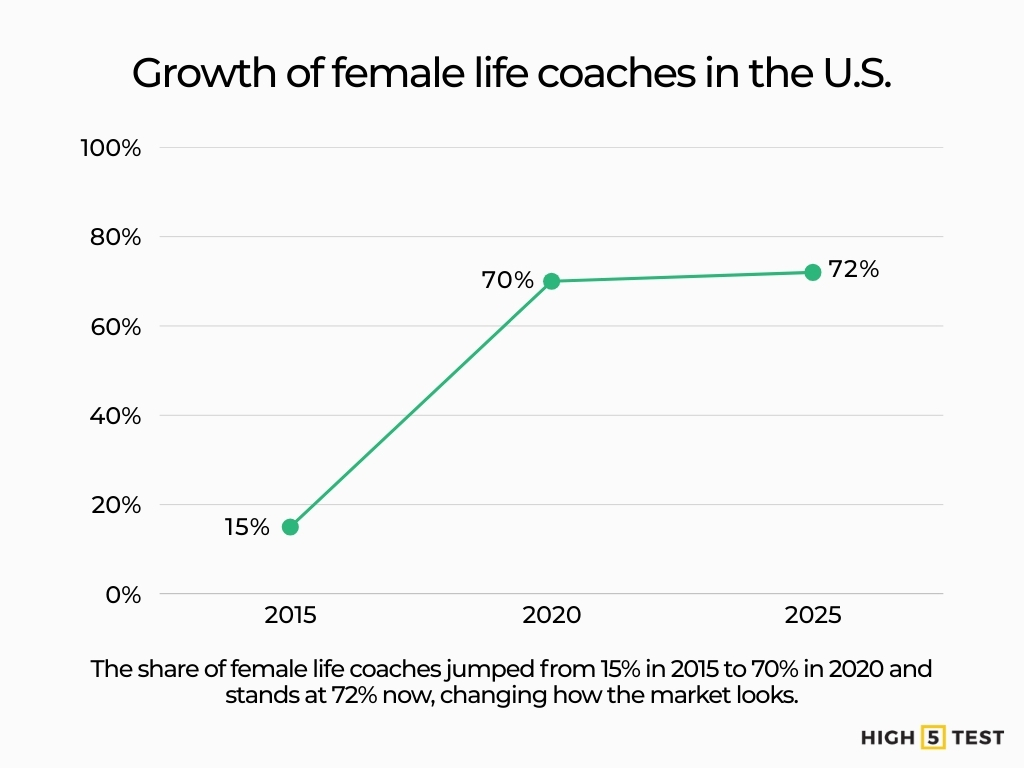
Female life coaches increased from about 15% in 2015 to about 70% by 2020, with about 72% of female coaches currently reported. The field has shifted fast, which can influence marketing, community building, and buyer expectations.
Source: International Coaching Federation
73% of coaches say clients and organizations expect certification or credentials. Credentials do not replace results, but they can speed up trust with new buyers.
Source: International Coaching Federation
Number of coaching businesses in the U.S.
About 232,000 U.S. businesses offered coaching services as of 2025. A crowded market rewards clear messaging, strong referrals, and proof of outcomes.
Source: Marketdata LLC
Key insight: Competition is real, and the bar is higher. Coaches who show results and specialize tend to stand out faster.
Client and buyer statistics
Corporate coaching adoption and budget growth
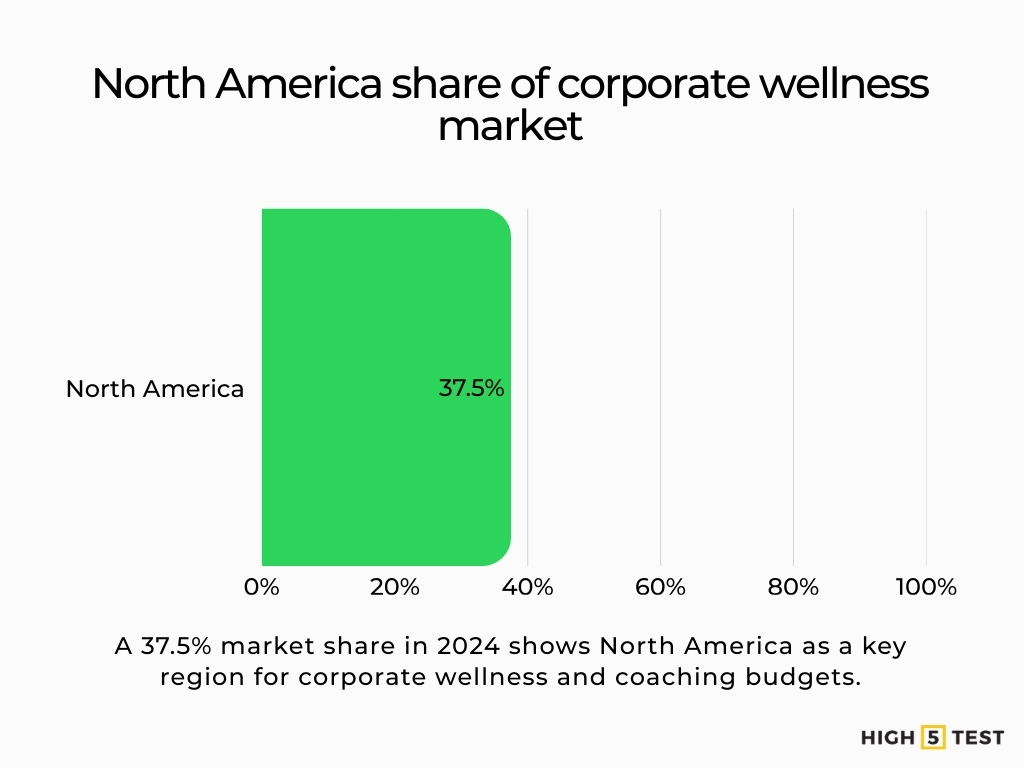
North America held 37.5% of the corporate wellness market in 2024. Corporate wellness budgets often include coaching, so this share matters for B2B growth.
Source: Fortune Business Insights
59% of coaches expect higher earnings in 2026, driven by more clients and more sessions instead of higher fees. Volume growth can work, but it also increases delivery load without better systems.
Source: International Coaching Federation
Delivery mode shift: Online/hybrid/ in-person
The U.S. life-coaching virtual segment generated USD 885.5 million in 2024. Many buyers now expect virtual options as a standard feature.
Source: Global Market Insights Inc.
The global hybrid learning model market surpassed USD 52 billion in 2024 and is projected to grow at about 13.8% CAGR from 2024 to 2033. Hybrid habits in learning and development often translate into hybrid coaching programs, too.
Source: HTF Market Intelligence
Demand for niche and specialized coaching
Coaches who focus on a niche are reported to grow 30% faster than generalists. Specialization can simplify marketing and improve referrals because clients know who you help.
Source: Research.com
ROI and impact metrics
Executive coaching ROI has been reported at 788%. Buyers still want to know what changed, so clear before-and-after metrics help the most.
Source: American University
Coaching engagements are reported to deliver an average ROI of about 7.9 times the investment. ROI claims vary across studies, so use them as a prompt to measure your own outcomes.
Source: The Coaching Tools Company
Key insight: Buyer expectations keep moving toward measurable impact. Coaches who track outcomes and package services for teams fit corporate buying patterns better.
What is coaching data telling us
Technology and AI in coaching
The coaching platform market is forecast to grow from USD 3.8 billion in 2025 to USD 11.1 billion by 2035 (CAGR ~11.1%).
Source: Future Market Insights
The AI coaching avatar market is projected to grow from USD 1.2 billion in 2025 to USD 8.2 billion by 2032 at about 27% CAGR. Growth here signals experimentation, but many clients still prioritize human connection.
Source: Stratistics MRC
Research suggests coaches use generative AI for admin support and content creation, while relational substitution remains limited. AI can lighten back-office work, but trust still drives coaching outcomes.
Source: arXiv
Group coaching, micro-coaching, and subscription models
Group coaching, subscriptions, and shorter sessions are highlighted as leading trends for 2024 to 2025. These formats can improve margins, but they require tight structure and a strong curriculum.
Source: The Coaching Tools Company
Corporate well-being, mental health, and coaching
Well-being coaching is gaining attention as companies add coaching to mental health and resilience programs. This creates opportunities for coaches who can coordinate with HR and benefits teams.
Source: International Coaching Federation
Regional and delivery shifts in the U.S. market
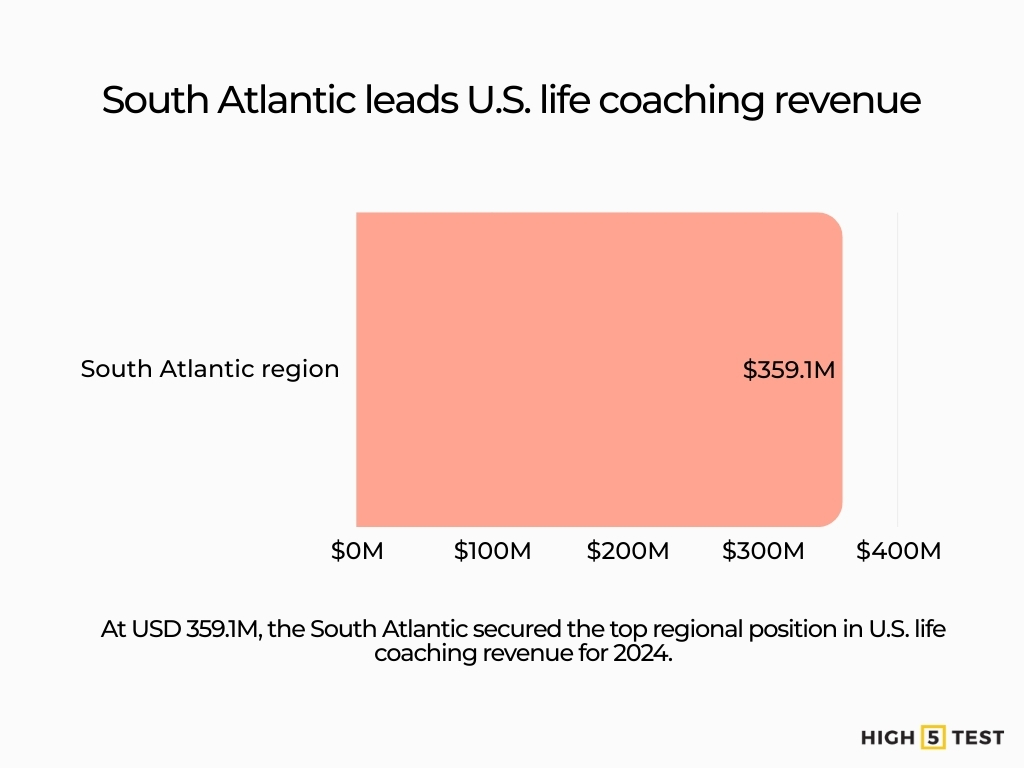
In the U.S. life coaching market, the South Atlantic region led with USD 359.1 million in revenue in 2024. Regional concentration can shape where competition and partnerships appear first.
Source: Global Market Insights Inc.
Key insight: Technology and scalable formats are growing, and corporate well-being spend remains a strong entry point. Coaches who pair human skill with smart systems will be positioned for the next cycle.
Conclusion
The 2024 to 2025 coaching market in the United States keeps expanding, but competition keeps rising too. Growth is steady, and buyers are getting more selective. Coaches who specialize, show measurable outcomes, and offer strong virtual or hybrid delivery tend to earn trust faster and keep it longer.
Another clear signal is the shift toward business discipline. Coaches who treat their practice like a real business, with defined offers, repeatable delivery, and consistent marketing, are better positioned to handle pricing pressure and client churn.
Long-term success will also depend on adaptability. Coaches who stay alert to client buying patterns, delivery preferences, and technology shifts will be more resilient as the market continues to mature.