Student burnout is a widespread issue across US education. High school and college students report high levels of academic strain, emotional exhaustion, and disengagement. National data from 2024 and 2025 point to sustained pressure tied to coursework demands, financial strain, and anxiety about the future.
This article serves students, educators, journalists, and policymakers who need reliable and citable statistics on student burnout in the United States. Instead of relying on a single burnout rate, the data focuses on measurable indicators such as academic impairment, mental health prevalence, and persistence risk. Together, these indicators provide a clear picture of how burnout shows up in student outcomes.
10 most interesting student burnout statistics
- 44.5% of U.S. college students say procrastination negatively impacted their academic performance in the past year. This suggests nearly 1 in 2 students are struggling with cognitive overload and avoidance—core burnout mechanisms.
- 38% of U.S. college students screened positive for moderate or severe depression using a clinical instrument (PHQ-9). This is not “feeling stressed” as it meets a clinical threshold.
- 34% of college students screened positive for moderate or severe anxiety (GAD-7). Anxiety at this scale dramatically increases burnout risk by impairing focus, sleep, and recovery.
- 35% of college students seriously considered leaving their program in the past six months. Burnout is no longer just a wellness issue; it’s a retention crisis.
- Among students considering leaving, emotional stress and mental health were cited as the top reasons, above academics. Students are not failing out, but they are burning out.
- 15.8% of college students report that financial stress directly harmed their academic performance. Financial strain is a structural burnout driver, not a personal budgeting issue.
- 13.1% of college students say career uncertainty interfered with academic performance. Burnout is increasingly future-oriented, tied to fear about post-graduation stability.
- 33.7% of college students used mental health services in the past year. Help-seeking is rising, but still lags far behind distress prevalence, indicating unmet need.
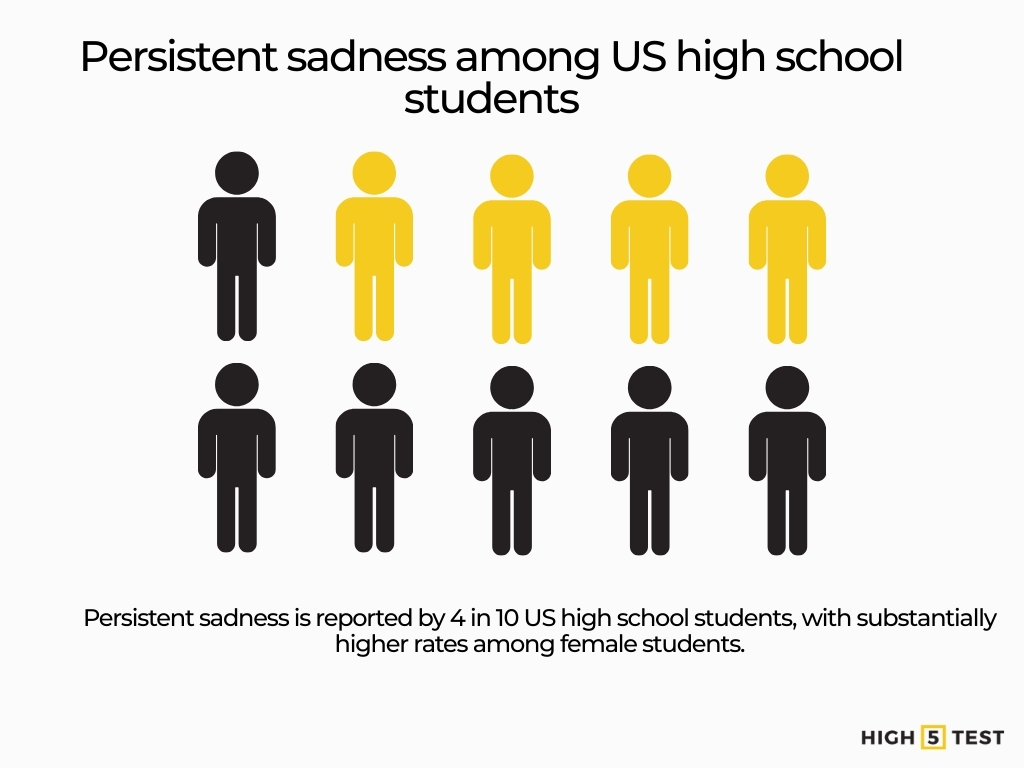
- 39.7% of U.S. high school students experienced persistent feelings of sadness or hopelessness. Burnout trajectories often begin before college, not after enrollment.
- 52.6% of U.S. high school girls reported persistent sadness or hopelessness. More than half of adolescent girls are showing burnout-linked emotional distress.
10+ student burnout statistics in the U.S. (2024/2025)
Mental health and burnout in high school students
Persistent feelings of sadness or hopefulness affect 4 in 10 U.S. high school students overall and more than half of female students (52.6%), signaling early burnout trajectories marked by emotional distress, academic disengagement, and gender-based disparities.
Emotional distress during adolescence is closely linked to academic disengagement and absenteeism. Female students face higher emotional strain, which is often connected to academic pressure, social comparison, and internalized stress. These early patterns increase the likelihood of continued burnout later in education.
Source: Centers for Disease Control and Prevention
Burnout rates in higher education
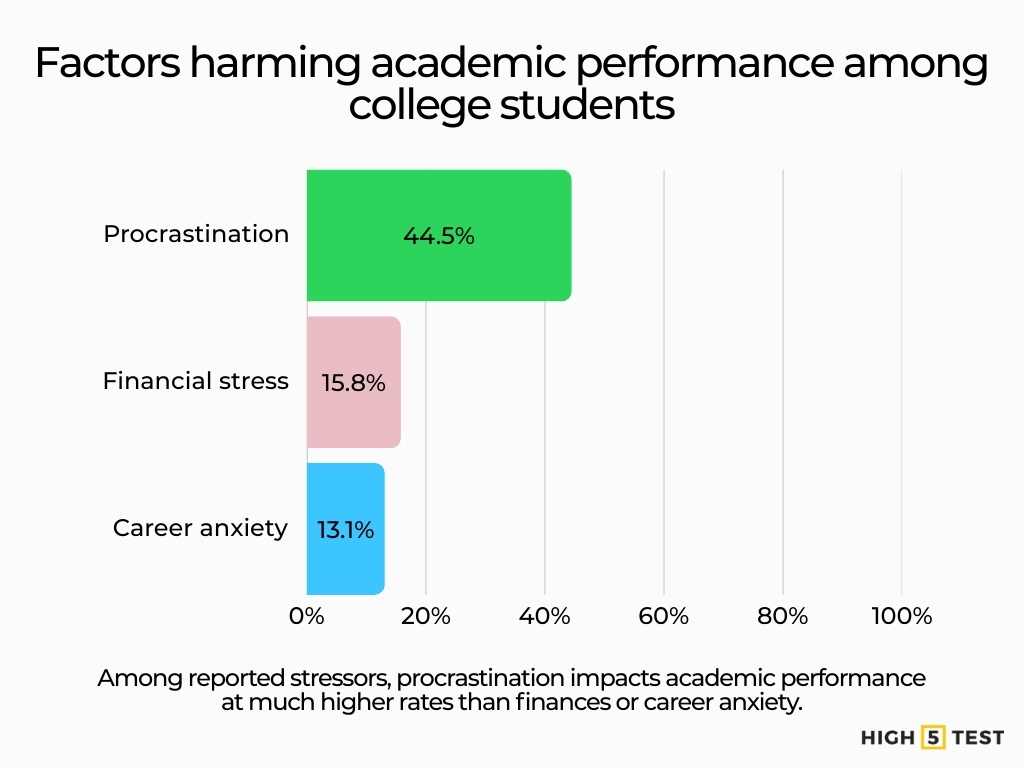
- 44.5% reported procrastination harmed academic performance.
Procrastination at this scale reflects sustained stress rather than poor habits. Chronic pressure reduces cognitive capacity and makes task initiation harder. Over time, this pattern contributes to emotional exhaustion and disengagement.
- 15.8% said finances harmed academic performance.
Students facing economic pressure often work longer hours while enrolled. Sleep loss and constant worry reduce focus and recovery time. These conditions accelerate burnout and academic withdrawal.
- 13.1% said career anxiety harmed academic performance.
Uncertainty about post-graduation outcomes weakens motivation and confidence. Students who question the value of their degree often disengage from coursework and struggle to sustain effort.
Source: American College Health Association
37.8% used mental health services in the past year.
Service use has increased compared with pre-pandemic levels. Distress still exceeds access, which leaves many students without adequate support during periods of high strain.
Source: American College Health Association
In a 2024–2025 study, 37% of U.S. college students screened positive for moderate or severe depression (PHQ-9 ≥10), while 33% screened positive for moderate or severe anxiety (GAD-7 ≥10).
Depression, anxiety, and burnout frequently overlap. Emotional exhaustion and disengagement mirror depressive symptoms. Ongoing anxiety maintains high stress levels that impair concentration and recovery. Early screening and coordinated support remain essential.
Source: Healthy Minds Study
Emotional stress and mental health challenges are leading contributors to attrition, with 35% of college students considering leaving their academic program.
Burnout directly threatens student persistence. When stress and mental health concerns drive stop-out consideration, institutions face not only a wellness crisis but also a retention and completion challenge.
Source: Gallup
Statistics on gender differences in student burnout
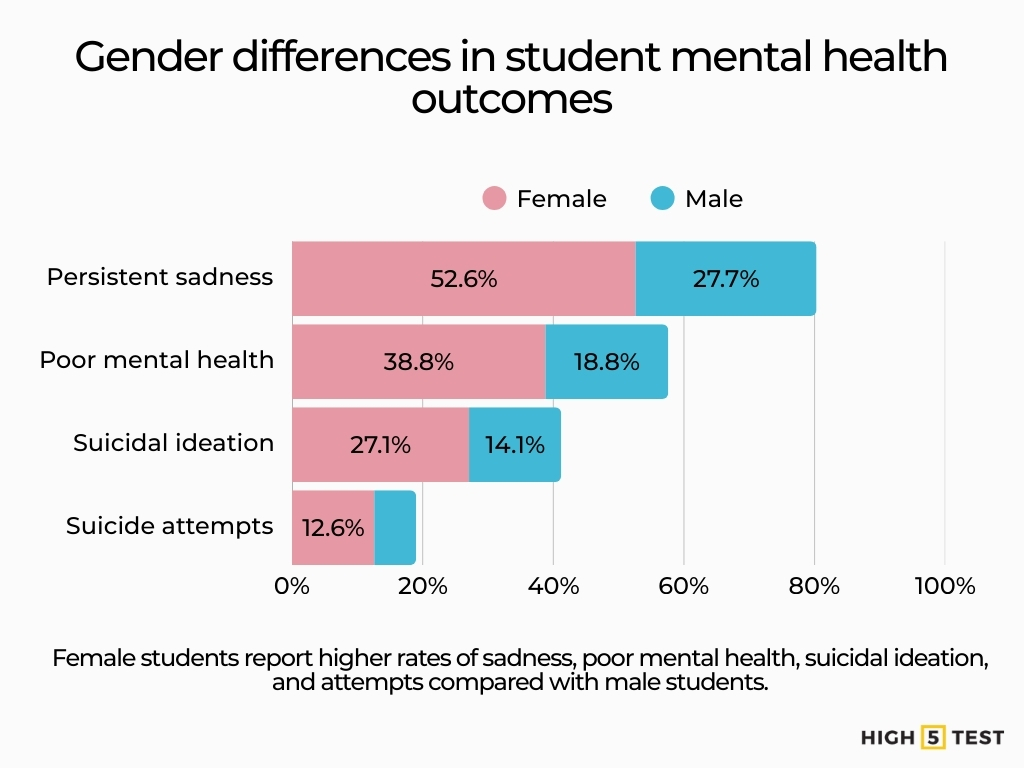
Female students reported substantially higher rates than male students across all measured mental health outcomes, including persistent sadness (52.6% vs. 27.7%), poor mental health (38.8% vs. 18.8%), suicidal ideation (27.1% vs. 14.1%), and suicide attempts (12.6% vs. 6.4%).
This pattern reflects a clear gender-based mental health disparity. Adolescent girls and young women experience layered academic, social, and psychological pressures. These pressures raise risk well before adulthood and point to the need for early, gender-responsive support in schools.
Source: Centers for Disease Control and Prevention
College women experience significantly higher levels of day-to-day stress and worry than male students, with 72% reporting high stress and 56% reporting worry on the prior day, compared with 56% and 40% among men.
Gender differences in anxiety prevalence suggest uneven exposure to burnout-related stressors and differing help-seeking or coping patterns.
Source: Gallup
Statistics on leading causes of student burnout
Nearly half of college students (44.5%) report experiencing academic overload and procrastination.
Avoidance often becomes a coping response when demands exceed emotional and cognitive capacity. Over time, this cycle erodes confidence and contributes to emotional exhaustion.
Source: American College Health Association
Financial strain impairs learning for 15.8% of students, highlighting economic pressure as a significant academic risk factor.
Long work hours, limited rest, and constant concern about expenses reduce academic focus. Sustained imbalance between effort and available resources contributes to burnout.
Source: American College Health Association
Career uncertainty and anxiety about the future affect 13.1% of college students.
Doubts about long-term outcomes weaken engagement and increase cynicism toward coursework. These patterns align with core burnout symptoms.
Source: American College Health Association
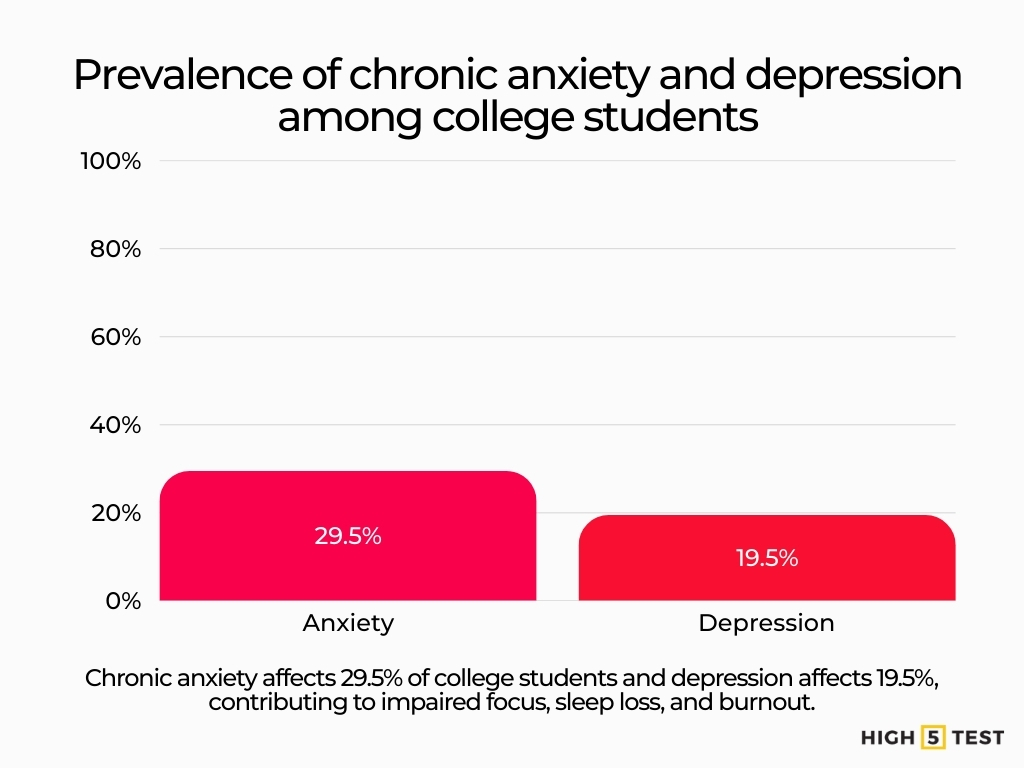
Chronic anxiety and depression affect 29.5% and 19.5% of college students, respectively.
Persistent anxiety and depression intensify burnout by impairing concentration, sleep, and emotional regulation. These conditions can both trigger burnout and result from prolonged academic stress.
Source: American College Health Association
Conclusion
Student burnout in the United States is widespread and measurable. Data from 2024 and 2025 show consistent links between sustained stress, academic impairment, emotional distress, and disengagement across education levels.
These patterns point to structural pressures rather than individual failure. Workload intensity, financial strain, and future uncertainty shape student outcomes in clear ways. Schools and policymakers have the ability to address these conditions through changes in academic expectations, support access, and institutional design.
The evidence shows that student burnout is a public education issue. Meaningful progress depends on data-informed action that reflects the real conditions students face.