HR professionals and business owners alike are navigating a fast-changing workforce in 2024 — and making informed, strategic decisions means having access to the right data. From hiring slowdowns and high turnover to employee burnout, AI disruption, and shifting expectations around flexibility and DEI, today’s workplace challenges are complex and deeply interconnected.
This report brings together the most important HR statistics for 2024 and 2025, sourced from authoritative research and industry surveys. Whether you’re planning your next recruitment campaign, refining onboarding processes, or shaping long-term talent strategy, this data-driven guide will help you stay ahead of the curve. We also highlight key workforce trends, compare U.S. and global insights, and offer commentary to help you translate the numbers into action.
Use these insights to benchmark your organization, identify areas of opportunity, and guide smarter, more human-centered HR decisions.
10 most interesting HR statistics
- Only 30% of U.S. employees are highly engaged, the lowest in 11 years. Engagement is at a historic low, while 17% are “actively disengaged”, costing billions in lost productivity.
- 44% of U.S. employees report physical fatigue from work-related stress. A 38% increase since 2019, signaling that burnout is now a health crisis as much as an HR issue.
- Middle managers have the highest burnout rate at 43%. The people expected to hold teams together are burning out faster than anyone.
- Recruiting is now “marketing” to 86% of HR teams. Finding top talent isn’t about job boards, it’s about employer brand and candidate experience.
- Companies with structured onboarding retain new hires 50% longer. Yet many still neglect onboarding, even though it’s one of the easiest ROI wins in HR.
- 95% of HR leaders say burnout is damaging retention. Yet only a fraction have comprehensive wellness strategies in place.
- 47% of HR leaders say retention is their #1 challenge. Turnover isn’t just a side effect, now it’s HR’s top strategic concern.
- Only 20% of employees are passionate about their jobs. A reminder that meaningful work, purpose, and recognition matter more than ever.
- 58% of employees experiencing pay discrimination are women. Pay equity remains a massive, unresolved issue with real consequences for retention and morale.
- 44% of workers’ skills will need to change by 2029. The pace of disruption is accelerating, and upskilling isn’t optional anymore.
30+ HR statistics in the U.S. (2024/2025)
The US labor market remains tight. The US recorded about 7.7 million job openings in October 2025. This high level of vacancies keeps competition for talent intense and gives workers more options and bargaining power.
Source: U.S. Bureau of Labor Statistics
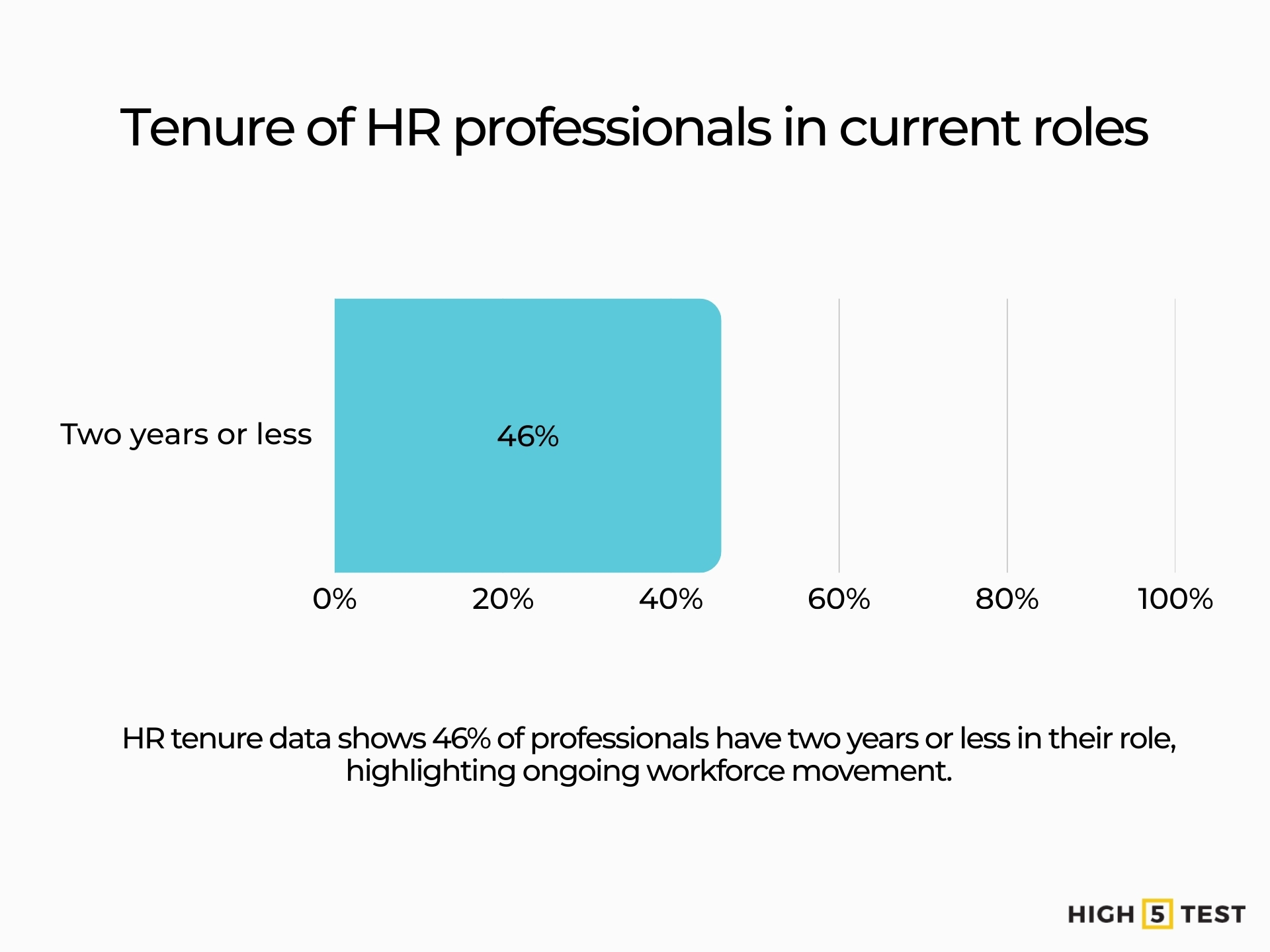
Many HR practitioners are new to their positions: Nearly 46% of HR professionals have been in their current position for two years or less. Teams can benefit from new perspectives, yet frequent transitions can stretch capacity.
Source: Paycor
HR jobs are on the rise: HR specialist jobs are projected to grow 6% from 2024 to 2034, faster than average. Employers are investing in people expertise as workforce needs become more complex.
Source: U.S. Bureau of Labor Statistics
Household incomes are rebounding: The median U.S. household income reached $83,730 in 2024. Higher incomes signal economic recovery and can raise employee expectations for better pay and benefits.
Source: U.S. Census Bureau
HR statistics on talent acquisition
Recruiting requires more planning than it did a few years ago. Employers face talent shortages, and candidates compare pay, flexibility, and brand reputation.
Hiring is widespread and challenging: About 91% of businesses plan to hire, and 71% cite finding quality candidates as their biggest challenge. Many teams are strengthening sourcing, referrals, and employer branding to compete.
Source: Paycor
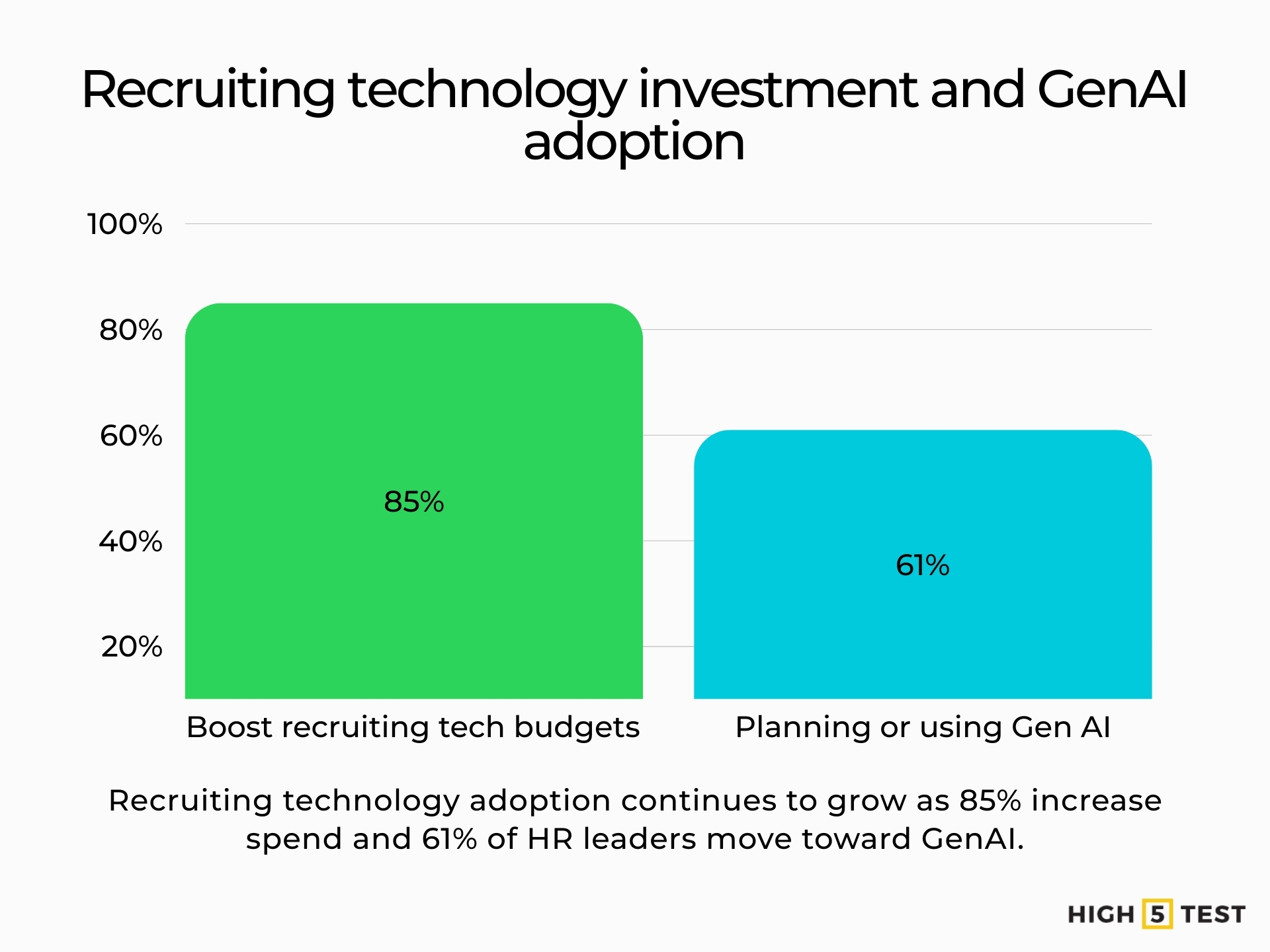
Recruiting tech investment is rising. Nearly 85% of companies plan to increase spending on recruiting technology. 61% of HR leaders are planning or already deploying GenAI in 2025. Tools can speed up screening and scheduling, so teams still need review steps that keep judgment and fairness in the loop.
Source: Allegis Group, Gartner
Social media recruiting is mainstream: 74% of recruiters say they use social media to find candidates. LinkedIn remains a major channel, and platforms like Instagram and TikTok can help reach younger audiences.
Source: Resume Builder
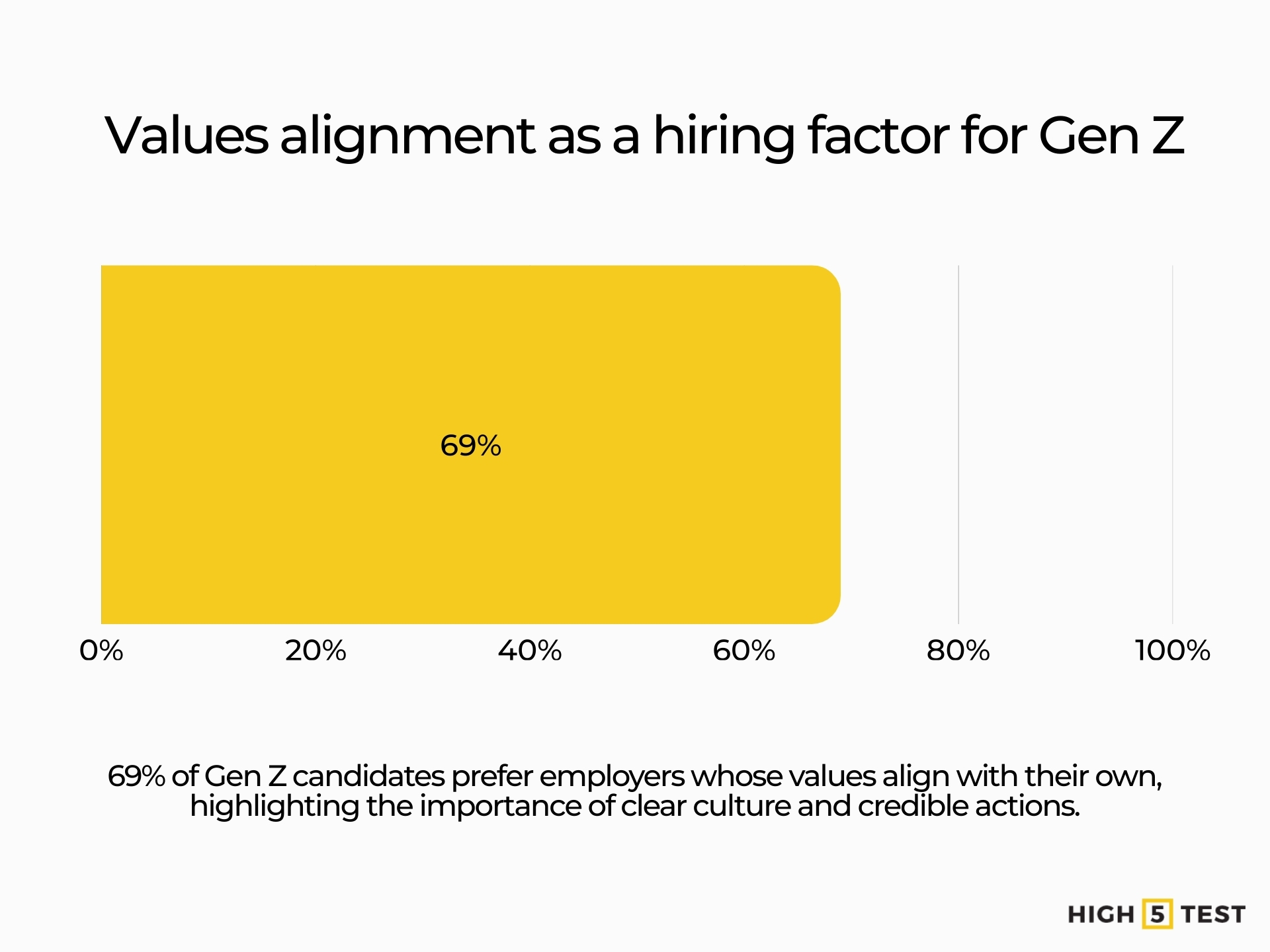
Values influence Gen Z decisions. 69% of Gen Z candidates say it matters to work for a company that shares their values. This pushes employers to communicate culture clearly and back up public messages with consistent actions.
Source: Deloitte
Employer reviews shape applicant behavior. 86% of employees and job seekers check company ratings and reviews before applying. A clear and credible employer brand can improve both applicant volume and fit.
Source: Glassdoor
Mobile applications are common. 33% of job applications are completed on a mobile device. Career sites and forms need to load fast and stay simple, or applicants drop off.
Source: Page Up
Hard-to-fill positions are still common. 91% of hiring managers report difficulty filling certain jobs. Some employers plan to make pay moves to attract talent, and 24% expect to prioritize compensation adjustments in 2026. Pay transparency also matters, and many employers report better applicant quality when salary ranges are listed.
Source: Robert Half, Mercer
Statistics on onboarding data and early experiences
Onboarding sets the tone for performance and retention. Early signals often show up quickly.
New hire doubt can show up in the first week. Up to 44% of new employees report regrets or second thoughts within their first week. Disorganized onboarding can push someone to restart a job search fast.
Source: Bamboo HR
Onboarding needs time, not just a first-week checklist. Best practice guidance suggests extending onboarding to at least three months, and sometimes up to a year. New hires satisfied with onboarding at 90 days are twice as likely to stay for 1.5 years.
Source: Harvard Business Review
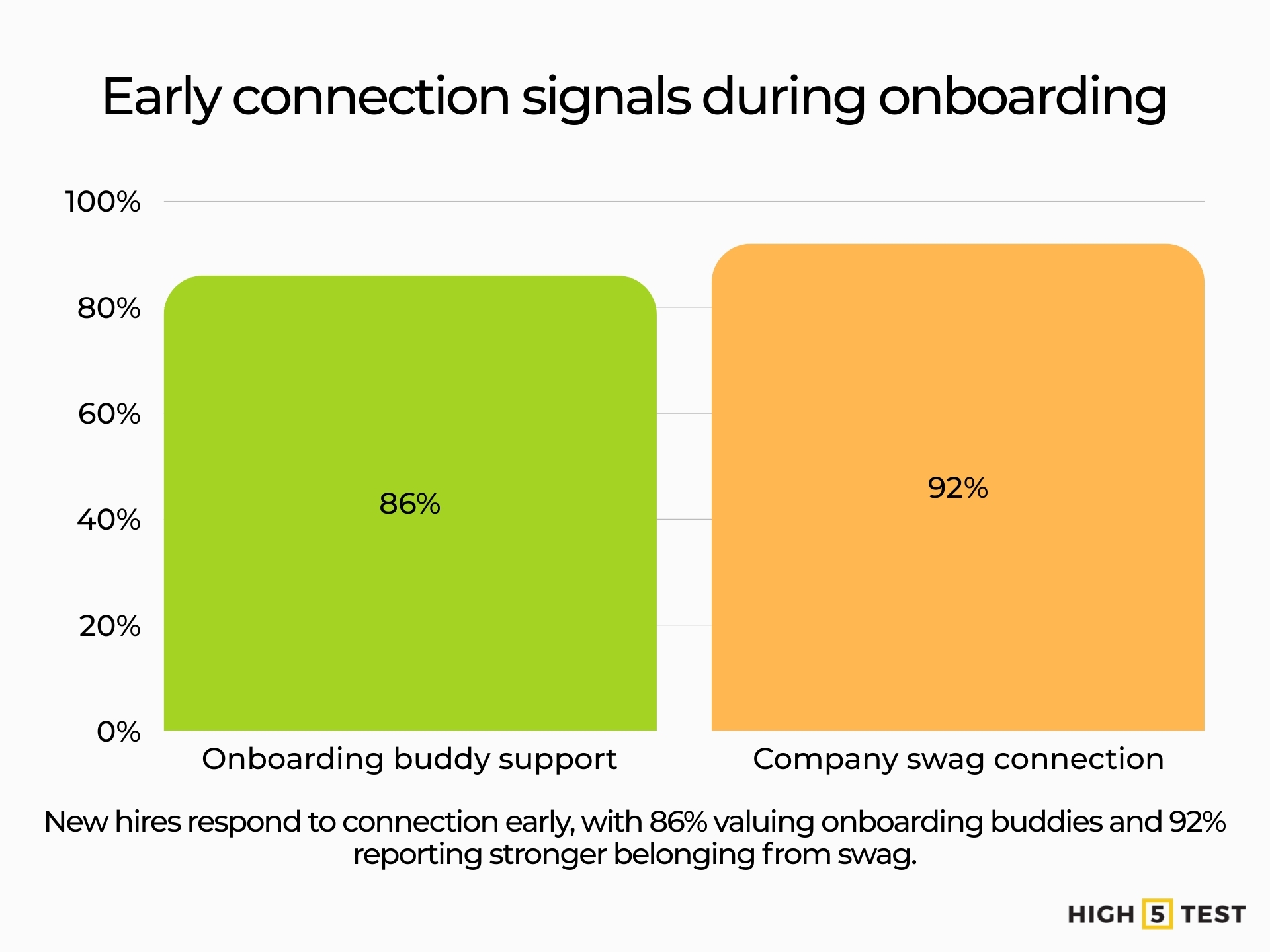
Connection matters early. 86% of new hires value support from an onboarding buddy. Small welcome gestures can also help, and 92% of employees who received company swag reported a stronger sense of connection and belonging.
Source: Bamboo HR, Custom Ink
HR data on retention and turnover
Retaining experienced people saves time, money, and momentum. Recent data shows turnover pressure has eased in some areas, yet gaps remain.
Quit rates have cooled compared with peak years. About 2.9 million Americans quit in October 2025. That is below the 2022 monthly average and closer to 2024 levels. Employees may feel less confident about switching jobs than during the peak resignation period.
Source: U.S. Bureau of Labor Statistics
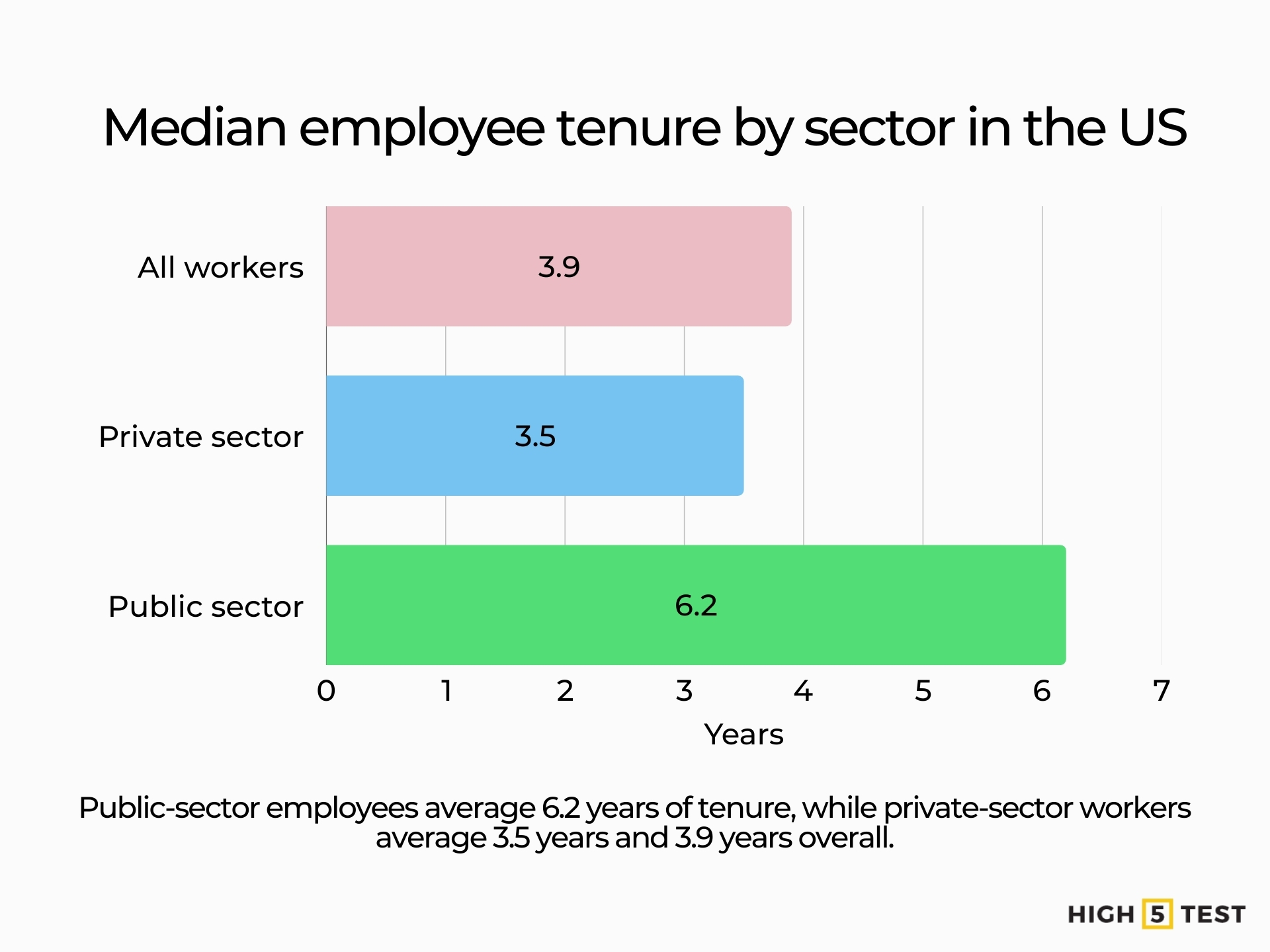
Median tenure remains short, especially in the private sector. Median tenure in early 2024 was 3.9 years. Private-sector tenure was about 3.5 years, while public-sector tenure averaged 6.2 years. Job security and benefits often help explain the gap.
Source: U.S. Bureau of Labor Statistics
Retention sits at the top of many HR priority lists. 62% of HR managers say retention and turnover are top priorities. Work-life balance, growth opportunities, and recognition remain common focus areas.
Source: Gallagher
Burnout is a major retention risk. 79% of employees report feeling burned out. Many describe feeling overworked, undervalued, or uncertain about the future. Burnout often leads to job searching and exits.
Source: ISolved
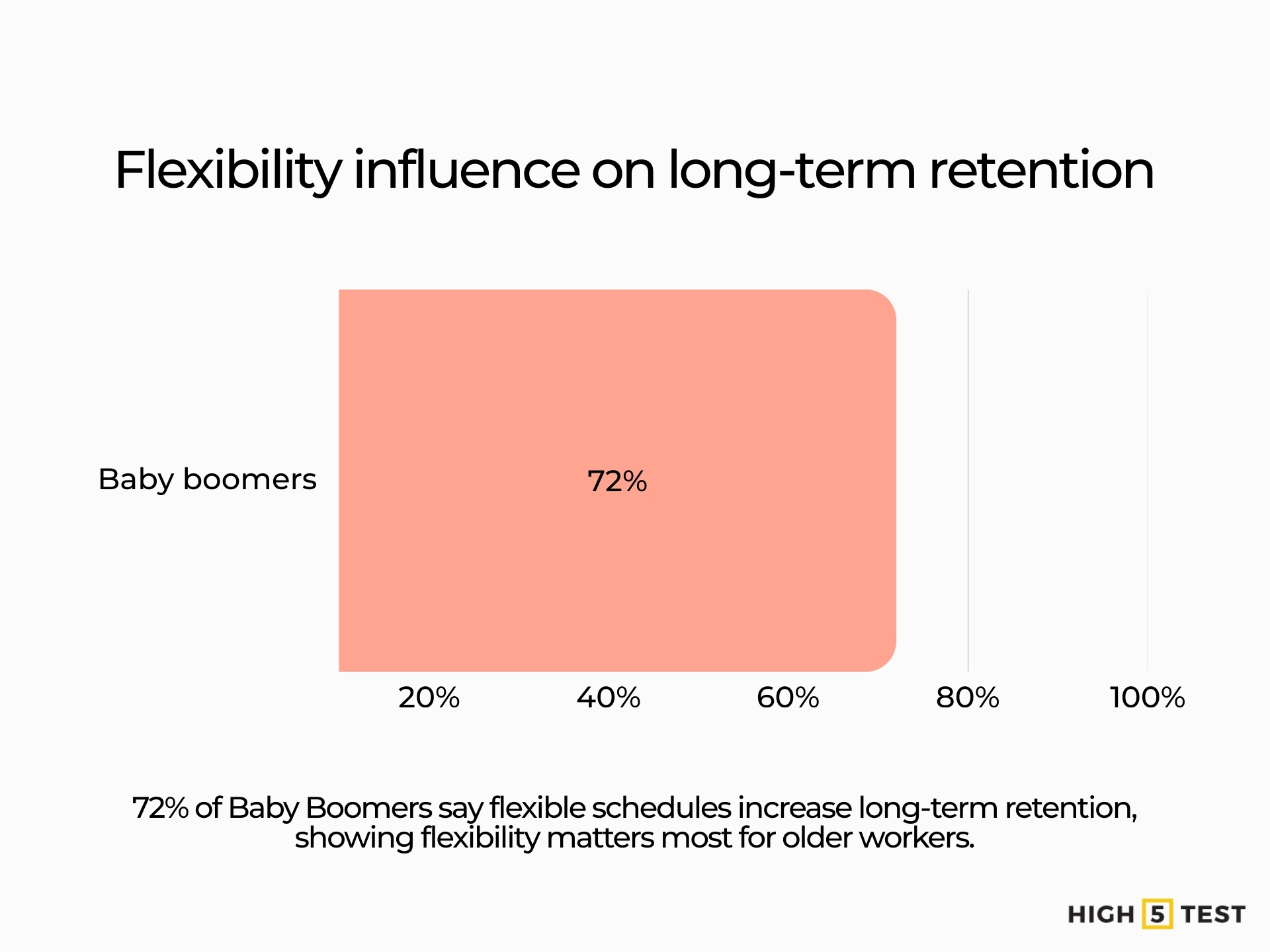
Flexibility influences who stays: Interestingly, 72% of Baby Boomers say flexible hours or scheduling would make them stay at a job long-term. Older workers, who often have family or health considerations, value flexibility the most, whereas younger employees may prioritize other factors (like growth opportunities). A one-size retention approach won’t fit all generations.
Source: Flex Jobs
Early exits happen fast. More than 40% of employees who leave within the first year do so in the first 90 days. Strong onboarding, early feedback, and clear growth paths can reduce these early losses.
Source: Work Institute
Top reasons employees leave: The top three reasons employees gave for quitting were personal conflict (such as health or family issues), a better job offer for advancing their career goals, and unsatisfactory pay. Recognition also matters. Employees receiving high-quality recognition are 45% less likely to leave their organization over two years.
Source: Huntsville Business Journal, Gallup
Statistics on engagement, feedback, and manager influence
Engagement reflects emotional commitment to work and the organization. Recent measures show a decline, which can show up in productivity and retention.
Engagement has dropped to a 10-year low in the US. Research reports 31% of employees were engaged in early 2025. That leaves most employees in a neutral or negative state at work.
Source: Gallup
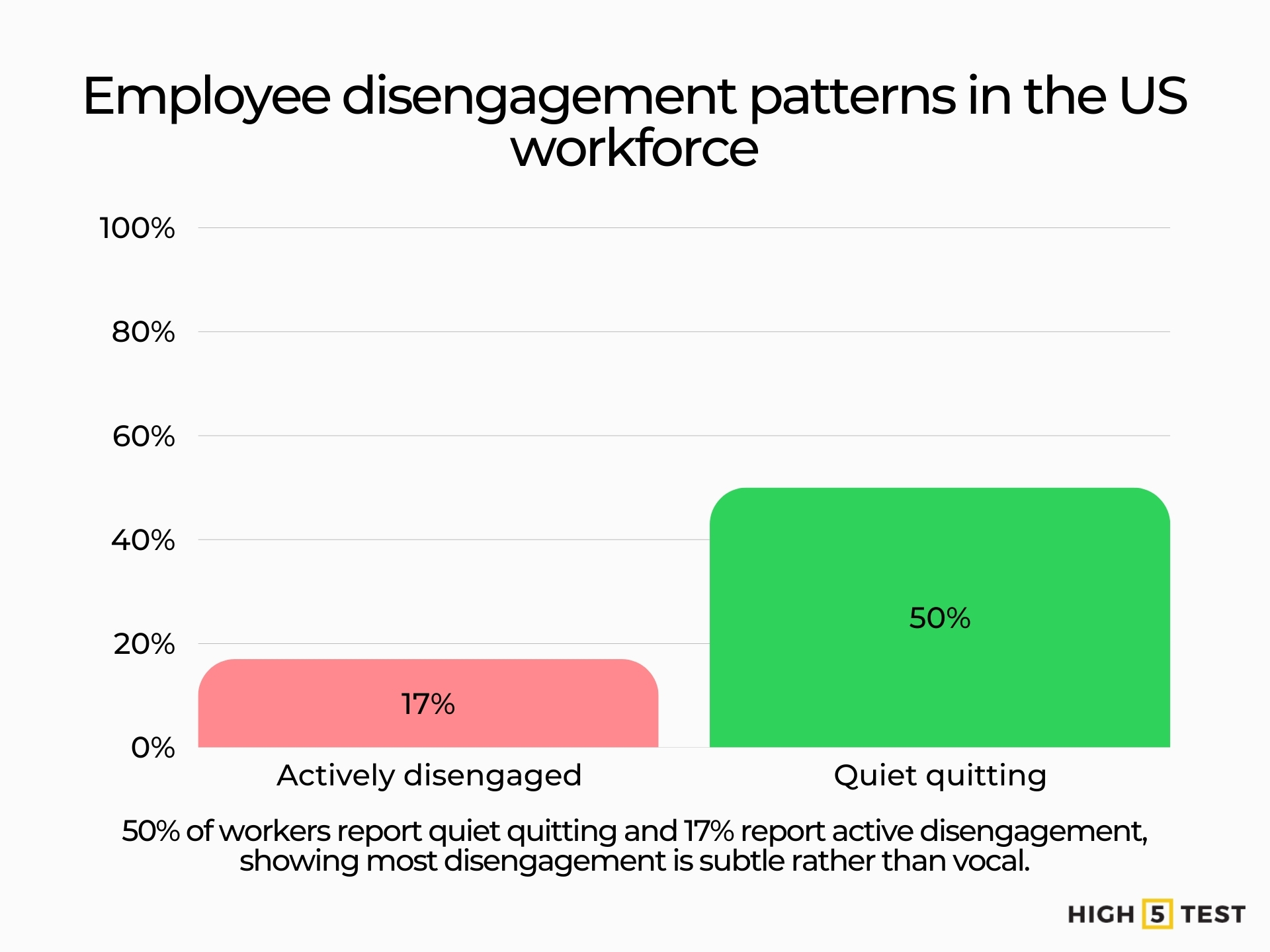
Disengagement takes different forms. In the first quarter of 2024, 17% of employees were “actively disengaged” (the so-called “loud quitters”) – up from 16% in 2023. These are workers who often undermine morale and productivity. Another 50% of workers fall into a lower-effort pattern often called quiet quitting.
Engagement has a huge business impact: Companies with highly engaged teams are 23% more profitable than those with low engagement. They also see significantly lower absenteeism and turnover. In fact, it is estimated that low engagement costs the global economy $438 billion in lost productivity. Investing in engagement isn’t just “nice to have” – it directly affects the bottom line.
Source: Gallup
Manager quality drives engagement: 70% of employees say the quality of their immediate manager or team leader is the key factor in their engagement at work. Good managers who provide clear expectations, support, and recognition can inspire higher engagement, whereas poor managers prompt people to disengage (or quit). This reinforces the adage that “people quit managers, not jobs.”
Source: Gallup
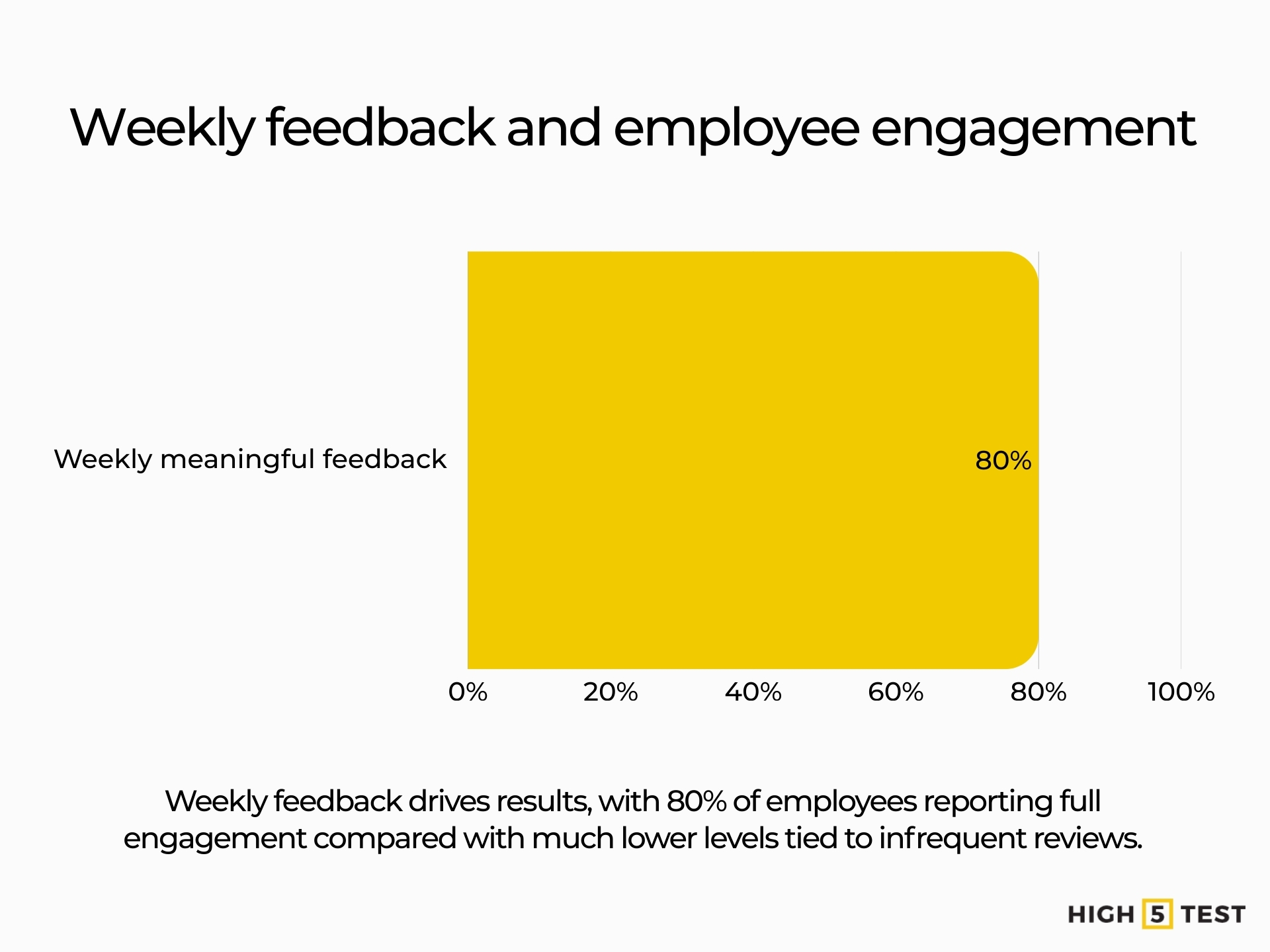
Recognition and feedback fuel engagement: A whopping 80% of employees who receive meaningful weekly feedback report being fully engaged in their work, whereas those who only get annual reviews or infrequent feedback are far less engaged. Similarly, employees who feel valued and recognized are much more likely to go the extra mile. Frequent, specific praise and coaching are simple but powerful engagement tools.
Source: Gallup
Disengagement is expensive: Actively disengaged employees (“loud quitters”) made up 17% of the workforce in 2023. These employees not only underperform, but they can drag down colleagues. A report warns that the prevalence of quiet and loud quitting is a significant drag on productivity and innovation in many organizations. Combatting disengagement through better communication, recognition, and career development is an urgent priority.
Source: Gallup
Stats on satisfaction, culture, and meaning at work
Satisfaction focuses on pay, conditions, and future outlook. Engagement and satisfaction often move together, though they are not the same.
Many people do not feel a strong passion for their work. Only 21% of people are truly passionate about their jobs. Employers can improve satisfaction with a better fit, stronger coaching, and a clearer purpose in day-to-day work.

Source: Gallup
Culture strongly shapes satisfaction. 73% of US employees say company culture is the biggest driver of their job satisfaction.
Source: Eagle Hill Consulting
Meaning and money matter: Studies find the two biggest drivers of high job satisfaction are having a “high meaning” job and competitive income. In other words, people are happiest when their work feels purposeful, and they feel fairly paid. Jobs that lack a sense of purpose or underpay employees see satisfaction plummet.
Source: Zippia
Celebrate life events: 80.8% of employees believe that celebrating employees’ personal milestones (birthdays, work anniversaries, etc.) contributes to positive work relationships and satisfaction. This shows the need for acknowledgment. Simple gestures that show the company cares about employees as people can boost morale and loyalty.
Source: Snappy
Performance reviews and ongoing feedback statistics
Annual reviews continue to lose ground as organizations shift to ongoing feedback and coaching.
Leaders express frustration with traditional reviews. An astonishing 95% of managers are unhappy with their company’s current performance review system, and 90% of HR leaders feel annual reviews fail to accurately reflect employee contributions. This lack of confidence in old-school appraisals is driving many organizations to rethink how they evaluate and develop employees.

Continuous check-ins can reduce turnover. Organizations using continuous feedback report 28% lower turnover than those relying on infrequent annual reviews. 80% of employees are more engaged with weekly manager check-ins. This engagement directly translates to staying with the company longer.
Source: Gallup
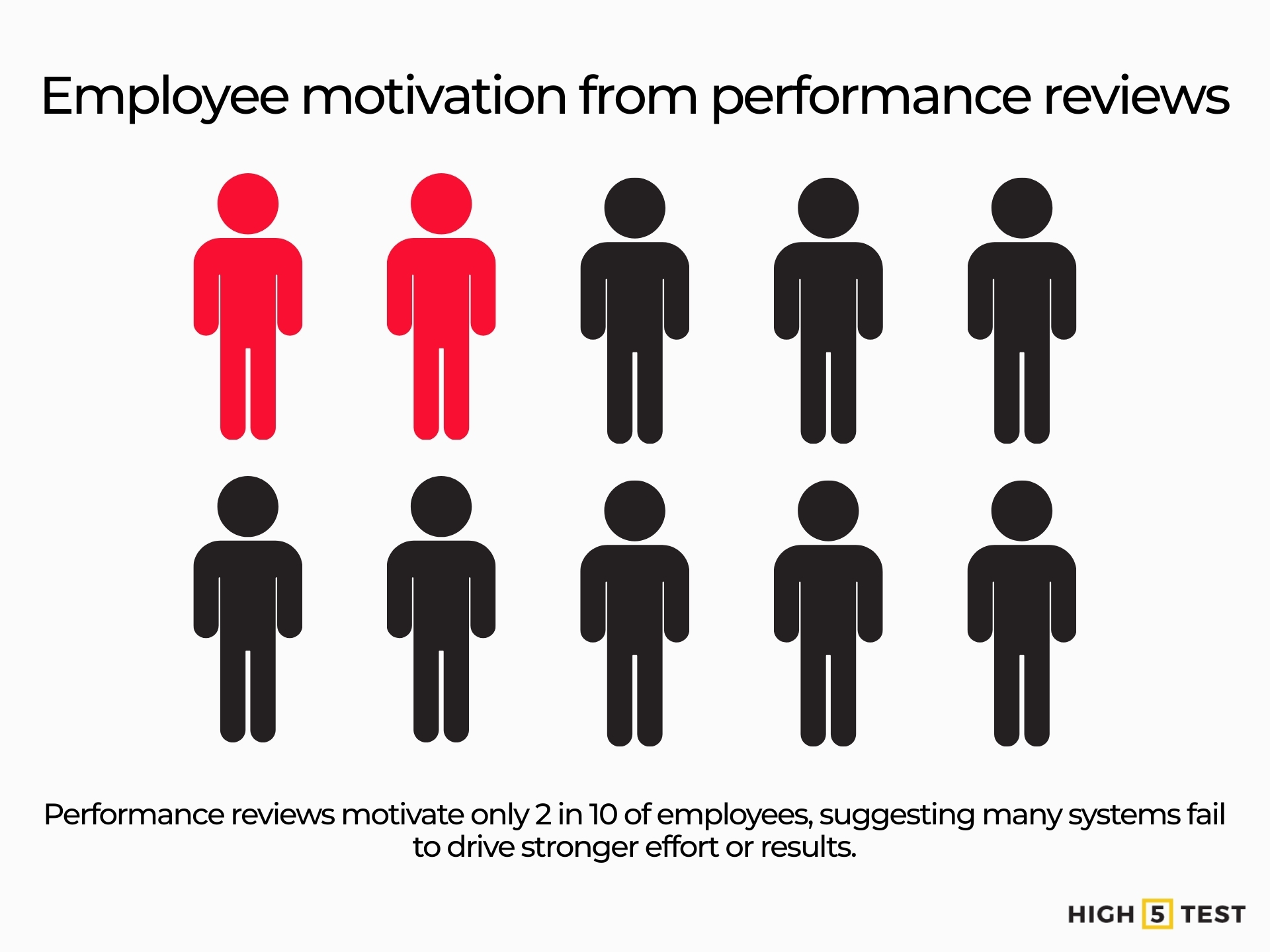
Annual reviews are on the way out: In 2016, 82% of companies used annual performance reviews, but by 2019, only 54% did. Research also suggests that only 2 in 10 employees feel their current review system motivates exceptional work.
Source: WorkHuman, ResearchGate Paper
Trust in performance ratings is low. Only 29% of workers trust how performance is evaluated at their organization. Clear criteria, manager training, and multiple inputs can improve confidence.
Source: Acorn
Employee recognition statistics
Recognition shapes culture and retention. It also matters more in distributed teams where informal praise happens less often.
Frequent recognition can lift engagement. When companies frequently recognize small wins, they see a 2X increase in employee engagement. Employees thrive on positive reinforcement – even minor accomplishments acknowledged publicly or with tokens of appreciation can significantly boost morale and effort.
Source: Quantum Workplace
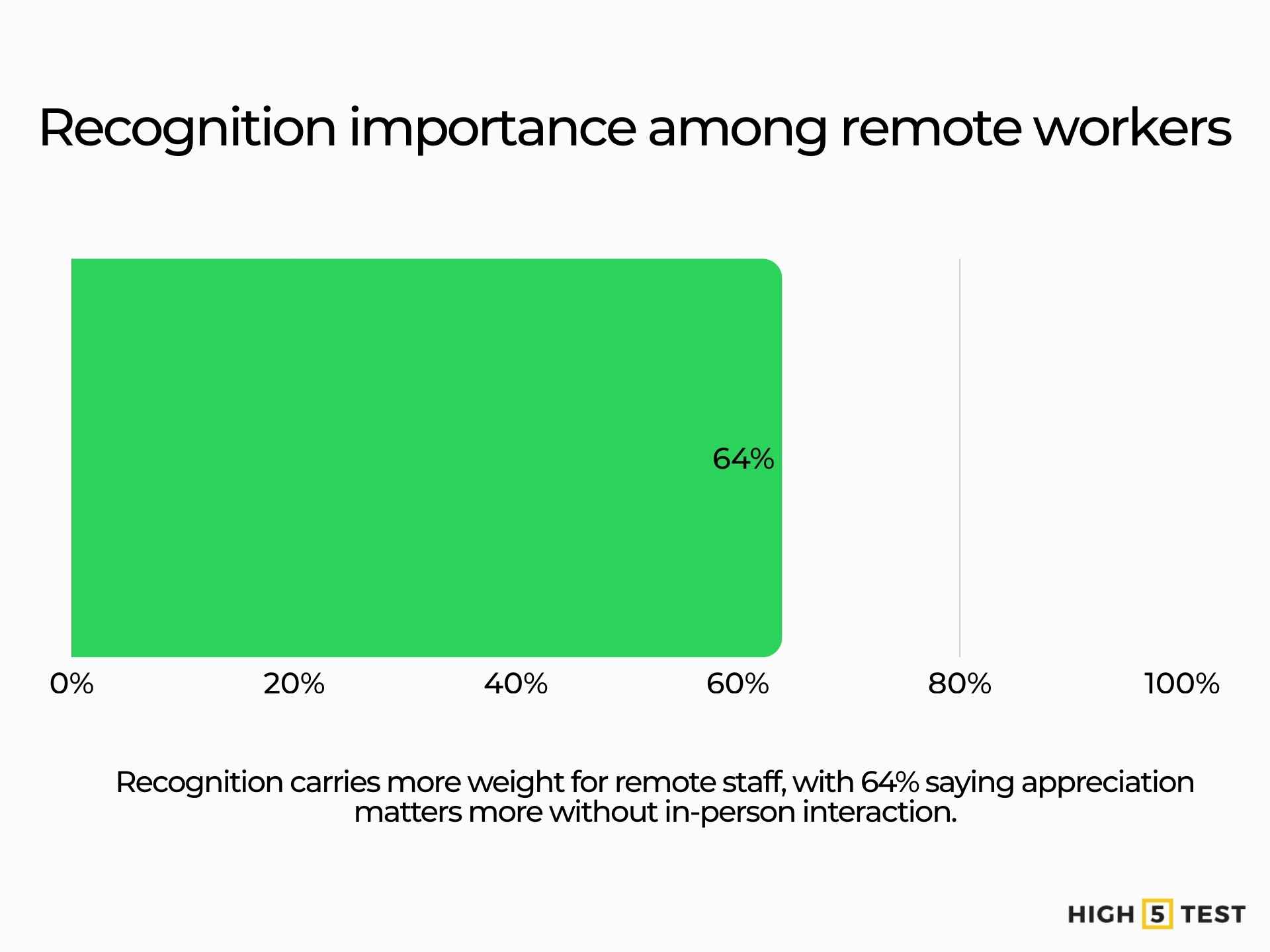
Remote workers crave recognition: 64% of employees say that recognition and appreciation are more important when working from home. Without the in-person thank-yous and office camaraderie, remote workers feel especially isolated. Regular shout-outs in team meetings, kudos on Slack, or virtual awards go a long way to keeping distributed teams motivated.
Source: Employee Engagement Group
Personal recognition can improve performance. 37% of employees say recognition from a manager or peers would help them do better work.
Source: Great Place to Work
Employees remember recognition that changes visibility and growth. The most memorable forms of recognition, according to employees, include public recognition (like a shout-out at a meeting) and getting a promotion or new responsibility as a result of good performance. Monetary rewards and gifts are appreciated, but the act of being singled out for excellence in front of one’s colleagues often has a deeper emotional impact. Align your recognition methods with what truly resonates for your team.
Source: Great Place to Work
Diversity, equity, and inclusion metrics
Diversity and inclusion efforts continue to shape hiring, pay practices, and employee experience.
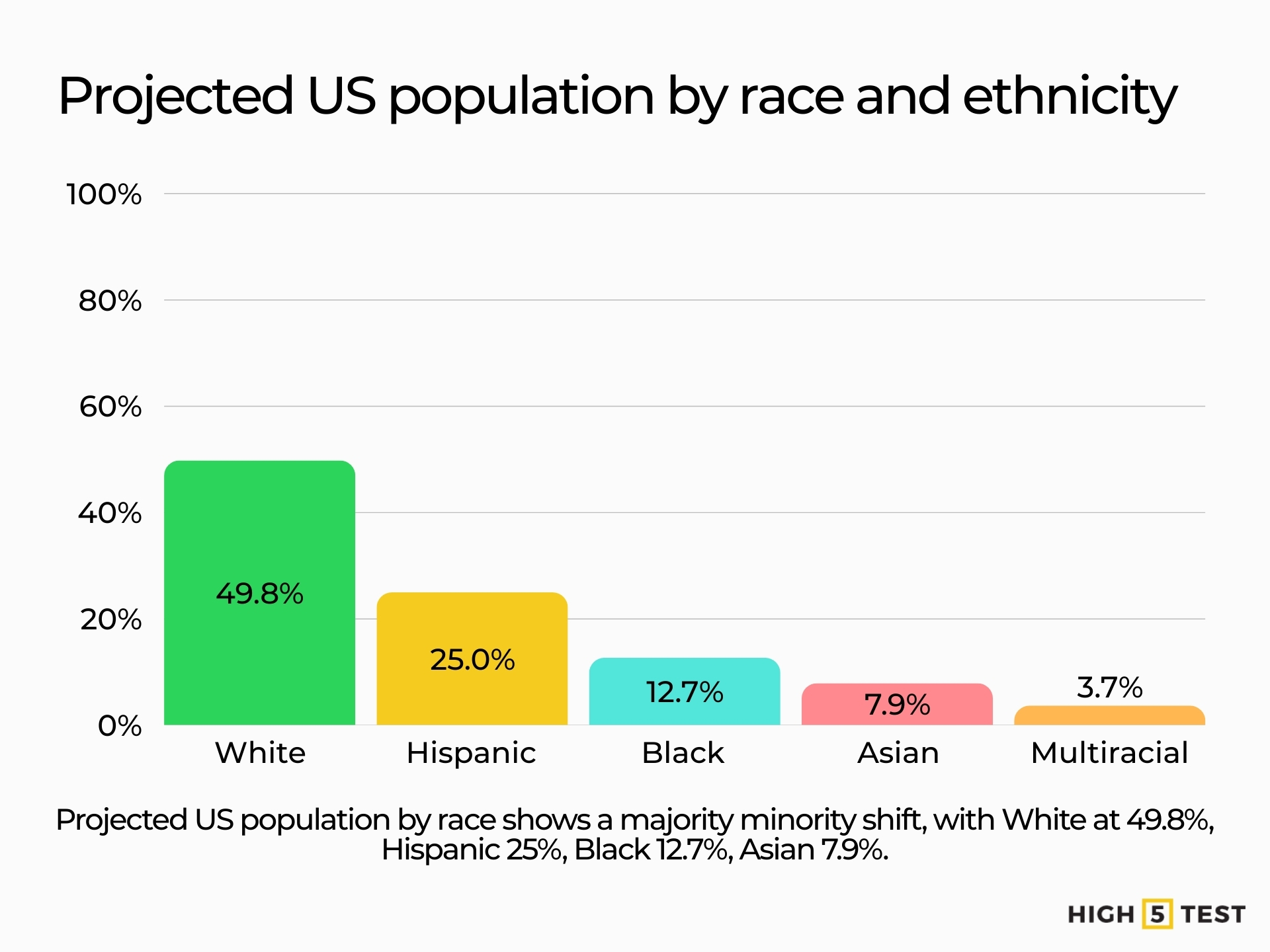
Majority-minority nation on the horizon: The U.S. population is projected to become “majority minority” in 2044 – by then no single racial group will be the majority (whites will be ~49.8%, Hispanics 25%, Blacks 12.7%, Asians 7.9%, multiracial ~3.7%). This demographic shift underscores why companies are focusing on diversity: the talent pool and consumer base are growing more diverse each year.
Source: U.S. Census
Gen Z is the most diverse generation in the US. About 48% of Gen Z in the US are racially or ethnically non-white. Many expect employers to show measurable progress on inclusion, not just statements.
Source: Market.us
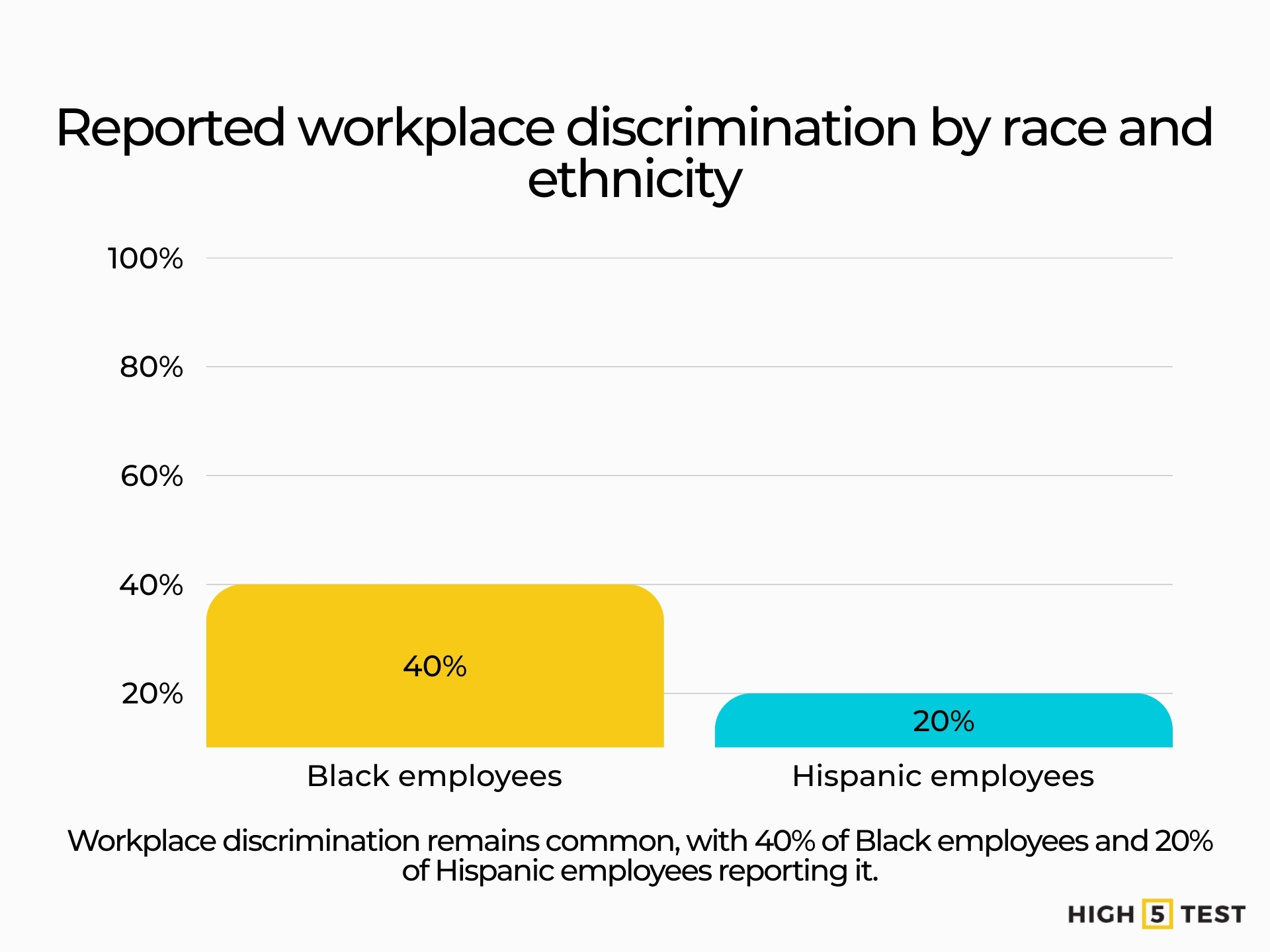
Discrimination persists: About 4 in 10 Black and 2 in 10 Hispanic employees report experiencing discrimination at work. These findings highlight that racial bias and unequal treatment remain problematic in many workplaces. Common forms reported include being passed over for opportunities or feeling targeted because of race/ethnicity. Employers need to implement bias training, clear reporting channels, and diversity programs to reduce these instances.
Source: Pew Research Center
Pay gaps persist. Women working full-time year-round earned just 83% of the median annual salary paid to men. Gender pay gaps and salary negotiation biases contribute to this perception. Research shows women often face stigma when negotiating pay (viewed as “greedy” or not team players. Transparency in pay scales and normalizing negotiation can help combat these disparities.
Source: AAUW
Employee resource groups (ERGs) are widespread: 90% of Fortune 500 companies have ERGs to support various identity groups (women, LGBTQ+, ethnic minorities, veterans, etc.). These ERGs provide mentorship, networking, and a voice to underrepresented employees. They also advise leadership on inclusion policies. The prevalence of ERGs indicates that large employers see them as effective in fostering belonging and driving DEI goals.
Source: McKinsey
Blind hiring can reduce bias. Studies have found that using “blind” recruitment practices (removing names/gender/ethnicity from resumes) can significantly increase the hiring of women and minorities. For example, one famous orchestra study showed that blind auditions raised the success rate of female musicians from 25% to 46%. Removing implicit bias in hiring by focusing on skills and abilities is a proven way to produce more diverse teams.
Source: Harvard Business School
Statistics on burnout risk in managers and teams
Burnout is prolonged stress that leads to exhaustion and detachment. It shows up in performance, absences, and turnover.
Work stress is widespread: Nearly 31% of U.S. workers feel stressed because of their job often or always. 47% of employees reported workload as the main contributor to their stress, pay/compensation (42%), poor leadership or management (40%), understaffing (37%), and their nature of work (30%). This result illustrates that stress isn’t just “in our heads” – it’s manifesting in real exhaustion and health issues, which grew worse through the pandemic years.

Source: SHRM
Middle managers are at the highest risk: Middle managers have the highest burnout rate of any employee group, at 43% reporting being burned out. Caught between executive directives and frontline demands, managers often absorb pressure from all sides. They also tend to feel they get insufficient support from above. This stat warns companies to pay special attention to supporting mid-level leaders (through mental health resources, reasonable span of control, etc.), or risk losing them.
Source: Georgia FMC
Women experience more burnout: Female employees experience burnout 59% more often than male employees, according to recent data. Employers can respond with fair workload distribution, flexibility, and stronger support systems.
Source: NAMI
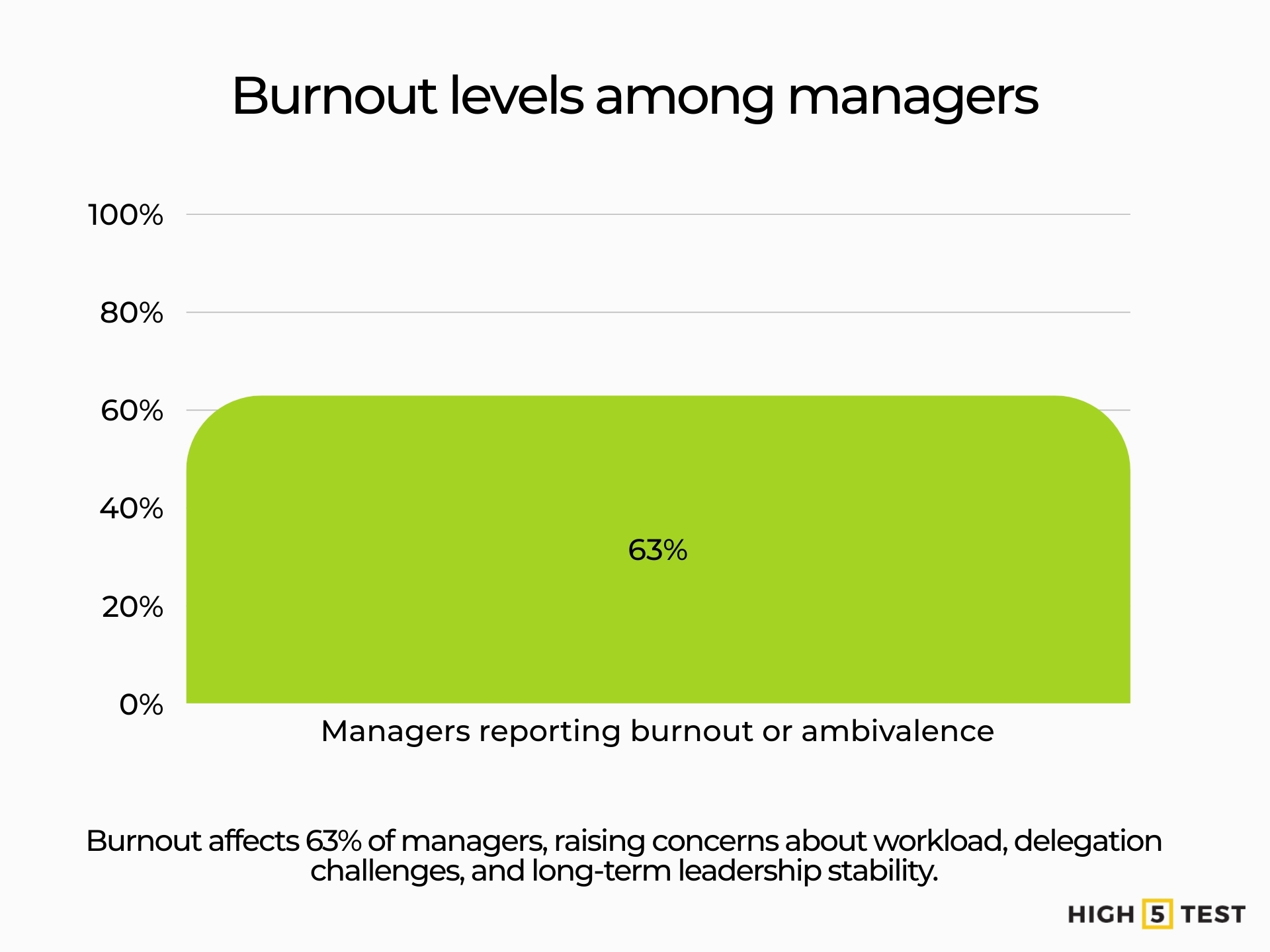
Managers also report feeling stretched thin. 63% of managers report feeling burned out or ambivalent in their current position. Many managers feel unequipped to prioritize tasks, delegate, or support their teams’ well-being because they themselves are stretched thin. Employers can respond by training managers in stress management, staffing adequately, and modeling reasonable work hours from the top.
Source: The Grossman Group
Burnout undermines retention and performance: Burnout isn’t just an individual health issue – it’s an organizational threat. Burned-out employees are three times as likely to be actively seeking a different job (45 percent versus 16 percent of those who did not report burnout). As noted above, 95% of HR leaders see burnout as a serious obstacle to retaining talent. Investing in wellness and reasonable workloads is ultimately an investment in productivity and loyalty.
Source: SHRM
Data on wellness programs and employee trust
Wellness programs and mental health benefits continue to expand. Trust and awareness remain common gaps.
Mental health is a top well-being focus for many employers. 47% of employers consider mental health as the most important well-being dimension. Just a few years ago, topics like stress, anxiety, or depression were seldom discussed at work; now they are front and center. Leadership recognition of this issue is the first step – the next is following through with resources and support.
Source: Business Group on Health
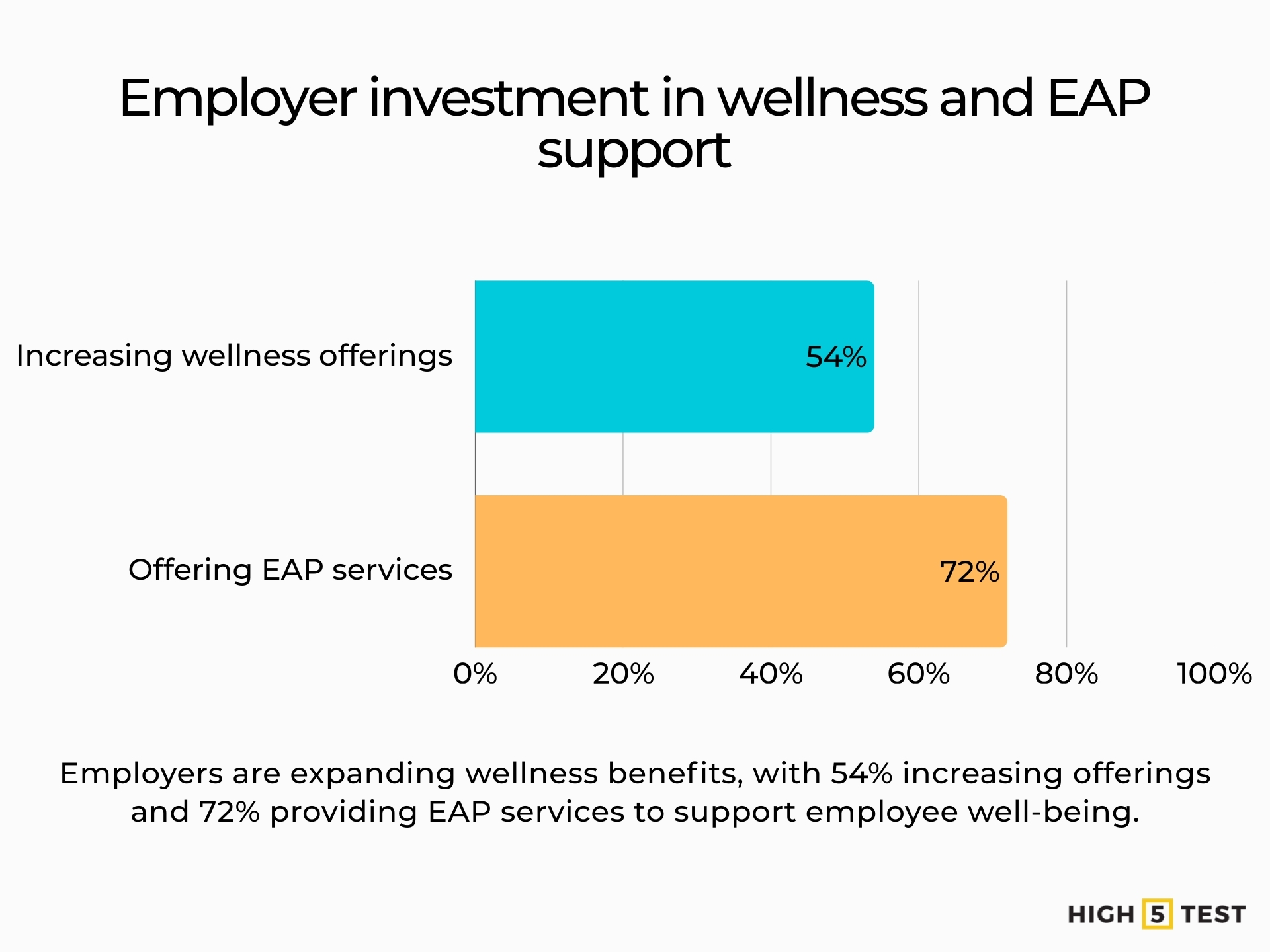
Many employers are expanding wellness support. Surveys show that a majority of companies are expanding investments in these areas, with 54% of employers increasing wellness offerings, and 72% of employers offering EAP services seeking to provide them to employees. Utilization of Employee Assistance Programs (EAPs) for counseling is also up. Employers are expanding benefits to include things like therapy coverage, mindfulness training, and resilience workshops, seeing these not as perks but as essentials.
Source: Employee Benefit Research Institute
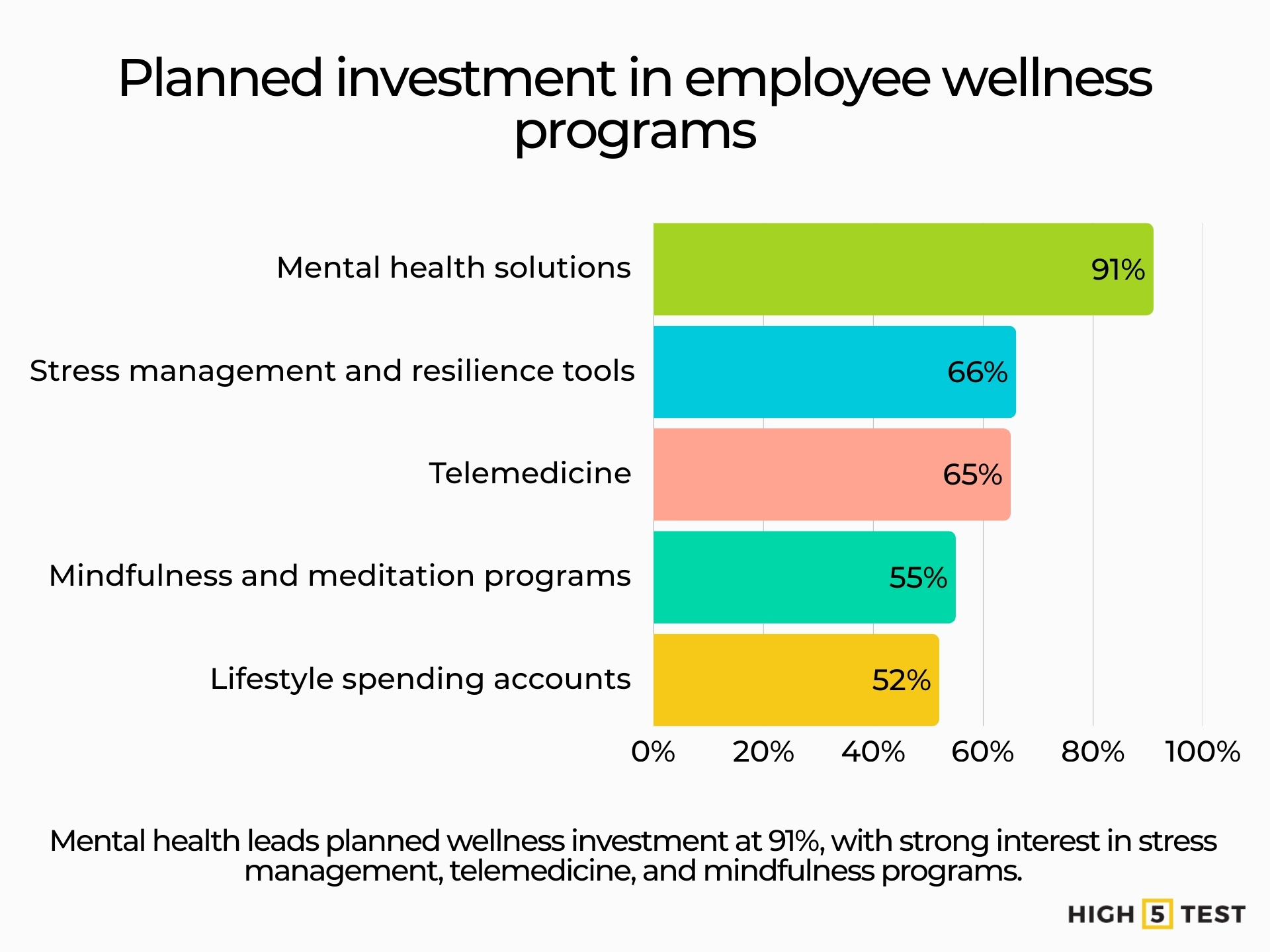
Wellness programs boost loyalty: A recent study found that companies anticipate greater investment in mental health solutions (91%), stress management and resilience tools (66%), telemedicine (65%), mindfulness and meditation programs (55%), and lifestyle spending accounts (52%).
Source: Wellable
Hybrid work can support work-life balance. 80% of hybrid workers report a better work-life balance and reduced feelings of anxiety. This has had a direct effect on health conditions related to stress, with 70% of employees experiencing fewer symptoms such as severe headaches, digestive issues, and tension-related pain. People greatly value the autonomy to balance life’s demands – whether that means working from home to avoid a commute or adjusting hours to handle family needs. Flexibility, as part of a wellness strategy, can alleviate stress and prevent burnout.
Source: International Workplace Group
Employees still question employer care and program awareness. Only 24% of employees strongly agree that their organization cares about their overall well-being. And among employees who know they have an EAP available, 81% say they’ve never used it, while 31% do not know if they have an EAP program or not. Ensuring adequate staffing (to avoid overwork), encouraging time-off use, and creating a culture where taking care of oneself is not stigmatized are all critical. Wellness culture has to be modeled from the top – e.g., leaders openly taking mental health days or actually unplugging during vacation, so employees feel permission to do the same.
Source: Gallup
Data on remote work impacts and tradeoffs
Flex work remains a core expectation in many industries. Employers are still refining policies that support productivity and connection.
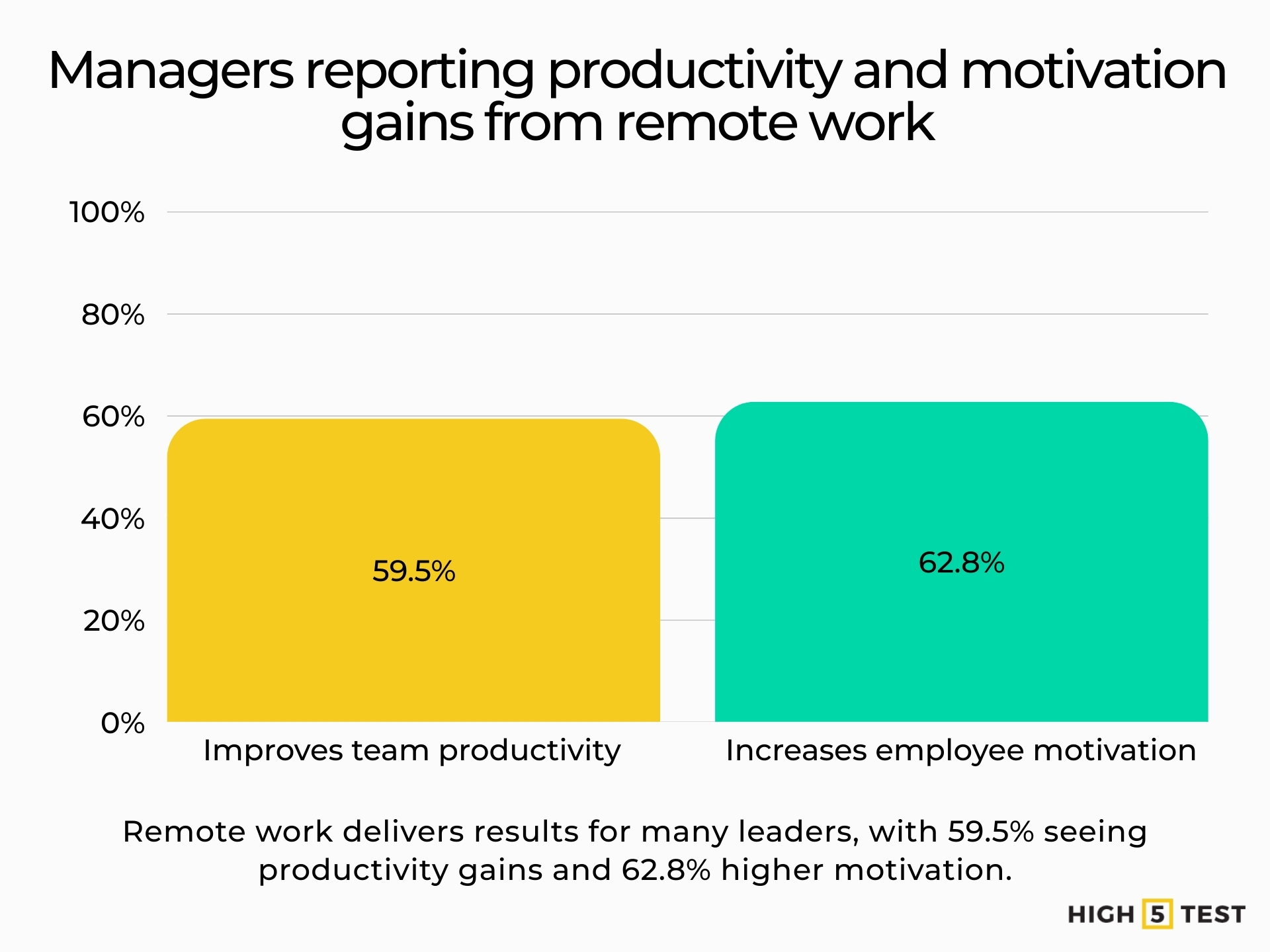
Managers often report productivity gains with remote work. About 59.5% of managers believe remote work improves team productivity, and 62.8% say it increases employee motivation. Many leaders have been pleasantly surprised by sustained or even enhanced productivity in work-from-home setups (likely due to fewer commutes and the ability to focus without office distractions). This has helped lessen the old stigma that remote workers are less dedicated.
Source: University of Birmingham
Hybrid is the new ideal: Nearly three-quarters (72%) of all respondents’ (employers and employees) organizations have elected to mandate working from the office—either on set days of the week (37%), with Monday to Wednesday being the most popular, or a set number of days (35%). In other words, a large segment of workers do value some in-person time for collaboration and social connection, but not the traditional 5-day office routine. The majority would prefer either hybrid or fully remote schedules, forcing companies to rethink rigid in-office policies.
Source: Cisco
Connection can be a problem for some remote workers. 53% of those who work from home at least some of the time say working from home hurts their ability to feel connected with co-workers. Despite video conferencing, remote workers can feel like second-class participants if hybrid meetings aren’t managed well. Additionally, company culture can suffer when people rarely meet face-to-face. Employers are experimenting with solutions – from better meeting facilitation (e.g., “all-remote” meetings even if some are in the office) to periodic offsite retreats to build camaraderie.
Source: Pew Research Center
Flexible schedules improve multiple outcomes: Companies that allow flexible scheduling (remote or hybrid options) see improvements in productivity, employee connection, and even company culture. Flexibility shows trust in employees and helps work fit around life, which boosts morale. It can also expand the talent pool beyond geography. However, flexibility requires strong communication practices to keep everyone aligned.
Source: Cisco
Office space needs are changing. Half of the largest international employers expect to shrink their global workspaces, although most are only planning to reduce by between 10% and 20%. Many organizations realized they simply don’t need as much physical office capacity when a large share of employees are remote at any given time. The office is gradually shifting to serve as a collaboration hub or meeting space, rather than rows of permanent desks. This has major implications for commercial real estate and how companies invest their resources.
Source: The Guardian
Many large employers plan to keep remote work options. 80% of Fortune 500 CHROs reported they have no plans to reduce remote work flexibility in the next 12 months. In fact, some companies that initially pushed for full returns have backtracked after facing resistance and even higher turnover. The consensus among many top HR leaders is that hybrid/remote arrangements will remain a central feature of the working world, and the focus now is on optimizing those models rather than reversing them.

Source: Gallup
Future of work data and predictions
Skills, AI, and career paths are shifting quickly. HR teams are planning for major changes in how work gets done and how people grow.
Rapid skill disruption: On average, workers can expect that two-fifths (39%) of their existing skill sets will be transformed or become outdated over the 2025-2030 period. This stat reflects how automation, AI, and evolving business needs are drastically altering job skill requirements. Nearly half of all employee skill sets will soon be outdated – emphasizing the need for continuous reskilling and upskilling programs. Lifelong learning is no longer optional.
Source: World Economic Forum
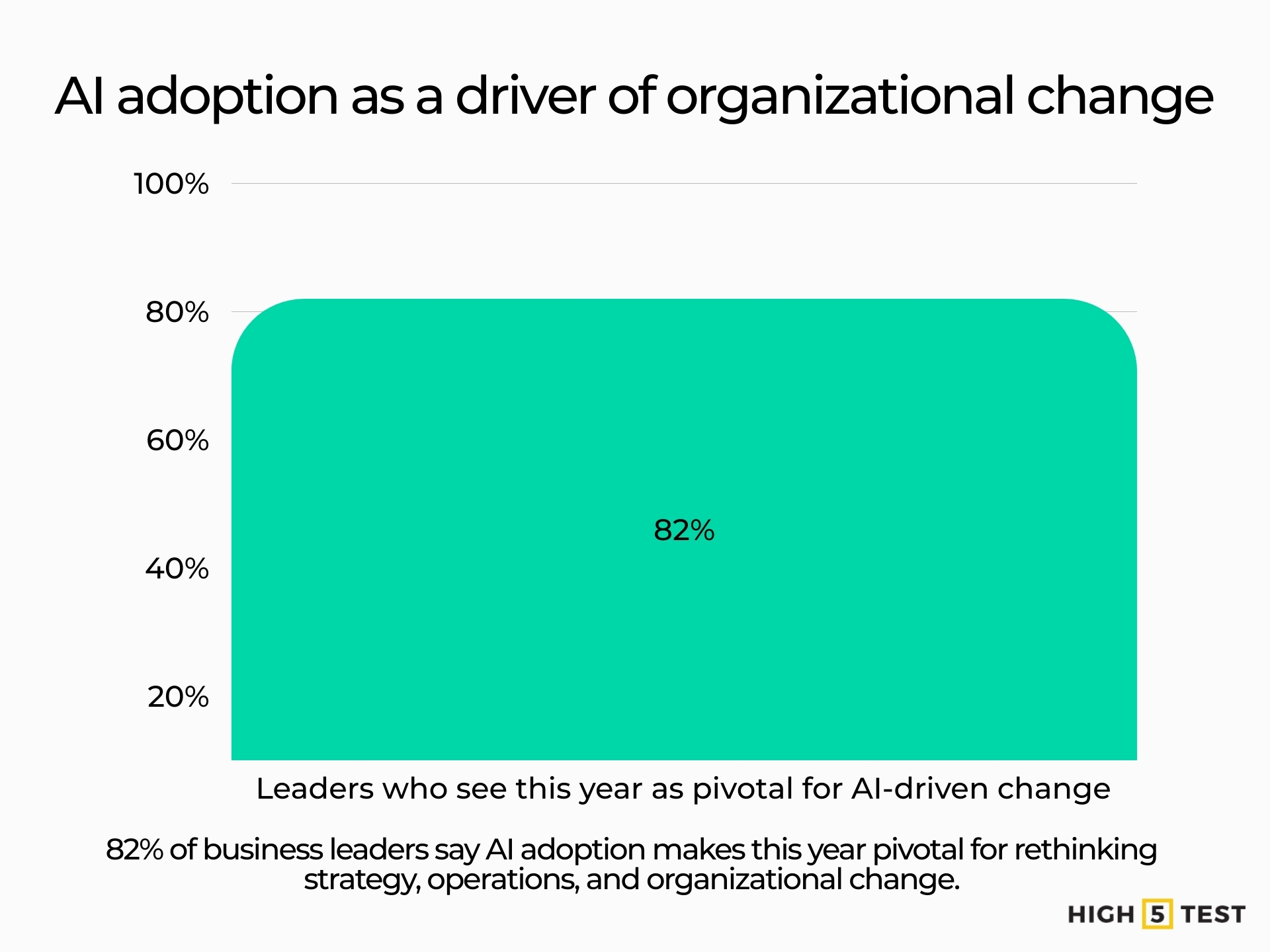
Technology adoption leads the way: A strong majority of business leaders see frontier technologies such as AI and machine learning as key drivers of organizational change. About 82% of leaders said this year is pivotal for rethinking strategy and operations in light of AI adoption. Embracing digital transformation is seen as essential for competitiveness. However, this also means HR will play a key role in managing tech-driven change – from handling workforce transitions to addressing ethical implications of AI.
Source: Microsoft
AI is a disruptor – and opportunity: In one survey, 45% of HR leaders cite AI and technology adoption as the biggest disruptor to the workforce over the next decade. Implementation choices will shape fairness, training needs, and job design.
Source: HRO
Nonlinear careers on the rise: 71% of candidates have applied for jobs outside their current area of expertise. Hiring practices that value transferable skills can widen the talent pool.
Source: My Perfect Resume
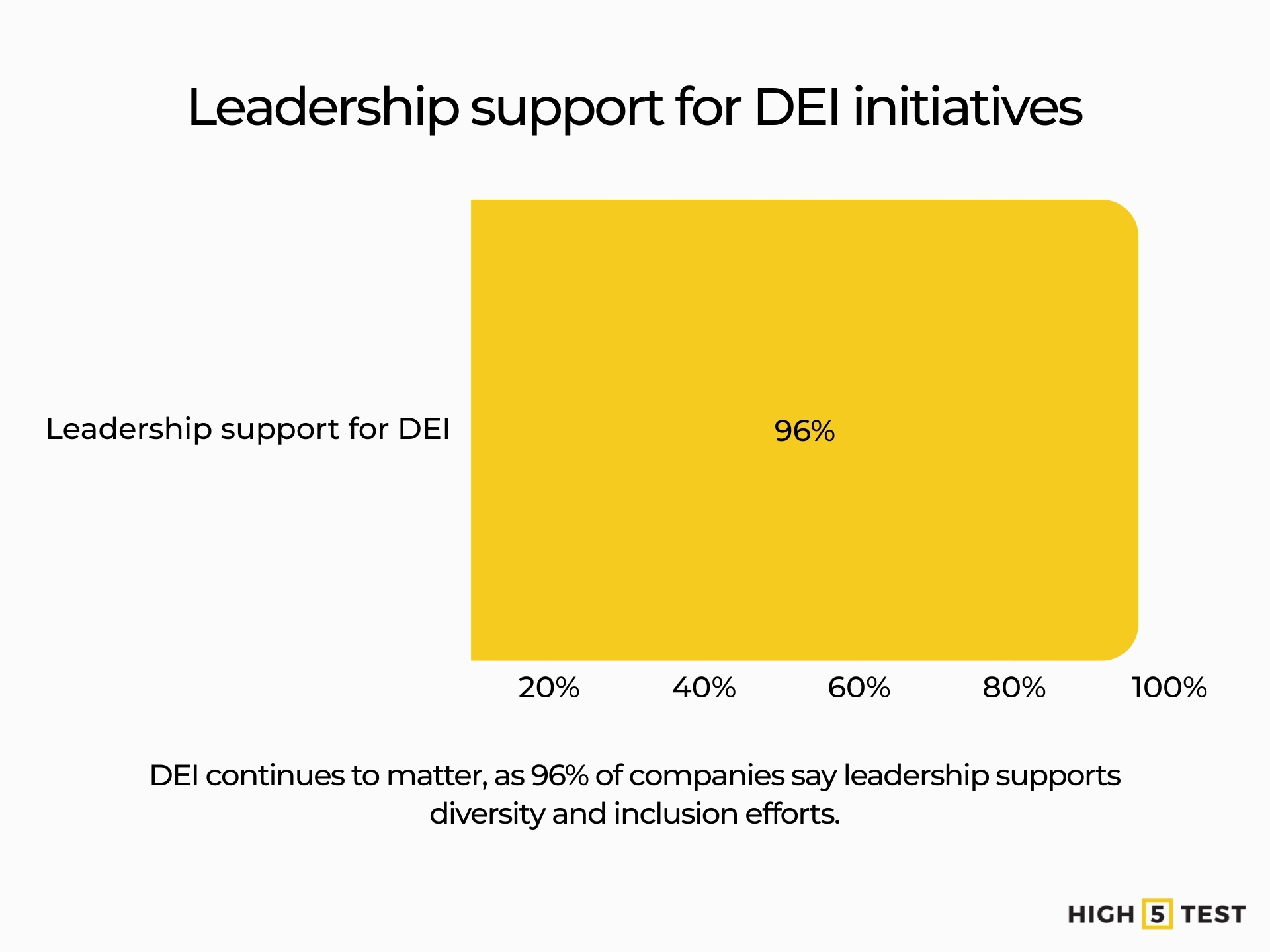
DEI remains a priority for the future: 96% of companies have leadership support for Diversity, Equity, and Inclusion initiatives going forward. Despite some political pushback in certain regions, the vast majority of organizations recognize that DEI is not a fleeting trend but a fundamental aspect of business success and employer brand. Future-of-work strategies almost universally include goals to foster more inclusive workplaces and leadership pipelines.
Source: ACCP
Remote work will persist long-term: As noted, flexible work arrangements aren’t a pandemic blip. Surveys of top companies show a sustained commitment to remote/hybrid models – for example, 82% of large-company CHROs plan to maintain current remote work levels or expand them. Additionally, workforce expectations (especially among younger generations) are cementing remote work as a norm. The future workplace is looking to be a distributed one, with implications for everything from office design to cybersecurity and onboarding practices.
Source: PWC
Conclusion
These HR statistics point to a workplace shaped by flexibility, higher expectations, and tighter competition for talent. Teams that track hiring pipelines, onboarding quality, engagement signals, and pay practices can make better decisions faster. Use these benchmarks to spot gaps, set priorities, and build people practices that keep pace with change.