Hybrid and remote work have changed how leaders manage performance and security. Many US employers now rely on employee monitoring tools, often called Bossware. These tools can track online activity, workplace access, and performance signals through analytics and AI.
This report summarizes employee monitoring statistics for 2024 to 2025, with a US focus and global context when helpful. You will see how common monitoring is, what employers track, how workers respond, and what makes monitoring more acceptable inside a healthy workplace culture.
10 most interesting employee monitoring statistics
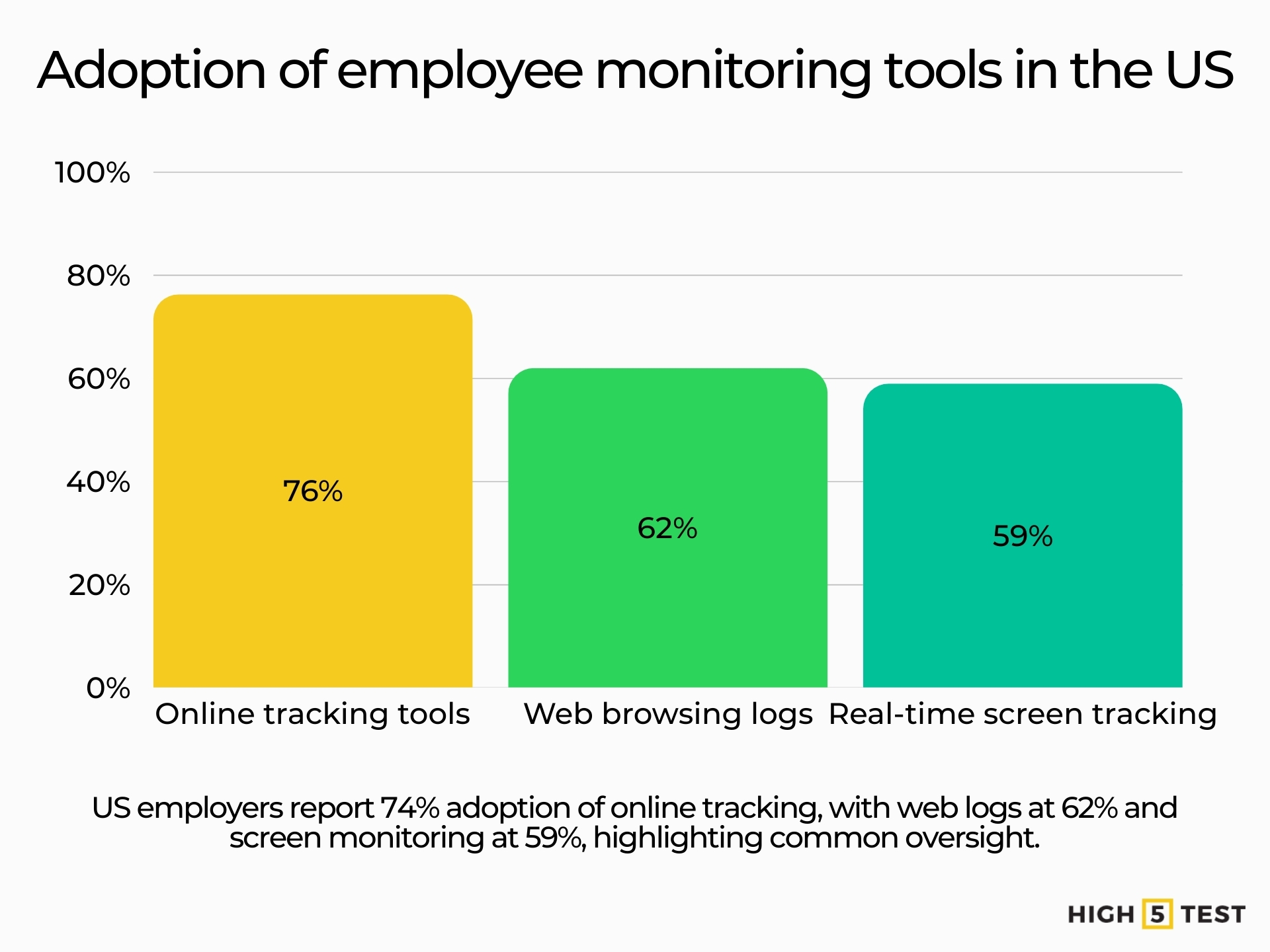
- 74% of US employers now use online tracking tools, meaning digital surveillance of websites, apps, or screen activity has become standard practice rather than an exception.
- 75% of US employers monitor physical workplaces, using tools such as cameras, badge systems, and controlled access points alongside digital tracking.
- 61% of US companies use AI-powered analytics to measure employee productivity or behavior, signaling a shift from simple monitoring to algorithm-driven performance evaluation.
- 67% of US employers collect biometric data, including fingerprints or facial recognition, raising significant privacy and data-security concerns.
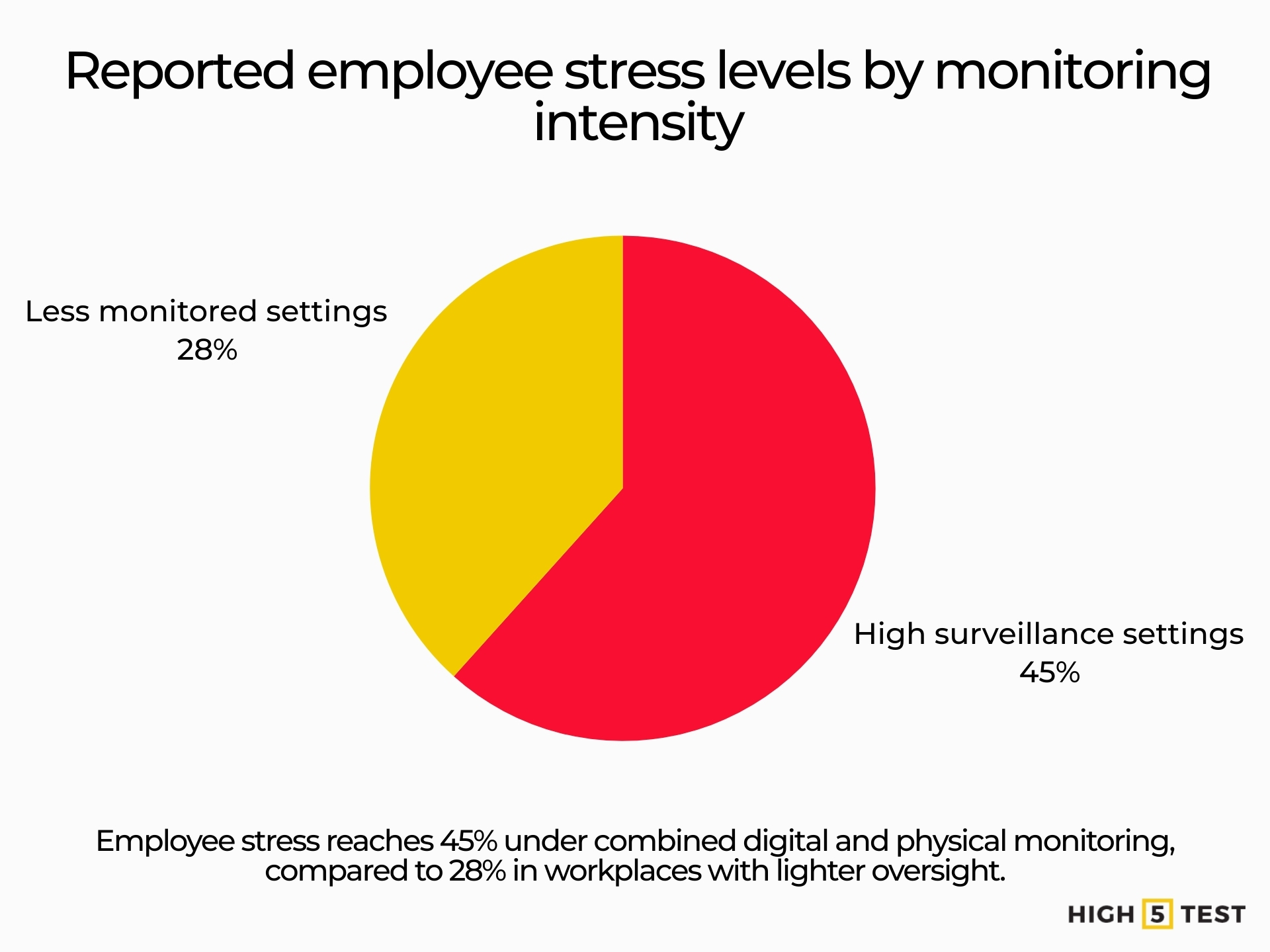
- Employees in high-surveillance workplaces report 45% stress levels compared to 28% in low-surveillance environments, a 17-point gap linked directly to monitoring intensity.
- 33% of employees feel constant stress, wondering if they are being watched, while 24% take fewer breaks to avoid appearing idle, showing how monitoring changes daily work behavior.
- 59% of employees report stress or anxiety caused by workplace surveillance, indicating that monitoring often harms mental well-being rather than improving performance.
- 46% of employers use monitoring data in termination decisions, proving that surveillance tools directly influence high-stakes employment outcomes.
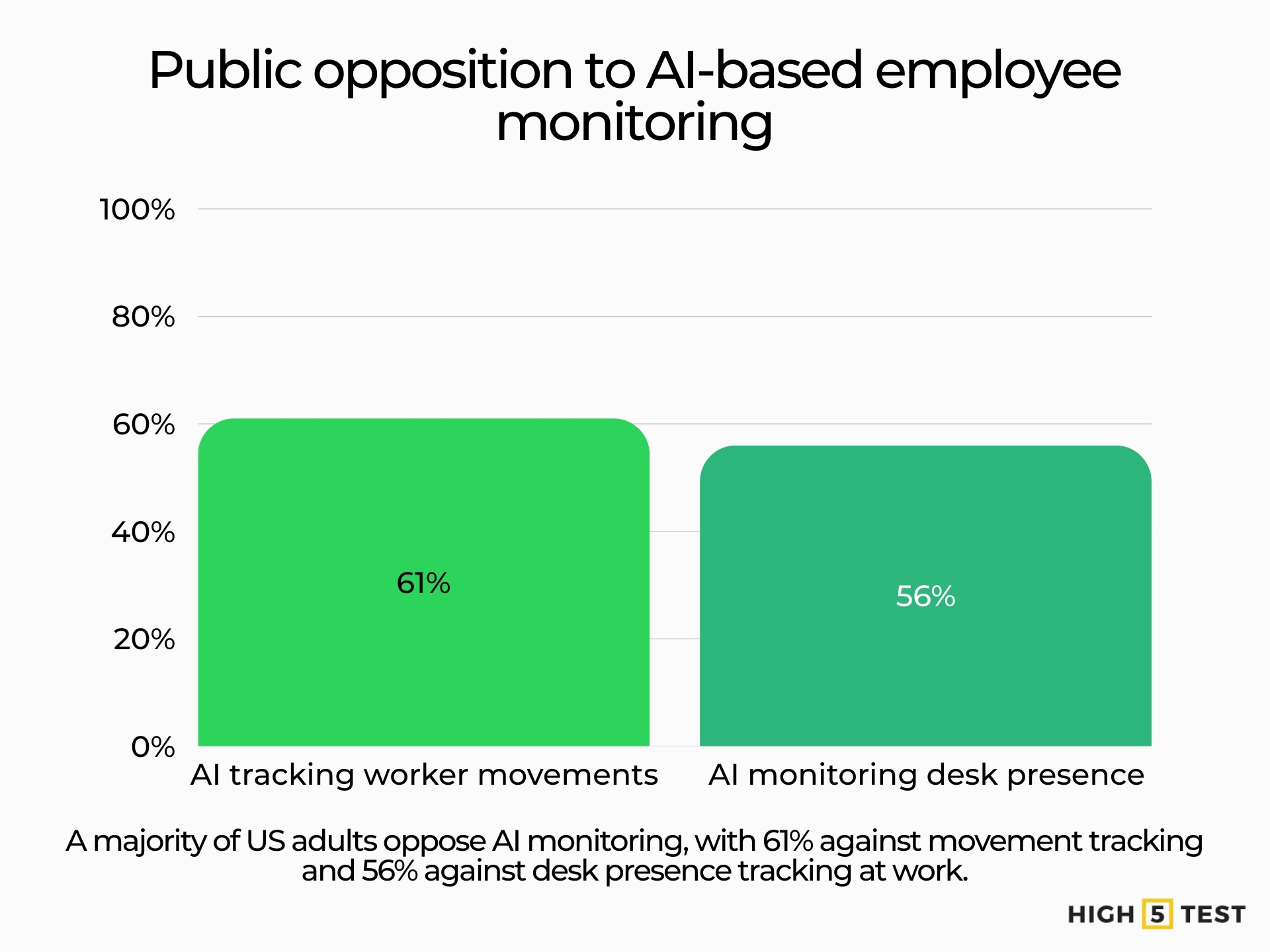
- 61% of Americans oppose employers using AI to track workers’ movements, and 56% oppose AI monitoring desk presence, highlighting a major trust gap between employers and employees.
- 71% of employees worldwide are digitally monitored, demonstrating that workplace surveillance has become a global norm rather than a US-only trend.
20+ employee monitoring statistics in the U.S. (2024/2025)
Adoption rates, remote vs in-office, and employer size
The prevalence of monitoring in U.S. workplaces is high and rising:
According to a Feb 2025 survey of 1,500 employers and 1,500 employees, 74% of US employers use online tracking tools, including real-time screen tracking (59%) and web browsing logs (62%). This level of adoption makes policy clarity a core part of day-to-day operations.
Source: Express VPN
Physical surveillance is almost equally widespread: 75% of employers reportedly use monitoring methods like video surveillance (69%) and biometric access controls (58.3%). Physical tracking can feel less personal than screen tracking, yet it still affects comfort and trust.
Source: Express VPN
Workers in environments with both online and physical surveillance report higher stress. 45% stress in high-surveillance settings, compared to 28% in less monitored settings. The pattern points to cumulative pressure when monitoring stacks up across channels.
Source: Express VPN
Key takeaway: Monitoring is now a standard management tool in many US workplaces. The differentiator is not adoption. The differentiator is restraint, transparency, and how leaders use the information.
Data on common employee data points employers collect
Digital monitoring: Websites, apps, screens, and files
Among the employers using online tracking tools, 59% monitor real-time screens, and 62% log web browsing. These tools can help security teams investigate incidents, yet they can also encourage performative activity.
Source: Express VPN
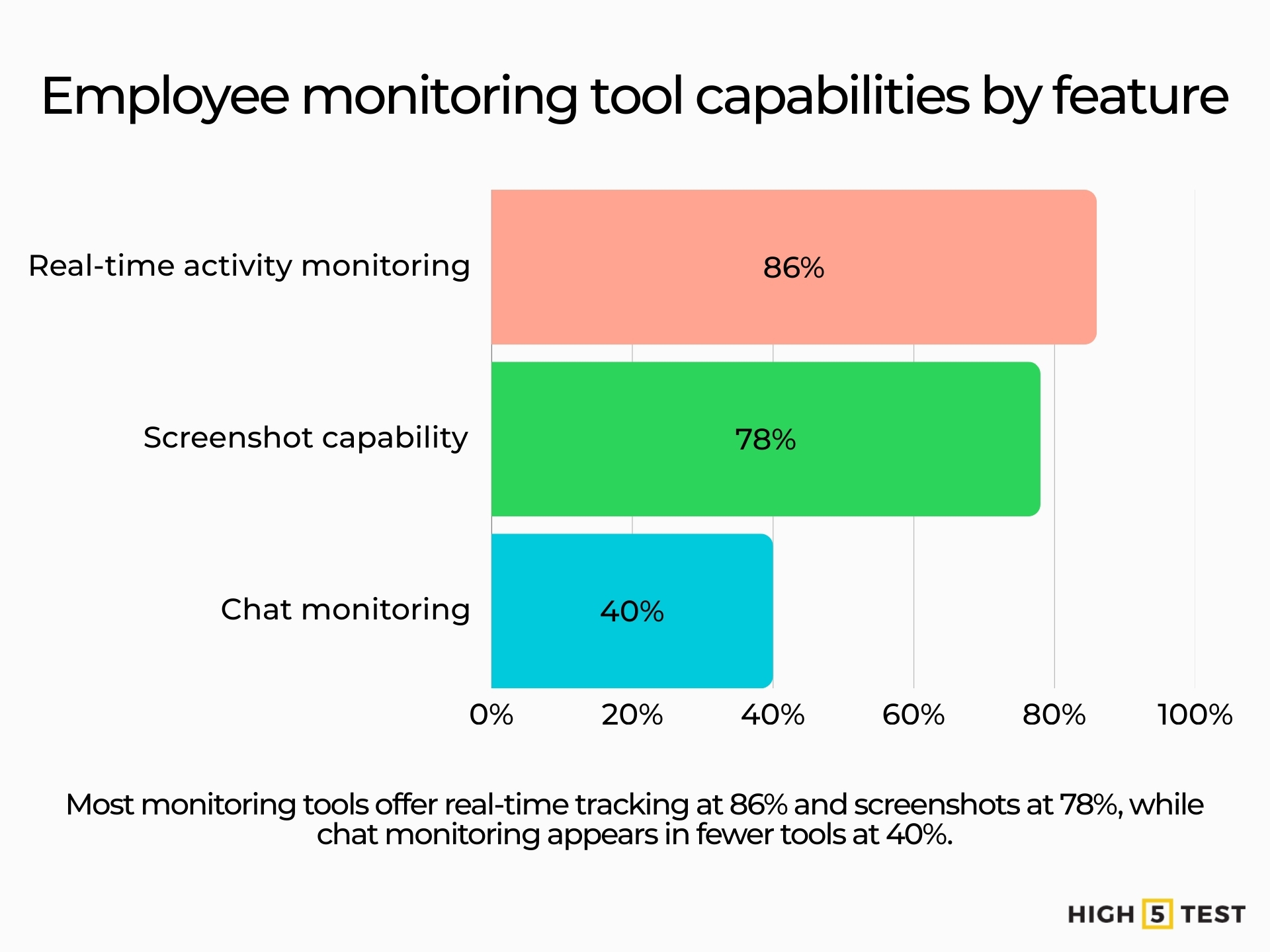
86% of monitoring tools offer real-time activity monitoring; 78% include screenshot capability; 40% include chat monitoring. Capability does not equal necessity, so selecting only what you need matters.
Source: Standout CV
This type of tracking can shift attention from outcomes to observability. Teams often feel that shift quickly. Managers should set performance expectations that prioritize results so people do not confuse movement with value.
Communication monitoring: Email, chat, and calls
Public sentiment in the US shows discomfort with employer use of AI for surveillance-style monitoring:
In a 2023 survey, a majority of U.S. adults oppose the use of AI by employers to track workers’ movements (61%) or monitor when office workers are at their desks (56%). If workers reject the idea in theory, they will resist it even more when it shows up in daily tools.
Source: Pew Research Center
Communication monitoring can also trigger backlash, especially when employees feel it crosses into personal space. If an organization monitors communications, it should define scope, purpose, retention, and access. That specificity lowers fear and reduces misunderstandings.
Physical and biometric monitoring: Cameras, badges, and biometrics
Physical monitoring often shows up in access systems and on-site security practices:
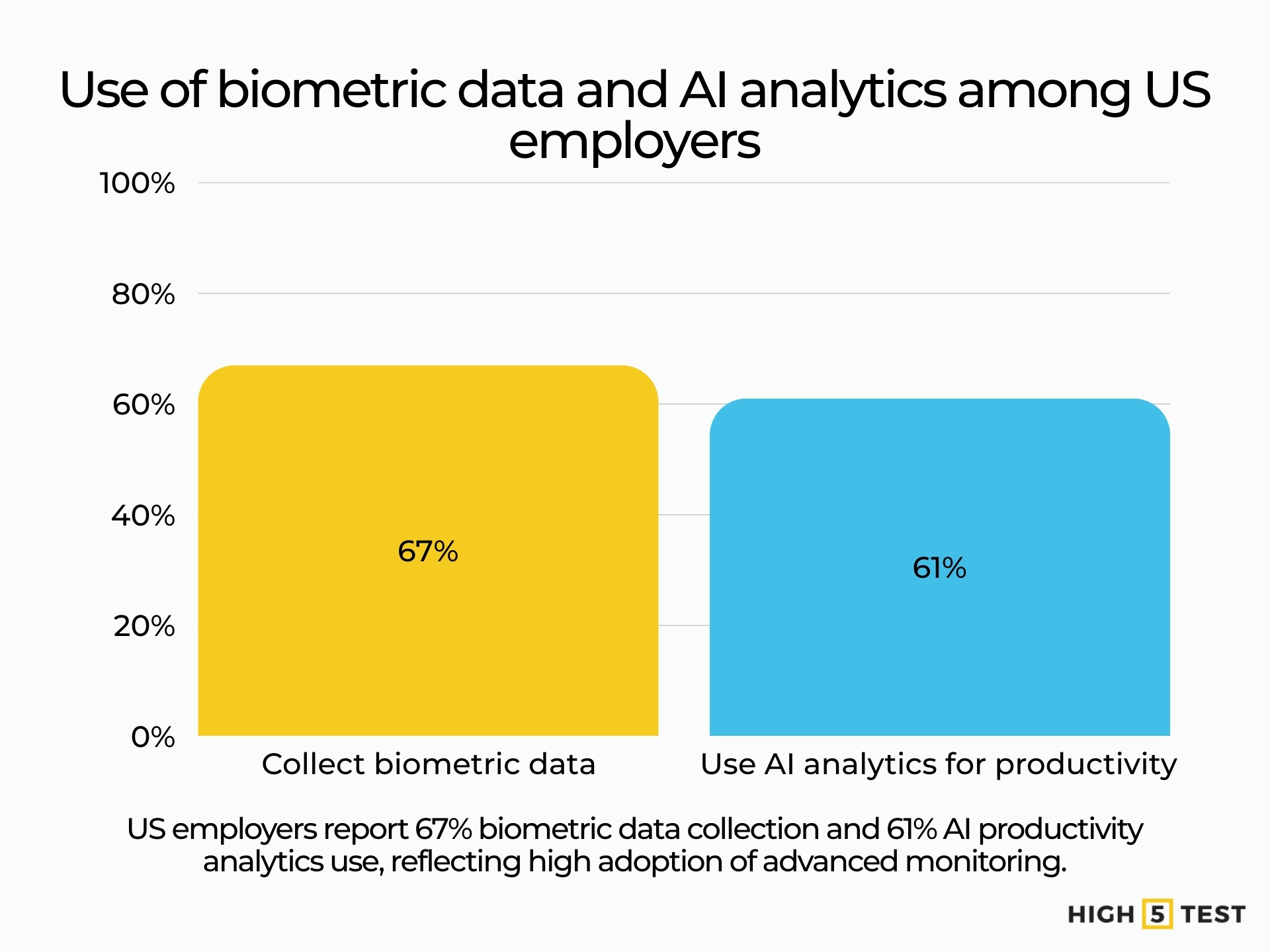
67% of US employers collect biometric data, and 61% use AI analytics for productivity monitoring. Biometric data is sensitive and hard to replace, so security controls and strict access rules matter.
Source: Express VPN
On-site monitoring can support safety and compliance. It can also create anxiety when it feels constant or unexplained. Employers should explain what is collected, where it is stored, and who can see it. That clarity helps people feel respected even when controls are necessary.
Statistics on employee monitoring and productivity
Many leaders cite productivity, security, and compliance as reasons to monitor. The data suggests a tradeoff.
68% of employers believe monitoring improves work output, while 59% of employees report feeling stress or anxiety due to surveillance. A stressed workforce may deliver short-term activity, then burn out or disengage.
Source: Express VPN
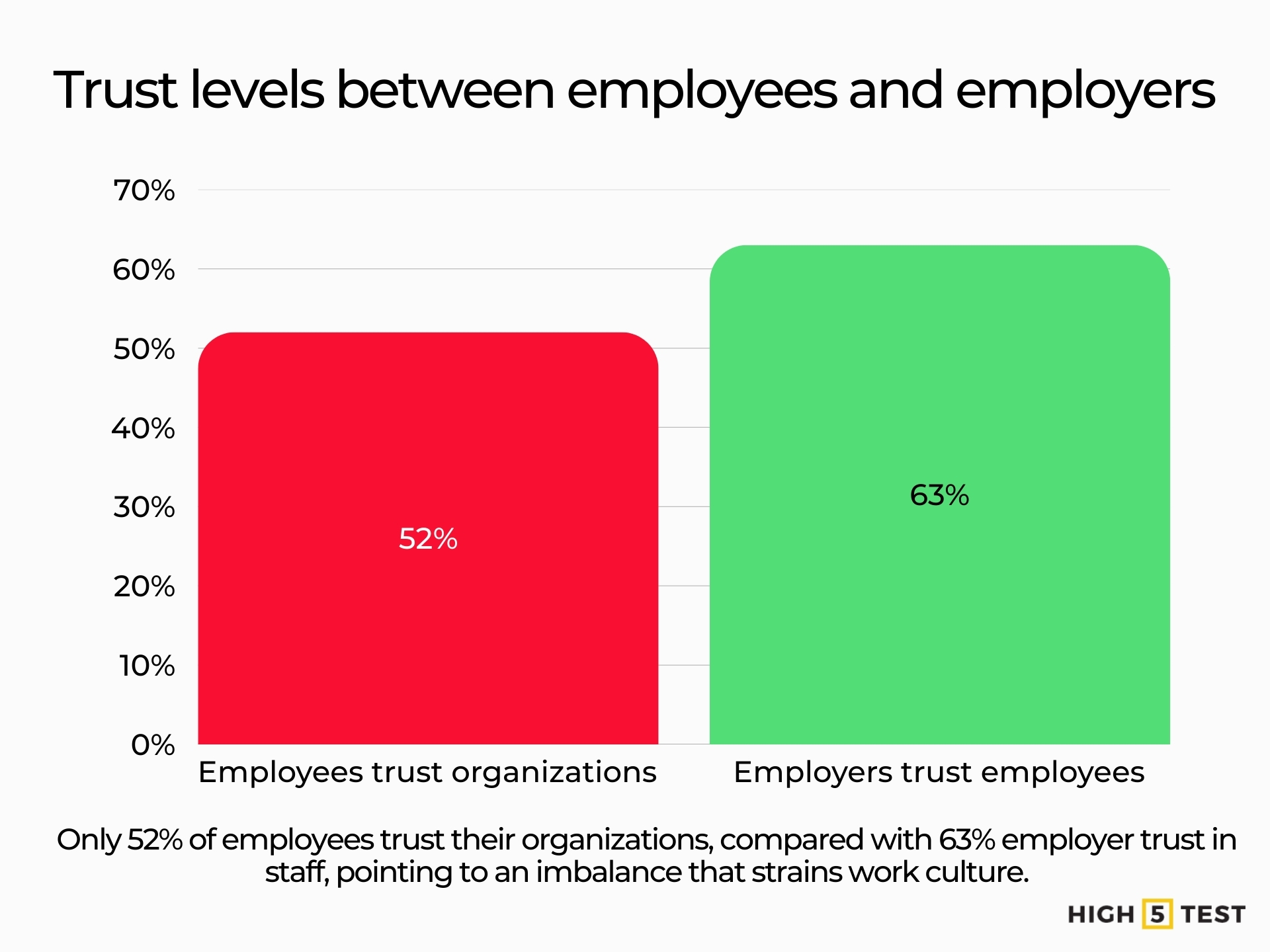
Only 52% of employees trust their organizations, and 63% of employers trust employees, highlighting a trust gap undermining productivity. Low trust turns monitoring data into a flashpoint instead of a helpful signal.
Source: Computer World
Just 21% of workers feel fully supported in their mental wellbeing, and about half report workplace stress at moderately high levels. Monitoring can add another layer to that load if it is heavy-handed.
Source: ADP Research Institute
Interpretation: Monitoring can produce more data, but that does not guarantee better performance. Teams do their best work when expectations are clear, autonomy exists, and measurement supports results instead of replacing judgment.
Statistics on employee monitoring and mental health
Employee sentiment shapes adoption outcomes. People accept oversight more readily when it feels fair, limited, and clearly explained.
Employees faced with both online and physical monitoring report 45% stress levels, versus 28% in less monitored settings. That difference suggests monitoring intensity changes how work feels day to day.
Specific findings:
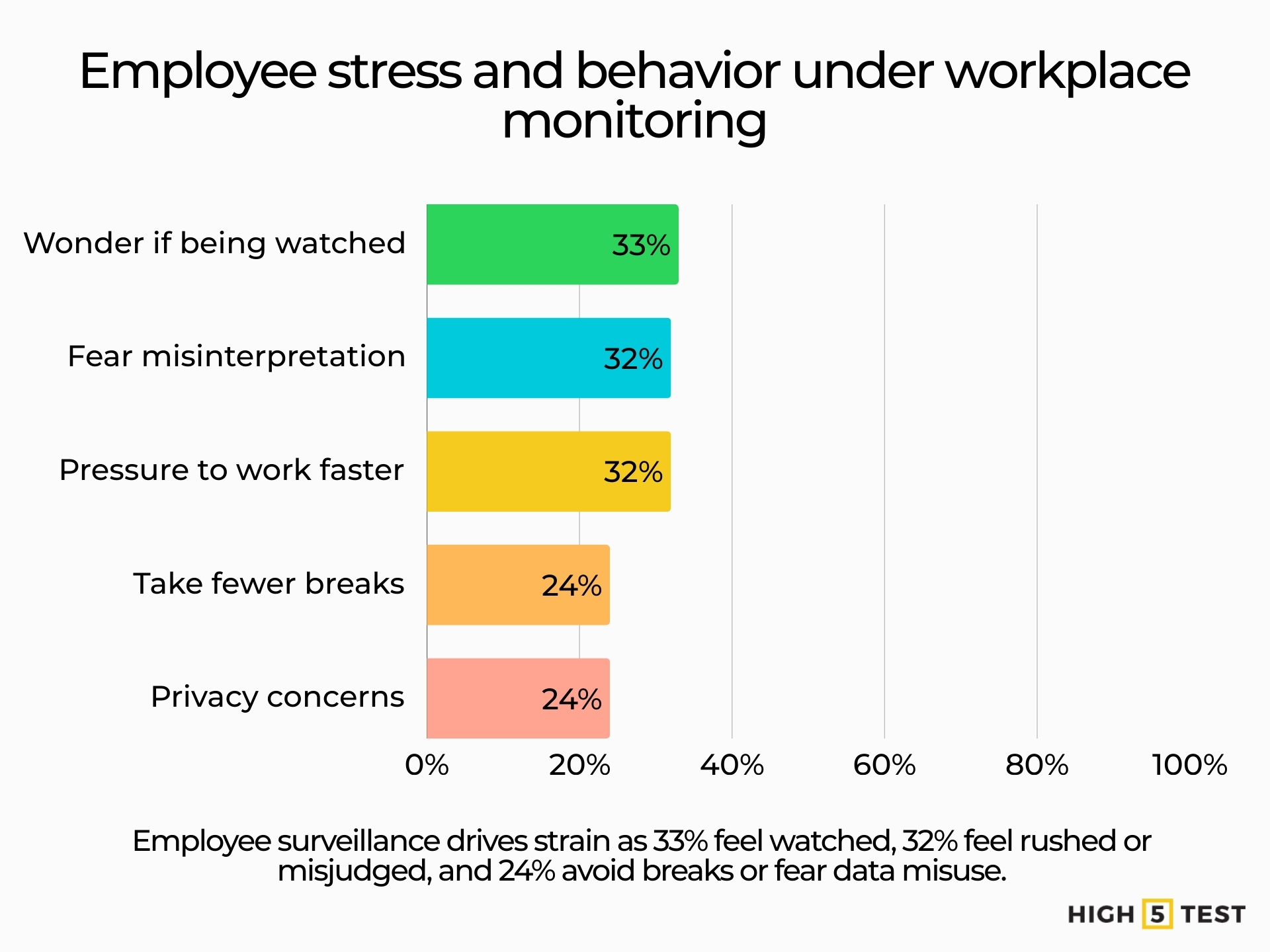
- 33% of employees said they constantly wonder if they’re being watched.
- 32% fear being misinterpreted by monitoring tools.
- 32% feel pressure to work faster rather than thoughtfully.
- 24% take fewer breaks to avoid appearing idle.
- 24% have privacy concerns over data misuse.
Source: Express VPN
Further, nearly half of the surveyed workers said they would consider quitting if monitoring increased. 24% would accept a pay cut to avoid surveillance. Among them, 17% said they’d be “very likely” to resign, while another 32% said they’d definitely consider it. This is a direct signal that trust can be more valuable than compensation for some workers.
Source: Express VPN
61% of Americans oppose employers using AI to track workers’ movements; 56% oppose tracking desk presence. Organizations can stay aligned with workforce expectations by avoiding the most invasive patterns.
Source: Pew Research Center
Implication: Surveillance that feels hidden or punitive damages trust, raises stress, and can accelerate attrition. A respectful approach treats monitoring as a narrow tool, not a management style.
Statistics on AI-powered monitoring and algorithmic management
AI-based monitoring expands what employers can measure and how quickly they can score behavior.
61% of U.S. companies use AI to measure productivity; 67% collect biometric data in that context.
Source: Express VPN
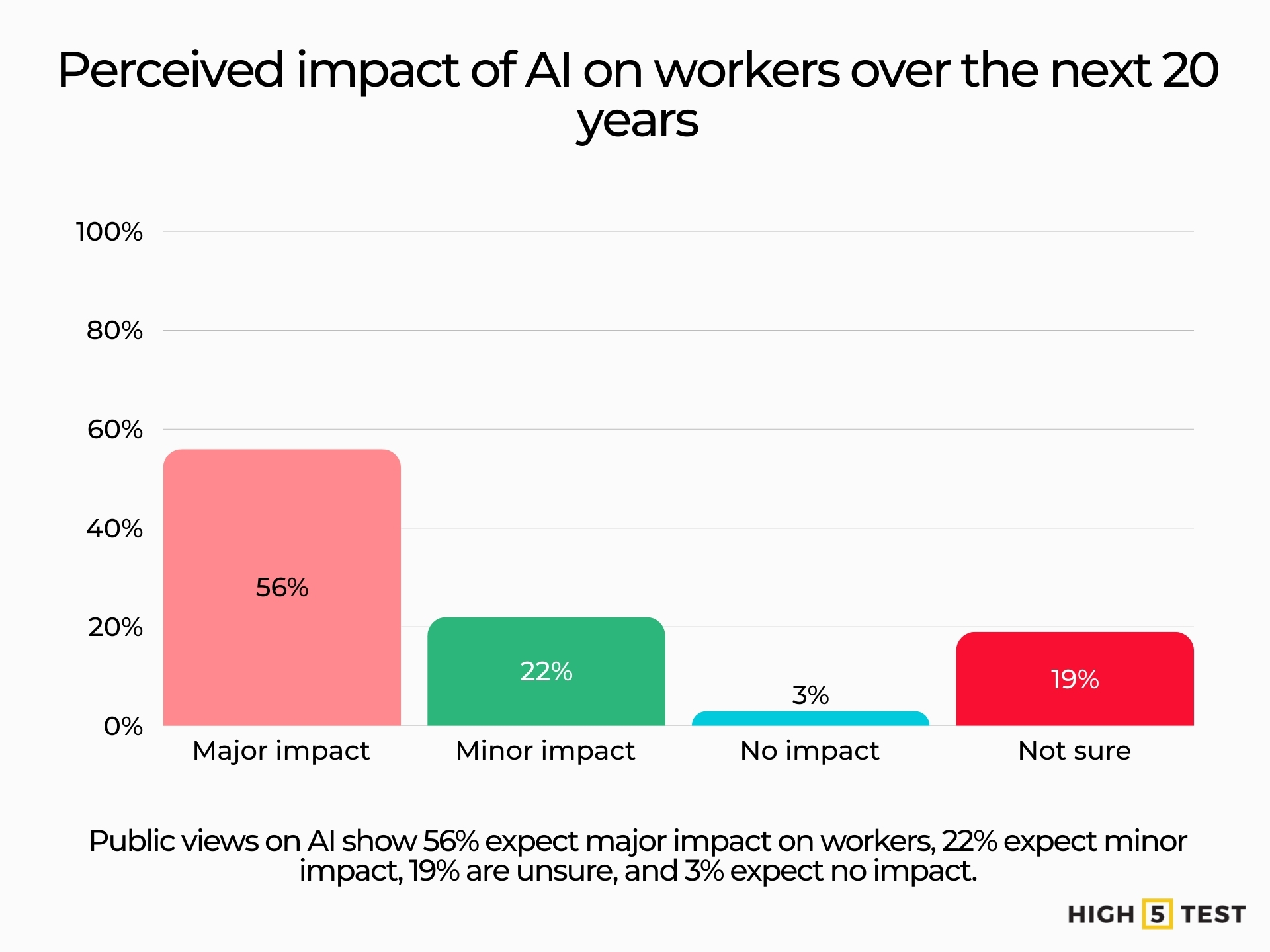
Americans are wary of AI tracking: Majorities oppose AI being used to evaluate workers, make hiring/firing decisions, or track desk presence. 56% think that over the next 20 years, the impact will be major, while 22% believe it will be minor. A small fraction (3%) say there will be no impact, and 19% are not sure.
Source: Pew Research Center
As tech commentator outlets note, AI-based “bossware” raises the risk of algorithmic bias, unfair scoring, and workers feeling “evaluated by analytics” rather than human judgment.
Source: WIRED
Key message: AI monitoring increases both capability and exposure. Strong transparency, fairness testing, and human oversight reduce risk and improve acceptance.
Employee monitoring statistics in the U.S. vs. global
Global context helps benchmark how intense monitoring is in the US.
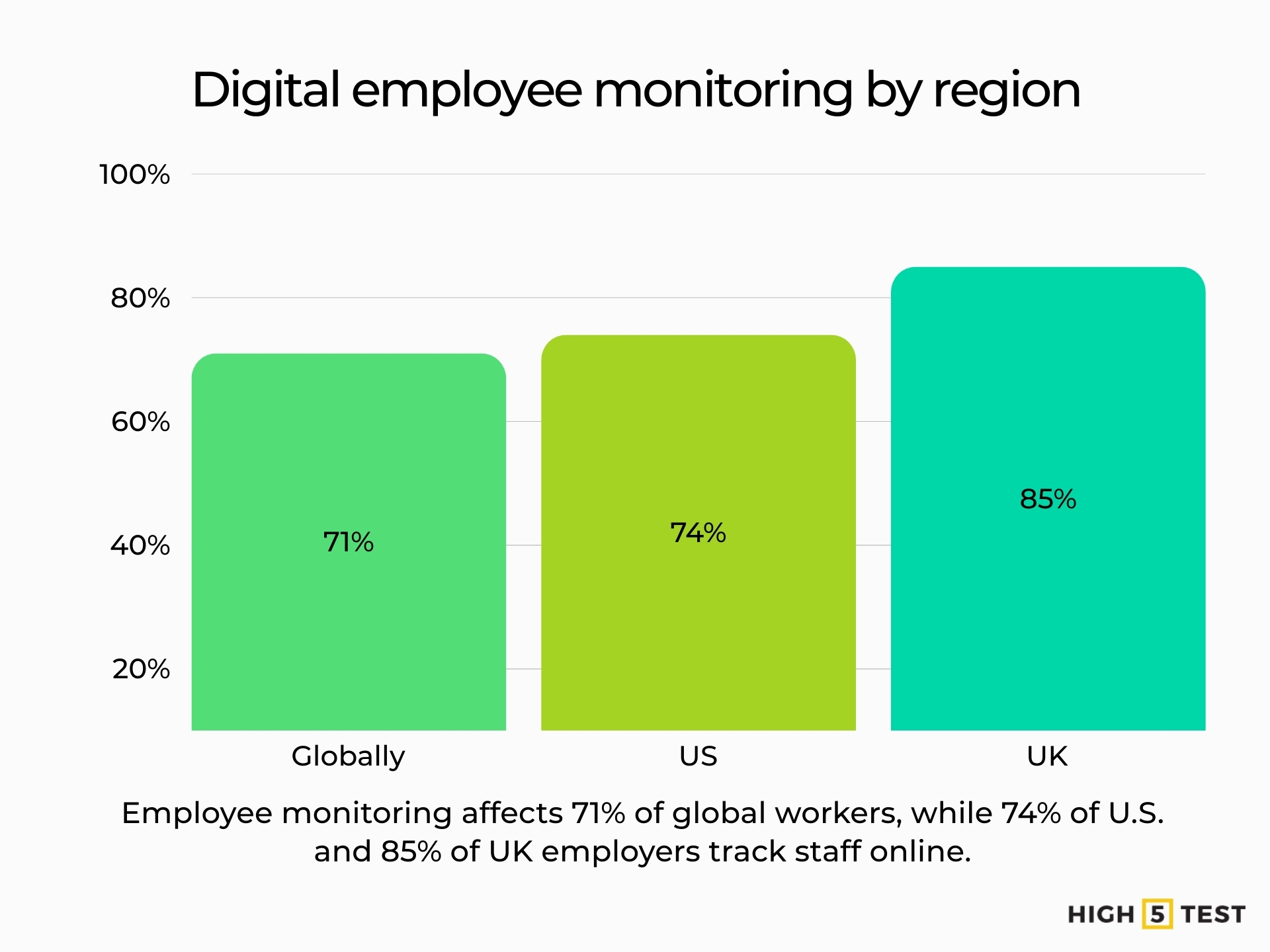
71% of employees worldwide are digitally monitored, alongside growing demand for monitoring software. This shows the trend is not limited to the US.
Source: Computer World
74% of U.S. employers use online monitoring tools. This places the US broadly in line with global patterns, with a strong emphasis on digital tracking
Source: Express VPN
In the UK, 85% of employers monitor staff online, and half of workers report elevated stress due to surveillance.
Source: Express VPN
Bottom line: The US sits inside a global surge in monitoring. AI analytics, biometrics, and real-time tracking make the stakes feel higher for workers, so trust-building practices matter even more.
Data on legal, ethical, and privacy considerations in the U.S.
Monitoring raises compliance and ethics issues, not just IT questions.
The Consumer Financial Protection Bureau has warned that invasive monitoring tools may create Fair Credit Reporting Act issues when used to evaluate or score employees. That warning signals real legal exposure when monitoring feeds decision-making.
Source: The Wall Street Journal
Employee awareness is limited: While many organizations say they disclose monitoring practices, only 22% of employees believe they know whether online tracking is used in their workplace. Lack of clarity fuels suspicion and rumor, even in well-intentioned programs.
Source: Express VPN
Surveillance can backfire when it reduces autonomy and trust. Purpose-driven goals and manager training can limit the damage.
Source: BetterWorks
Conclusion
Employee monitoring has become common across the US, especially in hybrid and remote work. The numbers show strong adoption of online tracking, physical surveillance, and AI analytics. They also show rising stress and deep skepticism about invasive AI-based monitoring.
Leaders can reduce conflict by setting clear boundaries and explaining the why behind every tool. Monitoring works best as a narrowly scoped support system for security and operations. It fails when it becomes a substitute for trust, good management, and clear goals. If you use these statistics as a benchmark, aim for fewer signals and better conversations. That is how monitoring stays useful without damaging the workplace.
FAQ
What percentage of U.S. employers monitored employees in 2025?
The report shows that 74% of US employers use online tracking tools as of February 2025. Treat that number as a baseline for how common monitoring has become, then focus on how your organization communicates and limits it.
What types of employee monitoring are most common?
Common methods include web browsing logs at 62 percent, real-time screen monitoring at 59 percent, office video surveillance at 69 percent, and biometric access controls at 58.3 percent, according to the same ExpressVPN report. The best approach starts with the smallest set of tools that matches a specific need.
How do employees feel about being monitored?
Study reports 45 percent stress in high-surveillance settings compared to 28 percent in less monitored environments. Pew also found majorities oppose AI tracking of movements and desk time. Workers tend to accept oversight more when it is transparent, limited, and tied to safety or security.
Does monitoring improve productivity?
Some employers believe it does, yet data also shows stress and trust gaps that can drag performance down. Monitoring can help in targeted cases, but broad surveillance often harms engagement and retention.
What best practices should organizations follow for monitoring?
Use clear disclosure, limit collection to a defined purpose, focus on outcomes, support employee well-being, govern AI and biometrics tightly, and review cultural impact over time. Trust is the multiplier that decides if monitoring data helps or backfires.