
Generation Z is entering the U.S. workforce in large numbers. This group includes people born between 1997 and 2012. As millions of young professionals enter the labor market, Gen Z workforce statistics reveal key trends in employment, job preferences, and career expectations.
This data-driven guide highlights the most important Gen Z workplace statistics for 2024–2025 to help employers, HR leaders, and organizations better understand and engage the next generation of talent.
10 most interesting Gen Z workforce statistics
- 52% of Gen Z professionals are freelancing, meaning over half of this generation is already participating in the gig economy rather than traditional employment.
- 71% of Gen Z employees have “unhealthy” work-health scores, compared to just 42% of Baby Boomers — highlighting a major generational wellbeing gap.
- 77% of Gen Z candidates say diversity and inclusion (DEI) is important when choosing a job, making it a non-negotiable factor for employers.
- 69% of Gen Z candidates want to work for companies that share their values, showing that culture alignment directly impacts hiring success.
- 70% of Gen Z workers develop career skills at least once per week, demonstrating a much higher learning intensity than older generations.
- 53% of Gen Z say learning helps them explore career paths, compared to only 37% of older workers — signaling a strong demand for internal mobility.
- 42% of Gen Z prioritize purpose-driven work, more than any older generation — indicating a shift away from purely salary-driven careers.
- Over 50% of Gen Z workers experience burnout, making them the most burnout-prone generation in the workforce.
- 92.7% of Gen Z employees use emojis, GIFs, or memes at work, showing a dramatic shift in workplace communication norms.
- 28% of the entire U.S. freelance workforce is Gen Z, despite them being one of the youngest working generations.
15+ Gen Z workforce statistics in the U.S. (2025-2026)
The Gen Z workforce continues to grow as students graduate and begin full-time employment.
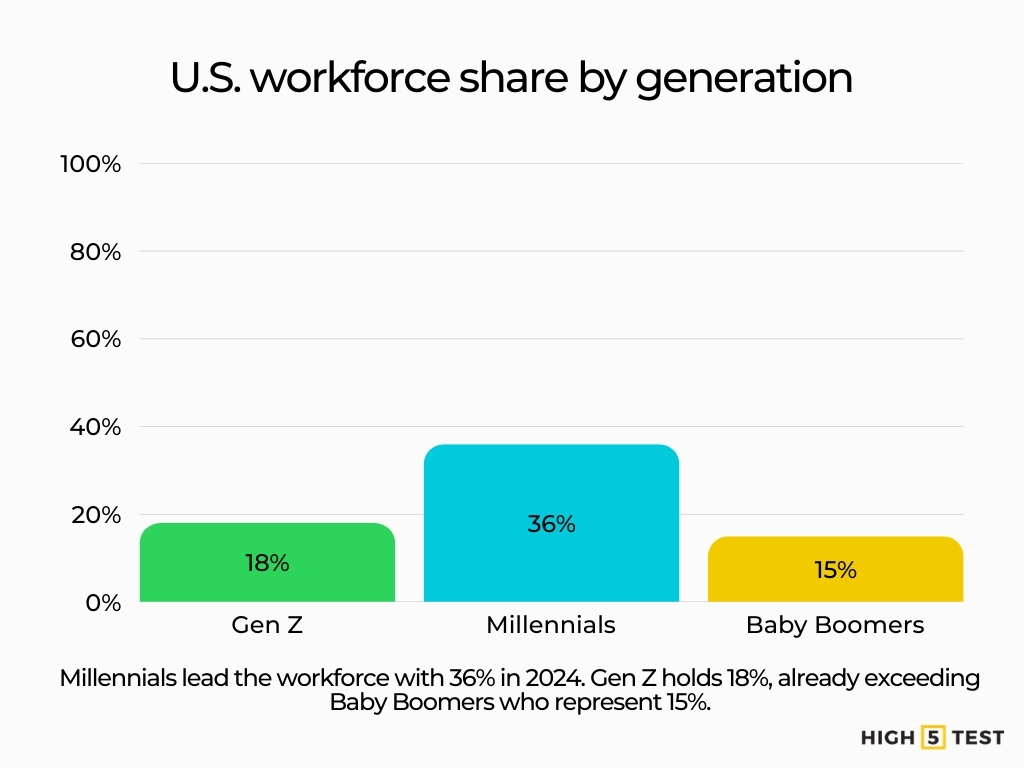
Gen Z represented about 18% of the U.S. labor force in 2024. This share places them among the fastest-growing workforce groups. Their presence will expand steadily in the coming years.
Baby Boomers accounted for roughly 15% of the workforce in 2024. Gen Z has already surpassed them in workforce share. This shift reflects the large number of retirements occurring across industries.
Source: U.S. Department of Labor Trendlines
Millennials represent the largest workforce cohort at about 36%. Gen Z is expected to narrow this gap as younger workers continue entering employment.
Source: U.S. Department of Labor Trendlines
These numbers demonstrate a major generational shift that will reshape hiring practices, workplace culture, and leadership pipelines over the next decade.
Gen Z employment and labor market statistics
Young workers enter the labor market under different economic conditions compared with previous generations. Technology, education trends, and new career paths influence their employment patterns.
59.5% of youth participate in the labor force. This means many young Americans are working or searching for jobs. The figure reflects steady engagement with the job market.
Source: U.S. Bureau of Labor Statistics
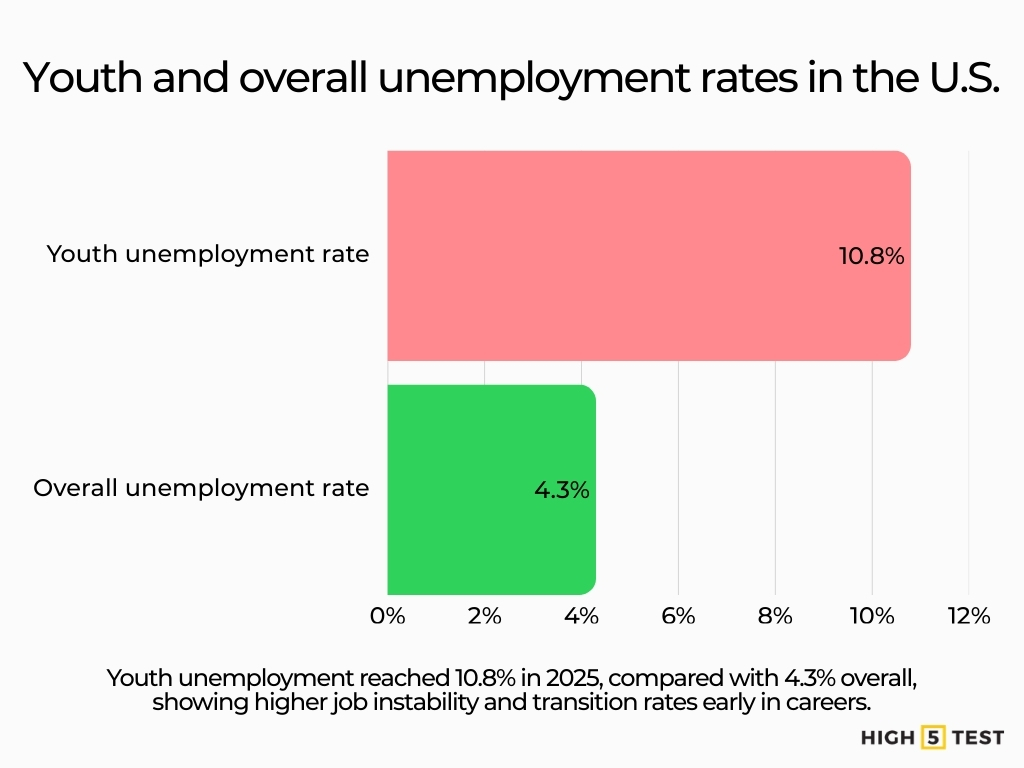
Youth unemployment reached about 10.8% in 2025. The overall unemployment rate was about 4.3%. Early-career workers often experience more job transitions and temporary employment.
Source: U.S. Bureau of Labor Statistics
Workers aged 25 to 34 had a median job tenure of about 2.7 years in 2024. Shorter tenure is common during the first stage of a career. Many workers explore different roles while building experience.
Source: U.S. Bureau of Labor Statistics
These figures show that early career paths often involve frequent job changes and exploration.
Statistics on Gen Z workplace preferences
Gen Z employees value learning opportunities and steady skill development.
Only 6% of Gen Z say their primary career goal is reaching a leadership position. Many prioritize work-life balance and personal growth over traditional corporate advancement.
Source: Deloitte 2025 Gen Z and Millennial Survey
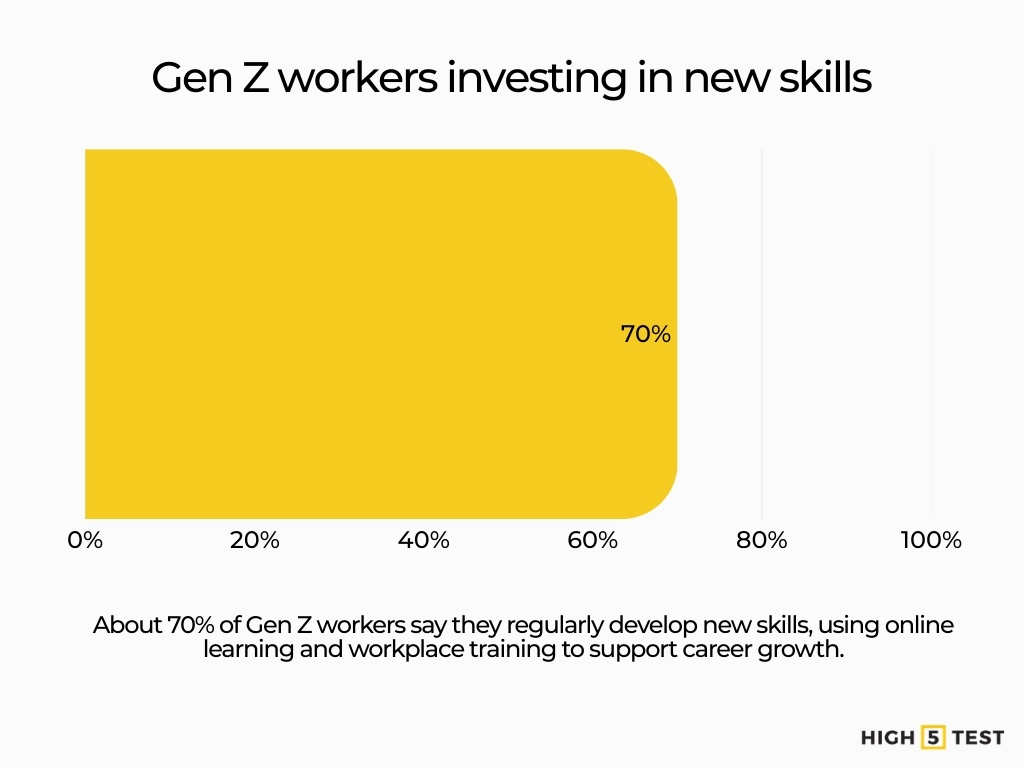
70% of Gen Z workers say they regularly build new skills to advance their careers. Many practice skill development weekly through online learning or workplace training.
Source: Deloitte
Employers that provide consistent learning opportunities tend to attract younger workers who value professional growth.
Data on Gen Z technology and AI uses in the workplace
Gen Z entered the workforce at the same time that artificial intelligence tools began spreading across industries.
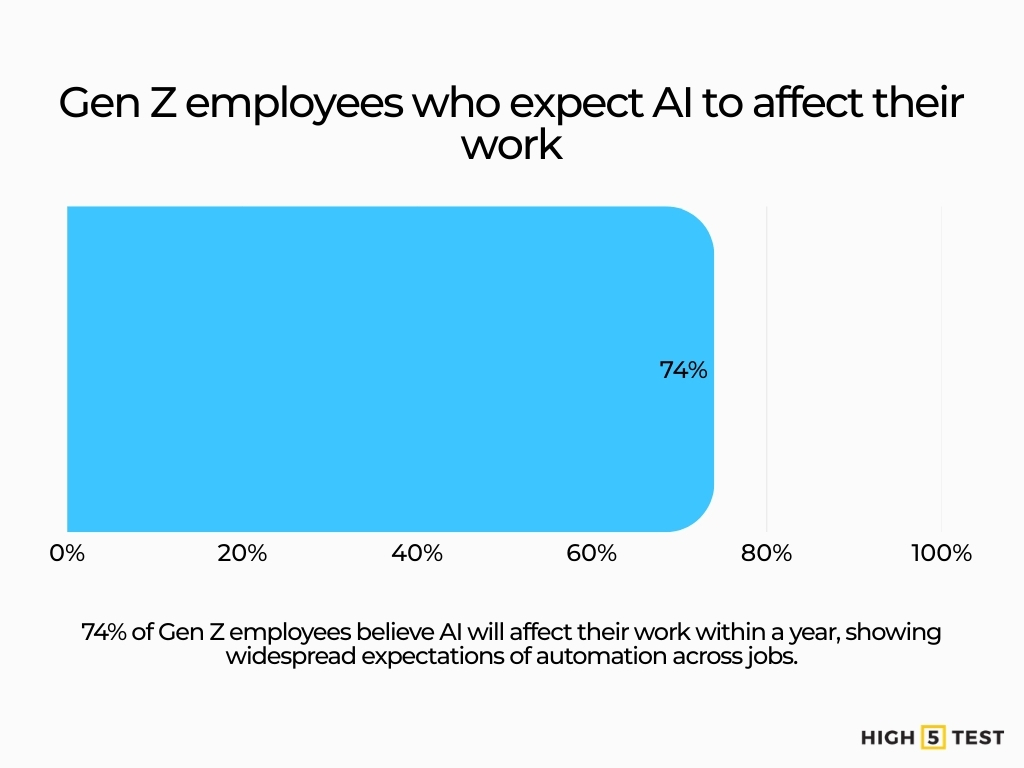
74% of Gen Z employees believe AI will affect their work within the next year. Many expect automation tools to change daily tasks and job requirements.
Source: Deloitte 2025 Gen Z and Millennial Survey
49% of Gen Z employees use AI regularly to improve workplace skills. Many rely on AI tools for research, productivity, and learning new tasks.
Source: Brandon Hall Group™
AI adoption is already shaping entry-level roles. Many young workers view AI as a tool that supports learning and productivity.
Data on Gen Z job mobility and career paths
Young workers often change jobs more frequently during the early stages of their careers.
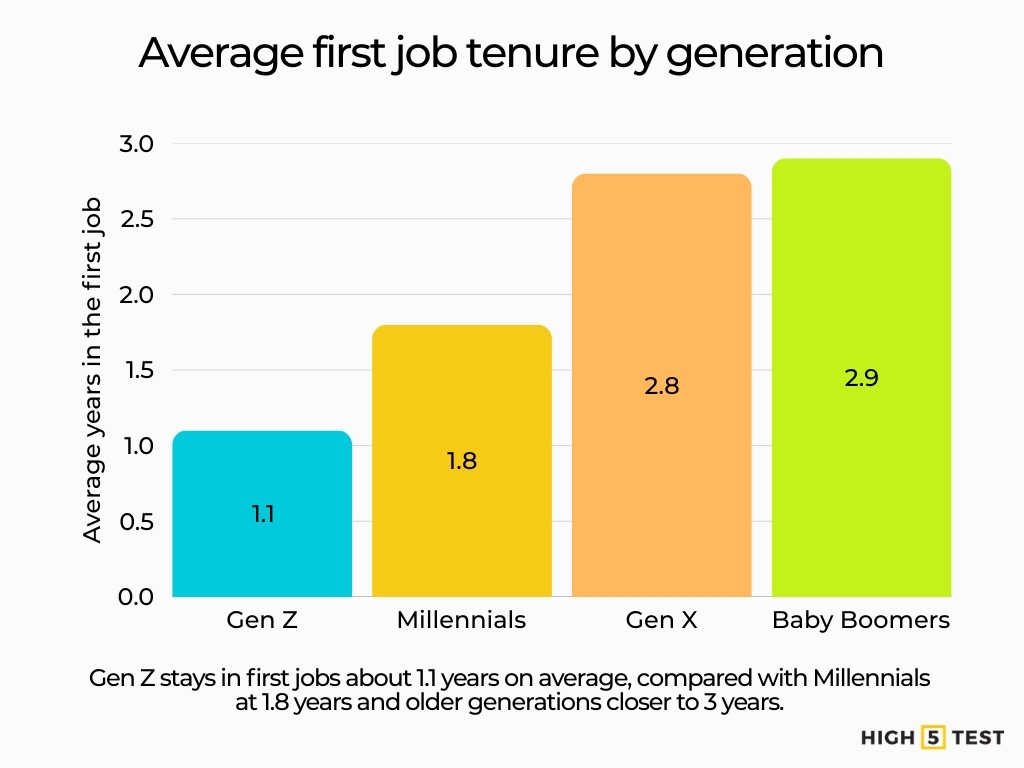
Gen Z workers average about 1.1 years in their first jobs. This is shorter than Millennials at 1.8 years, Gen X at 2.8 years, and Baby Boomers at 2.9 years. Many Gen Z employees search for clear career paths, flexibility, and meaningful work.
Source: Randstad
41% of Gen Z workers say they always consider long-term goals when choosing jobs. Their job changes often reflect career planning rather than short-term decisions.
Source: Randstad
Frequent job movement often reflects a search for growth opportunities and skill development.
Future Gen Z workforce trends
Several major workforce trends will shape Gen Z careers over the next decade.
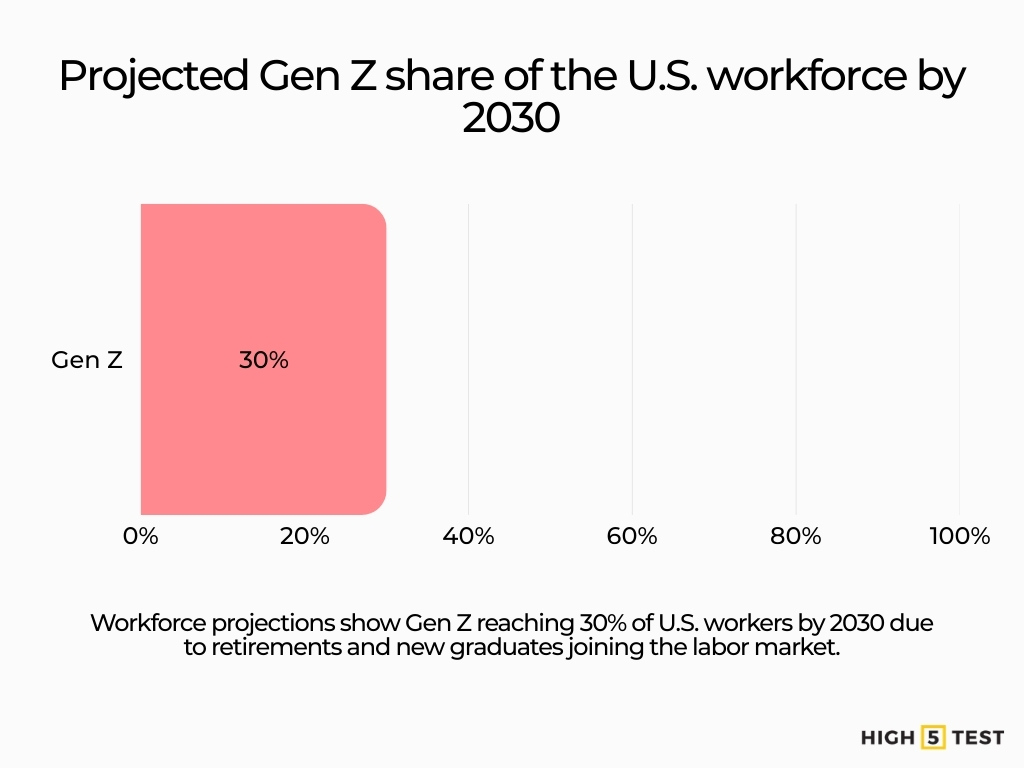
Gen Z is expected to represent about 30% of the U.S. workforce by 2030. A large number of Baby Boomers are retiring while new graduates continue entering employment.
Source: Mishra, Anubhav, and Awasthi, Saumya (2025)
Millennials and Gen Z together could represent nearly two-thirds of workers within the next decade. Younger generations will influence management styles and workplace expectations.
Source: Bank of America Workplace Insights
These demographic changes will influence leadership pipelines, hiring strategies, and workplace policies.
Why Gen Z is transforming the workplace
Gen Z workers are shaping the future of work in several important ways:
- Greater emphasis on continuous skills development. Younger employees expect access to learning resources throughout their careers.
- Strong interest in technology-driven work environments. Many Gen Z workers are comfortable with digital tools and AI systems.
- Higher expectations for career flexibility and growth. Many seek opportunities that support personal development and balanced lifestyles.
- Increased awareness of AI and automation impacts. Many Gen Z workers actively prepare for technology-driven changes in the workplace.
As Gen Z becomes a larger share of the workforce, organizations will need to adapt to their expectations and working styles.
Conclusion
Gen Z is becoming a major presence in the U.S. labor market. More young workers enter employment each year, and their expectations influence workplace practices across industries. Gen Z workforce statistics highlight clear shifts in career priorities, technology adoption, and employment patterns.
Employers that respond to these trends are more likely to attract and retain younger employees. Clear development paths, opportunities for learning, and transparent career progression often matter to Gen Z workers. Organizations that support these priorities may see stronger engagement and longer employee retention.
The next decade will bring a significant generational shift in the workforce. As Gen Z and Millennials continue to grow in workforce share, they will influence management styles, workplace culture, and hiring expectations. Businesses that recognize these changes early can adapt their strategies and remain competitive in the evolving labor market.