
The freelance economy is booming and it’s transforming the way Americans work. In 2024, more than 64 million people in the U.S. are freelancing, contributing over $1.27 trillion to the economy. From side hustles and gig work to full-time independent careers, freelancing is no longer a trend; it’s the new normal.
This data-driven report breaks down the latest freelance and gig economy statistics for 2024 and 2025, with insights for HR professionals, hiring managers, and freelancers alike. Backed by verified research, these stats reveal where the workforce is headed and how businesses can adapt.
10 most interesting freelance statistics
- Over 64 million Americans are freelancing. That’s 38% of the U.S. workforce—and up from 60 million just a year prior. Freelancing has hit record levels and continues to climb.
- Freelancers contribute $1.27 trillion to the U.S. economy. That’s more than the GDP of many countries—and a 78% increase since 2014.
- 71% of freelancers have no traditional full-time job. They’re not side hustlers—they’re full-time independents by choice.
- Gen Z leads the freelance surge: 52% are freelancing. Over half of Gen Z professionals are already in the freelance economy.
- 99% of employers plan to hire freelancers in 2025. Nearly all companies surveyed are turning to flexible, on-demand talent.
- 86.5 million Americans projected to freelance by 2027. That would make freelancers the majority (50.9%) of the U.S. workforce.
- Freelancers are 2.2× more likely to use AI than traditional workers. They’re leading the way in leveraging generative AI to boost productivity.
- 75% of side hustlers are more satisfied with their freelance work. Compared to just 47% satisfaction with their full-time jobs.
- 48% of Fortune 500 companies now use freelance platforms. Enterprise adoption of platforms like Upwork and Toptal is now mainstream.
- 78% of CEOs say top freelancers outperform full-time employees. Especially compared to employees with traditional degrees, signaling a major shift in talent evaluation.
30+ freelance statistics in the US (2024/2025)
Freelance workforce growth and size
Global rise of the gig workforce: Online gig workers now represent up to 12% of the global labor market. This share is larger than earlier estimates and reflects the rise of cross-border digital work.
Source: World Bank Group
Rapid expansion in the U.S.: The number of Americans doing freelance work rose by 90% between 2020 and 2024.
Source: MBO Partners
In 2023, 64 million Americans, or 38% of the U.S. workforce, earned income through freelancing. This marked an increase from 60 million in 2022 and set a new record. Current trends point to continued growth in the years ahead.
Source: Upwork
Side work participation: More than half of U.S. adults, or 51%, reported working a side gig in the past year. This shows that freelance income is common even among those with traditional jobs.
Source: Market Watch Guides
Statistics on the economic impact of freelancing
Freelance contributions to the economy: U.S. freelancers generated about $1.5 trillion in earnings during 2024. This reflects the growing share of independent work across many industries.
Source: Upwork
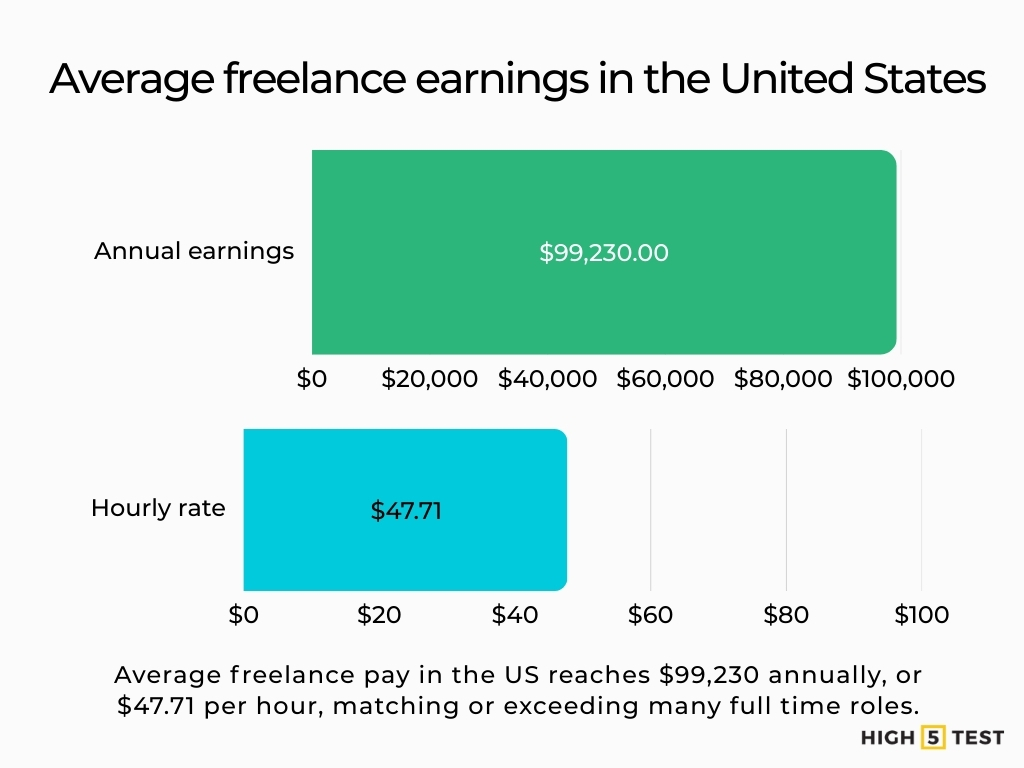
High earnings potential: On average, freelancers in the U.S. earn about $99,230 per year, which is roughly equivalent to a $47.71 per hour rate. Many skilled freelancers match or exceed earnings from standard employment. The technology and marketing fields report some of the highest pay rates.
Source: Zip Recruiter
Growth of freelance platforms: Revenue from freelance platforms is projected to reach $8.35 billion in 2025. This growth reflects continued investment in tools that connect businesses with independent talent.
Source: Research and Markets
Data on business adoption of freelance talent
Large enterprise participation: Nearly half of large enterprises use freelance platforms. In 2022, 48% of Fortune 500 companies sourced talent through freelance marketplaces. This trend shows that even the world’s biggest companies are embracing on-demand freelancers to fill skill gaps and increase workforce agility.
Source: Market Reports World
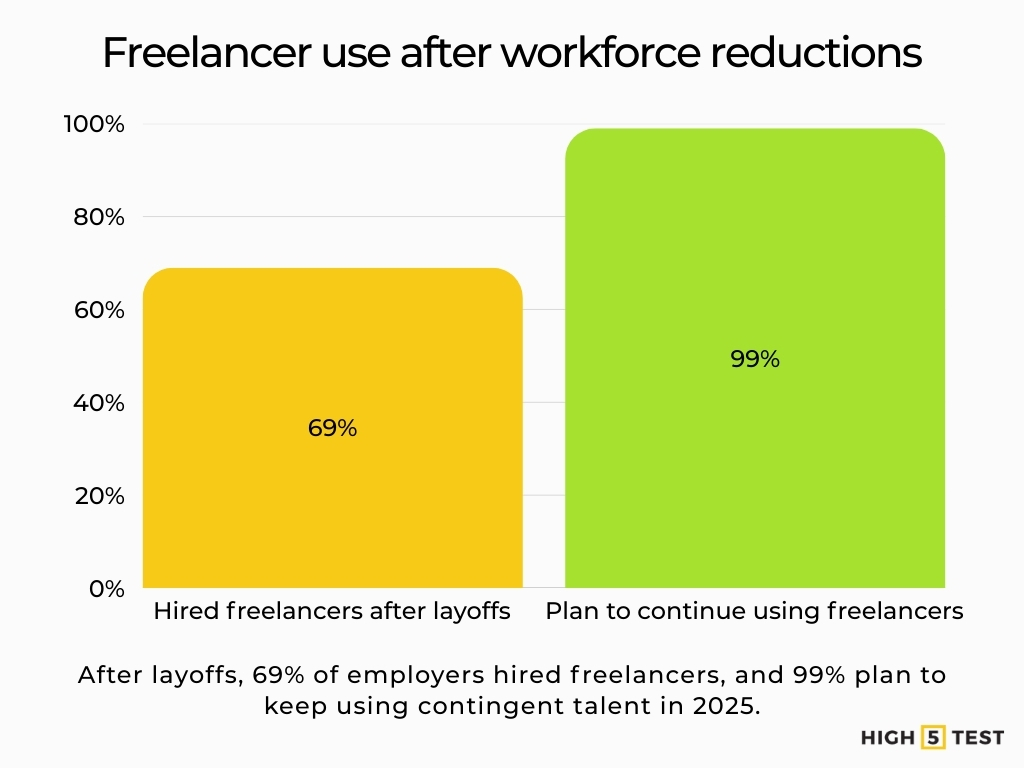
Freelancers after workforce reductions: Following layoffs in 2023 and 2024, 69% of employers hired freelancers to sustain output. Almost all of these companies (99%) plan to continue using freelance talent in 2025.
Source: Fiverr
Freelance hiring is a strategic priority: 48% of CEOs report they plan to increase their hiring of freelance/contract talent in the coming year. About 29% say their operations would struggle without independent talent. Many leadership teams recognize that incorporating freelancers (from contractors to consultants) is key to remaining competitive and agile.
Source: Upwork
Value delivered by top freelancers: Businesses also acknowledge the quality of freelance work. In surveys, 78% of CEOs said their top freelancers deliver as much or more value than full-time employees with college degrees. Specialized skills and faster execution drive this perception.
Source: Upwork
Statistics on freelancing as a career choice
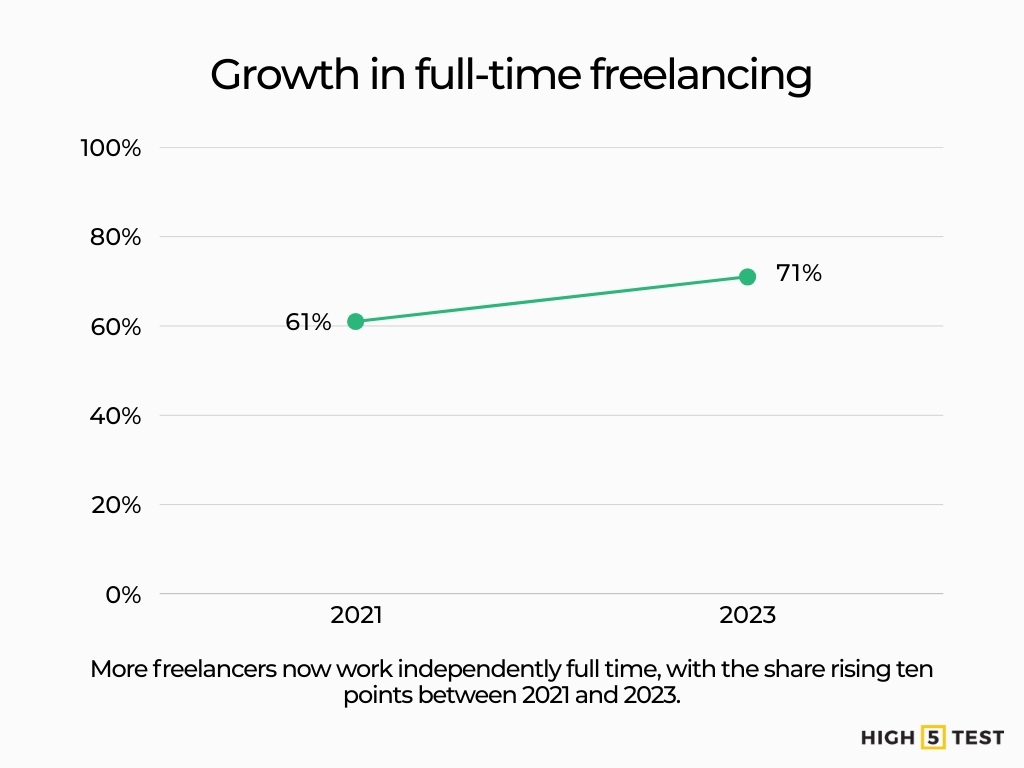
More professionals going independent full-time: In 2023, 71% of freelancers relied on independent work as their main source of income. This rose from 61% in 2021, signaling a long-term career shift.
Source: Fiverr
Independence by choice, not necessity: 63% of independent workers (freelancers/contractors) say that working independently is entirely their choice (as opposed to being forced by lack of traditional jobs). This aligns with survey findings that personal values – like flexibility, autonomy, and entrepreneurship – are driving people to freelance. The vast majority are voluntarily pursuing this path for the lifestyle and career benefits it offers.
Source: MBO Partners
Higher satisfaction levels: Most freelancers report greater job satisfaction compared to when they were in traditional employment. 86% of independent professionals say they’re happier working on their own than in a conventional job role. Many cite reasons such as better work-life balance, more control over projects, and the ability to choose clients.
Source: MBO Partners
Similarly, those who freelance on the side often find it rewarding – 75% of workers with a side hustle are highly satisfied with their freelance work, versus only 47% who report that level of satisfaction with their primary full-time job.
Source: Fiverr
Generational data: Gen Z driving freelance growth
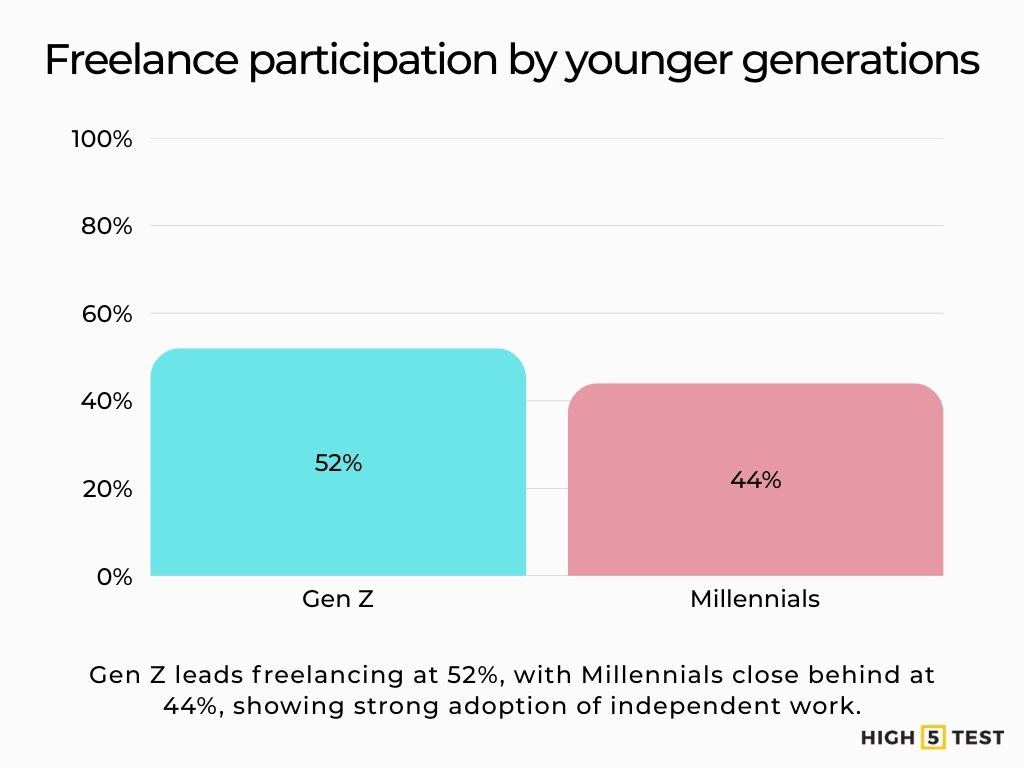
Young workers leading the freelance surge: Gen Z and Millennials are the most likely generations to freelance. In 2023, 52% of Gen Z professionals (ages ~18–26) and 44% of Millennials (ages ~27–42) performed freelance work. This means over half of the youngest working generation has engaged in freelancing, a significantly higher rate than older generations. Younger talent is clearly embracing non-traditional work arrangements at unprecedented levels.
Source: Upwork
Gen Z’s growing presence in the independent workforce: As a result of these trends, Gen Z now makes up 28% of the entire U.S. independent workforce. In just a few years, the share of freelancers who are Gen Z has skyrocketed – a reflection of both their high participation and the overall growth of freelancing. This influx of young freelancers is reshaping the demographics of the gig economy (while Boomers and Gen X gradually comprise smaller portions).
Source: MBO Partners
Freelancing instead of the 9–5: Many Gen Z workers are choosing freelance work over traditional jobs right out of school. Surveys show 53% of Gen Z freelancers are working full-time hours on freelance projects, effectively abandoning the conventional 9–5 path.
Source: Upwork
61% of Gen Z freelancers say independence gives them more control over career growth. Employers competing for this talent often need to offer flexibility and autonomy.
Source: Upwork
Stats on technology, AI, and skills in the freelance economy
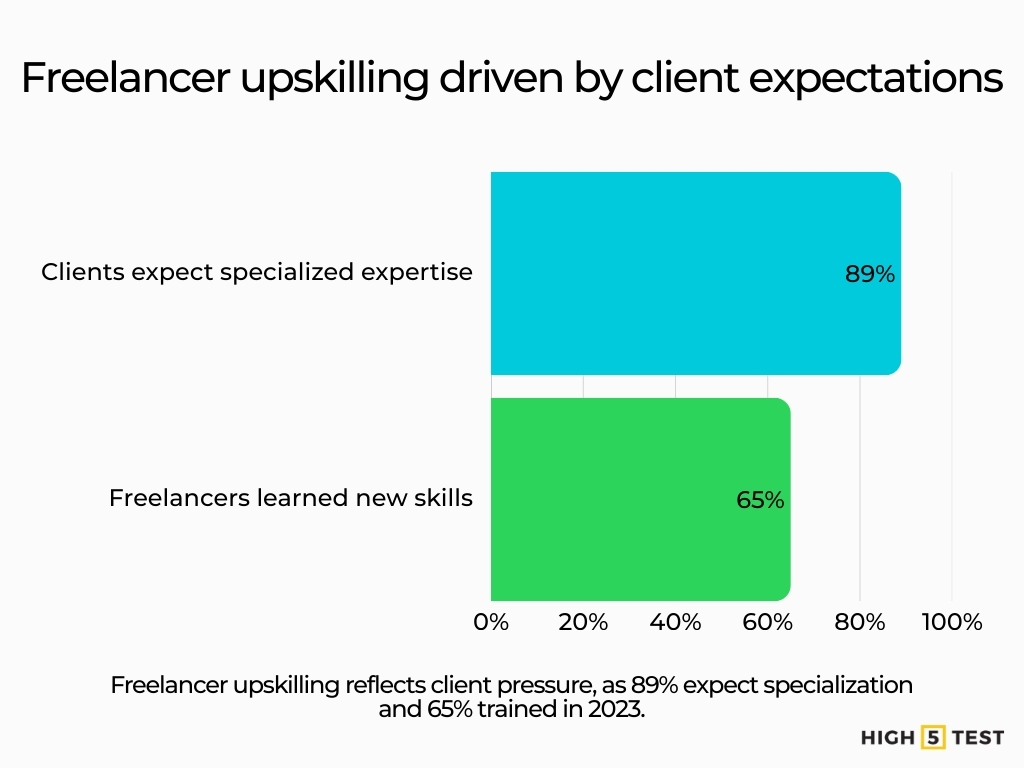
Continuous upskilling to meet demand: Freelancers are heavily investing in skills development to stay competitive. Nearly 89% of freelancers say that clients now expect specialized expertise, which has driven a majority to upgrade their skills. 65% of freelancers report they learned new skills or obtained additional training in 2023 alone. This constant upskilling culture means freelancers often bring very current knowledge to their projects, and it reflects a workforce that is proactively adapting to industry needs.
Source: Fiverr
Embracing AI tools: Independent professionals have been quick to adopt AI and automation in their workflows. 74% of freelancers (independent workers) use AI tools in their work, and 61% say using AI saves them time and increases their output.
Source: MBO Partners
Freelancers are 2.2 times more likely than employees to use generative AI regularly. This reflects faster adoption of new technology among independent workers.
Source: Upwork
Optimism about AI’s impact: Rather than fearing AI, most freelancers are excited about its potential. About 84% of skilled freelancers are optimistic and enthusiastic about AI improving their services..They see new tools as a way to enhance creativity and efficiency (e.g., using AI to handle repetitive tasks or to augment their capabilities), which can help them deliver more value to clients. This positive outlook on emerging technology suggests the freelance community is ready to adapt and harness AI advancements to improve their work.
Source: Upwork
Future outlook for freelancing
Freelancers to become a workforce majority: Freelancers are expected to exceed half of the U.S. workforce by 2027. Estimates show 86.5 million Americans, or 50.9%, working independently by that year.
Source: Statista
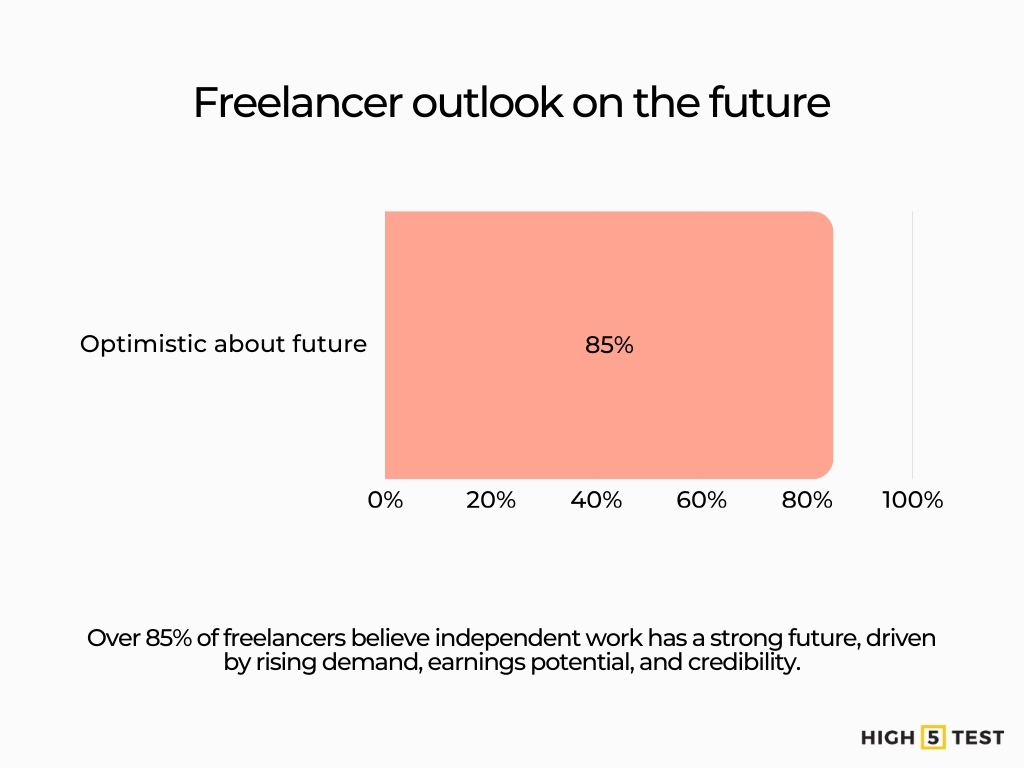
Freelancers are optimistic about the future: Those on the independent path see long-term opportunity. More than 85% of freelancers say the best days of freelancing are ahead, believing the industry will continue to grow in legitimacy, earnings, and client demand.
Source: Upwork
Over 80% of current independents plan to remain freelancing or even expand their freelance business in the coming years, indicating strong confidence and commitment to this way of working.
Source: MBO Partners
Traditional workers eyeing independence: It’s not just current freelancers who are bullish – many traditional employees are considering making the jump. Roughly 36% of non-freelance full-time workers (regular employees) are contemplating freelancing in the near future. Economic uncertainty and shifting attitudes toward work security have more professionals seeing freelancing as a viable and attractive career move. Companies may face more talent choosing independent routes if they cannot offer comparable flexibility and autonomy.
Source: Upwork
Global expansion of freelance talent pools: On a global scale, freelancing is expected to keep expanding as internet access and remote-work infrastructure improve. Developing countries are witnessing rapid growth in online freelancing, adding millions to the global talent pool.
International spending on freelance talent is projected to reach USD 525.23 billion by 2030 (across outsourcing and gig platforms combined), and many governments are adapting policies to accommodate the rise of remote and contract work.
Source: Grand View Research
Conclusion
Freelancing in 2024 and 2025 shows strong participation, rising earnings, and deeper integration into business operations. Independent professionals contribute trillions in economic activity and maintain high satisfaction levels. For businesses, freelance hiring is now a standard workforce strategy.
Organizations that integrate independent talent and flexible work models are better positioned to access specialized skills. As the workforce continues to shift, freelancing will remain a dominant form of work across industries and regions.