
Gen Z is taking up a fast-growing share of the early-career workforce in the United States, reshaping hiring processes and interview expectations in 2024 and 2025. From mass job applications and AI-assisted resumes to employer concerns about communication skills and professionalism, Gen Z interview statistics reveal a widening perception gap between candidates and recruiters.
This research pulls together recent primary-source data on Gen Z interview behavior, hiring manager feedback, AI’s impact, and candidate experience, so recruiters, HR leaders, and job seekers can see what’s happening in interviews right now.
10 most interesting Gen Z interview statistics
- 24% of hiring managers say recent graduates are unprepared for interviews, revealing that nearly one in four recruiters already enters early-career interviews expecting readiness gaps — a critical signal for Gen Z interview prep improvements.
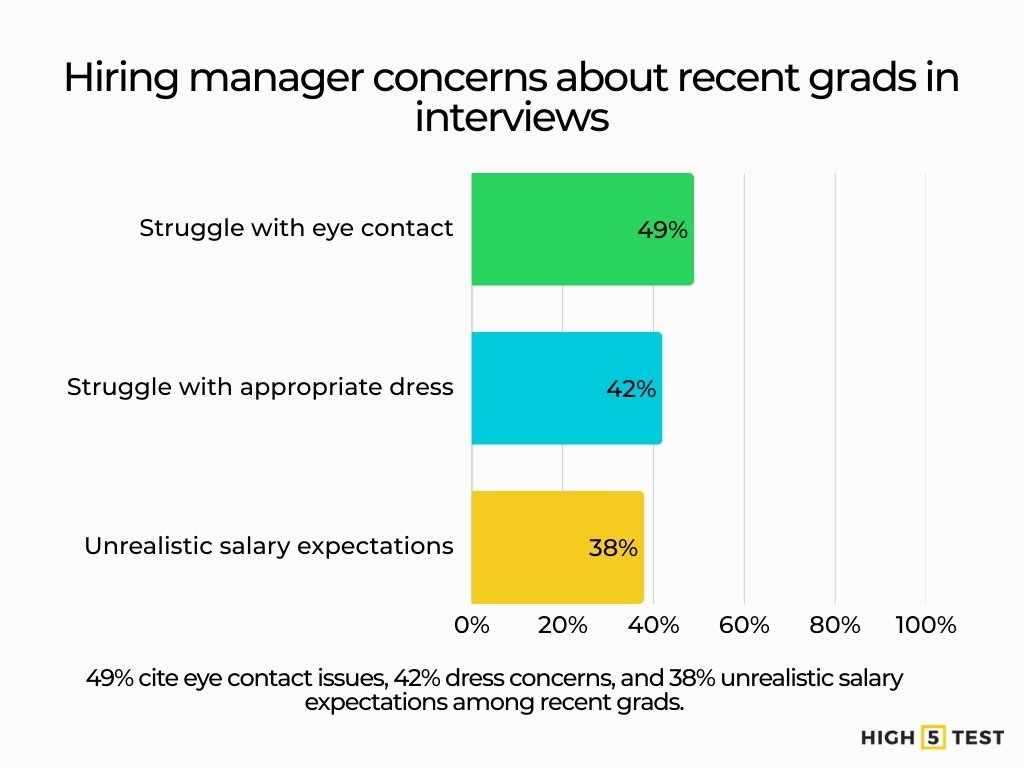
- 49% of hiring managers report recent grads struggle with eye contact, showing that nonverbal communication remains a major performance differentiator in interviews even in hybrid hiring environments.
- 42% of hiring managers say recent grads struggle with dressing appropriately, reinforcing how visual professionalism influences interview perceptions and employer decisions.
- 38% of hiring managers note recent grads have unrealistic salary expectations, highlighting negotiation and expectation gaps that can derail interview outcomes.
- 55% of hiring managers were involved in firing a recent graduate in 2024, suggesting higher scrutiny and risk aversion when evaluating Gen Z candidates during interviews.
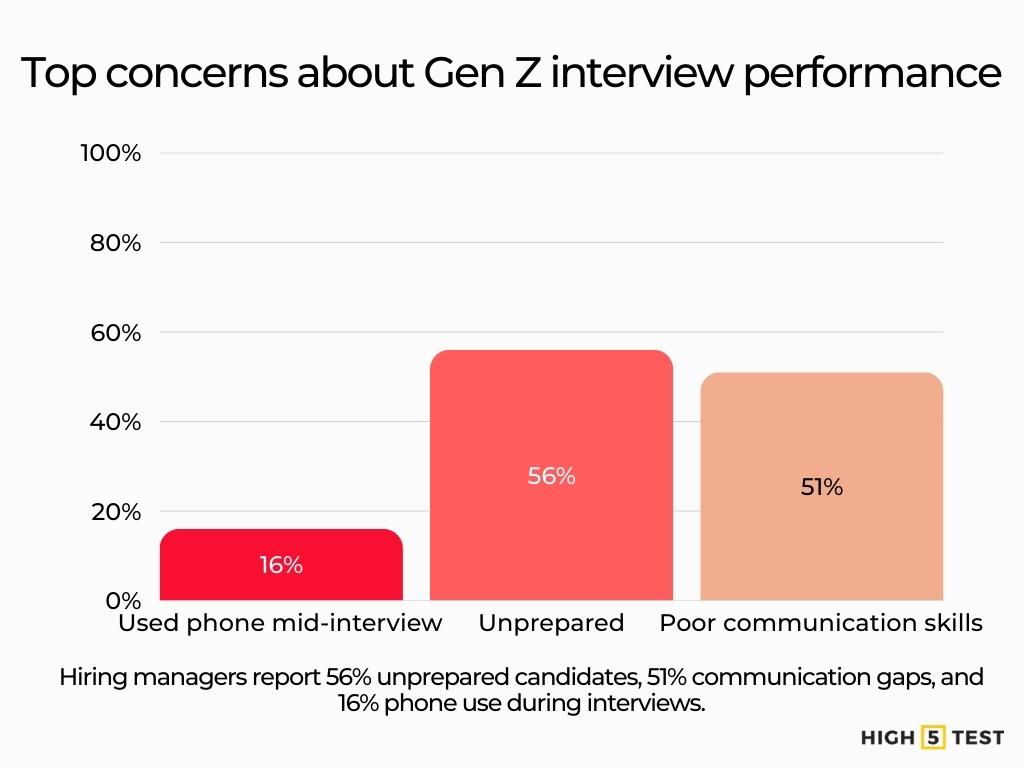
- 16% of hiring managers report Gen Z candidates using their phones mid-interview, a behavior that significantly damages perceived professionalism during critical evaluation moments.
- 56% of hiring managers say they’ve encountered unprepared Gen Z applicants, indicating that interview preparation remains the single most controllable factor for candidate success.
- 51% of hiring managers cite poor communication skills as a top concern, underscoring that clear articulation and structured answers are decisive factors in interview scoring.
- Around 70% of job seekers expect hiring processes to take three weeks or less, meaning slow interview cycles significantly increase the risk of candidate drop-off — especially among Gen Z.
- 63% of Gen Z say they would avoid a brand after a bad hiring experience, showing that candidate experience now extends beyond job offers — it impacts long-term brand perception and loyalty.
20+ Gen Z interview statistics in the U.S. (2025-2026)
24% of hiring managers say recent graduates are unprepared for interviews, meaning nearly one in four recruiters approach early-career interviews expecting readiness gaps.
Source: Intelligent.com
49% of hiring managers report recent grads struggle with eye contact, showing that nonverbal communication remains a critical interview filter even in hybrid hiring environments.
42% say recent grads struggle with dressing appropriately, reinforcing that visual professionalism strongly influences first impressions.
38% say recent grads have unrealistic salary expectations, indicating that compensation misalignment frequently impacts interview outcomes.
Source: Intelligent.com
55% of hiring managers were involved in firing a recent graduate in 2024, increasing employer risk sensitivity when evaluating Gen Z candidates during interviews.
Source: Intelligent.com
Data on controversial Gen Z interview behaviors
16% of hiring managers report Gen Z candidates using their phones mid-interview, a behavior that significantly damages perceived professionalism.
Source: Resume.org
56% of hiring managers say they’ve encountered unprepared Gen Z applicants, highlighting preparation as the single most controllable interview success factor.
51% of hiring managers cite poor communication skills as a top concern, reinforcing that structured answers and clarity outweigh raw credentials in interview scoring.
Source: Resume.org
Data on parental involvement in Gen Z interviews
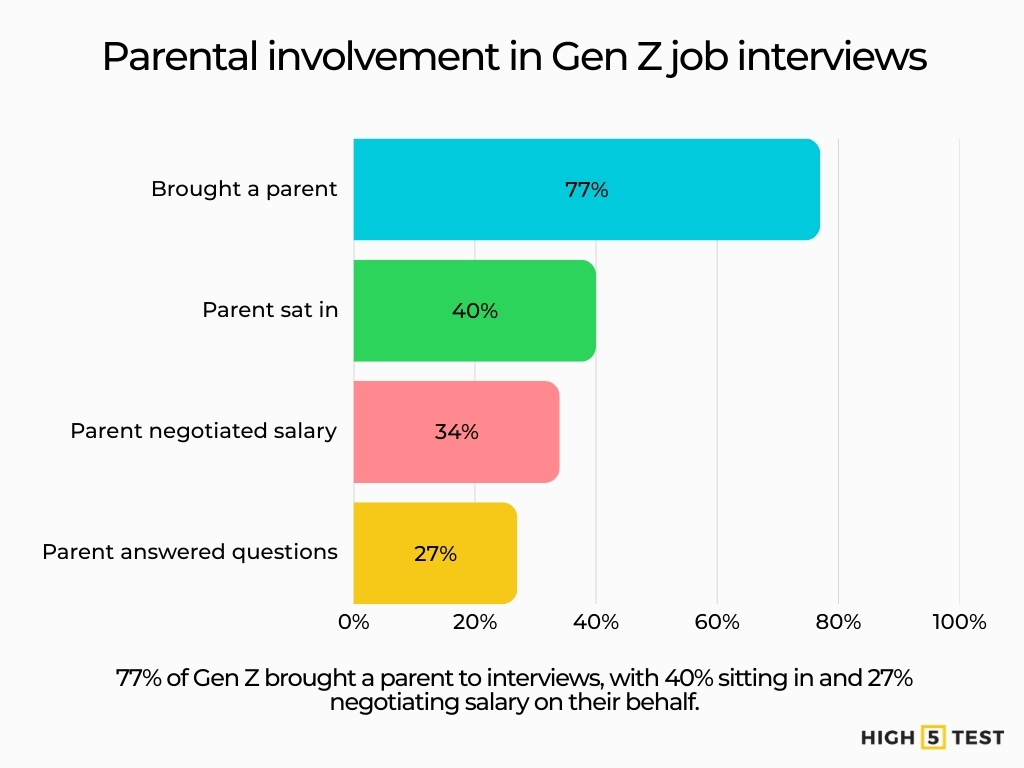
77% of Gen Zers say they have brought a parent to a job interview, reflecting increased reliance on external support systems during early-career transitions.
40% say a parent sat in on the interview, which can negatively affect employer perceptions of independence and readiness.
Source: ResumeTemplates.com
27% say a parent helped negotiate salary, suggesting confidence gaps around compensation discussions among Gen Z candidates.
34% say their parents answered questions, indicating that some Gen Z candidates may rely on parental guidance during the hiring process, potentially signaling lower interview preparedness or independence to employers.
Source: ResumeTemplates.com
Statistics on speed and candidate experience
Around 70% of job seekers expect hiring processes to take three weeks or less, meaning slow interview cycles significantly increase candidate drop-off risk.
51% of candidates are less likely to become customers after a negative interview experience, turning poor interviews into direct brand and revenue risks.
63% of Gen Z say they would avoid a brand after a bad hiring experience, showing this generation links employer experience directly to consumer loyalty.
Source: iCIMS
Statistics on AI in Gen Z interviews
68% of Gen Z candidates say AI has made job searching more competitive, contributing to higher applicant volume and lower interview conversion rates.
Source: Greenhouse
59% of Gen Z say generative AI skills are required for career advancement, meaning AI literacy is increasingly appearing in interview discussions.
Source: Deloitte
Insights on what Gen Z prioritizes during interviews
77% of Class of 2024 graduates prioritize job stability, leading to more interview questions about layoffs and long-term security.
Source: Handshake
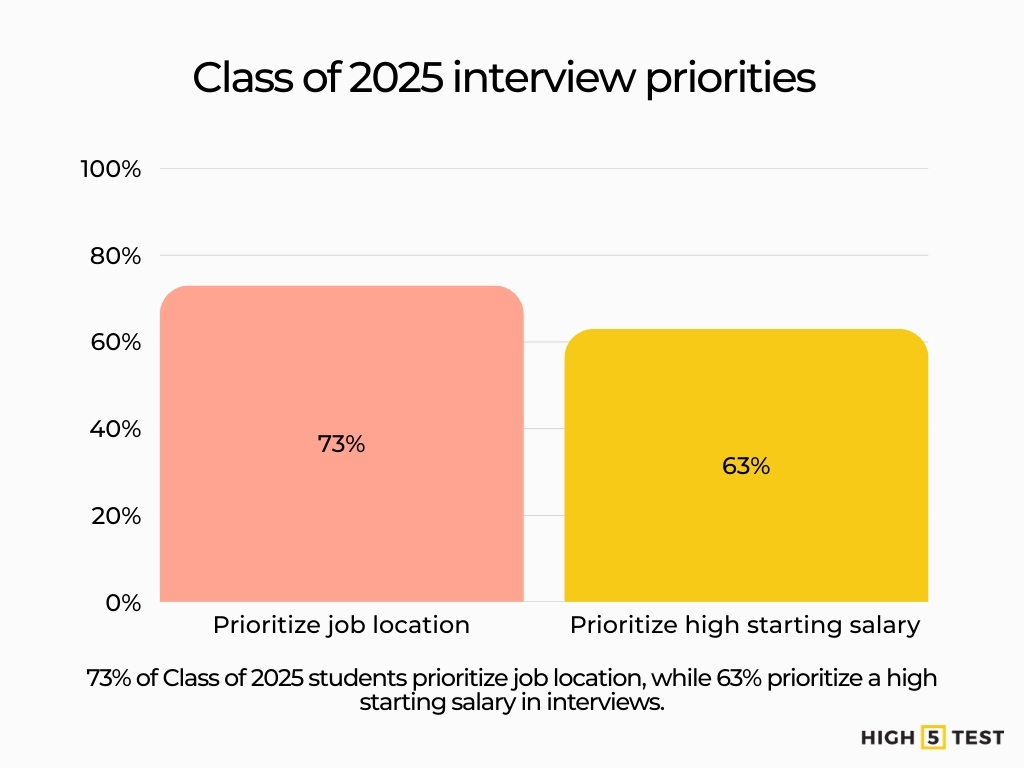
73% of Class of 2025 students prioritize job location, making remote versus in-office policy a decisive interview factor.
63% of the Class of 2025 prioritize a high starting salary, increasing early-stage compensation discussions during interviews.
Source: Handshake
Final word
Gen Z interview data from 2024 and 2025 points to a clear tension: candidates want speed, transparency, flexibility, and modern tools, while employers still grade heavily on communication, preparation, and professionalism.
Interview results improve when both sides close the gap: teams tighten candidate experience and set clearer expectations, and candidates show up prepared with strong communication and practical salary ranges.