
Free MBTI Alternative Test: Discover Your Top 5 Strengths
![30 Branch Interview Questions and Answers [2023]](https://high5test.com/wp-content/uploads/2023/03/30-Branch-Interview-Questions-and-Answers-2023.jpg "30 Branch Interview Questions and Answers [2023]")


![30 Business Analyst Interview Questions and Answers [2023]](https://high5test.com/wp-content/uploads/2023/03/30-Business-Analyst-Interview-Questions-and-Answers-2023.jpg "30 Business Analyst Interview Questions and Answers [2023]")

+4 million happier test takers
Great for individuals who want a practical alternative to MBTI – plus teams and coaches who need a shared language for strengths.
HIGH5 vs MBTI: What’s the Difference?
MBTI can be a fun way to explore preferences – but many people want something more actionable than a 4‑letter label. HIGH5 is a strengths-based MBTI alternative that highlights what you naturally do best and how to use it in real life. Here’s the quick comparison:
What you get
Your top 5 strengths (what energizes you and drives your best performance)
A 4‑letter personality “type”
What it focuses on
Strengths you can apply at work, in relationships, and in personal goals
Preferences and personality patterns
How it feels
Practical (“Here’s what I’m great at—and what to do next”)
Descriptive (“This is what I’m like”)
Use in teamwork
Creates a shared language for collaboration, communication, and roles
Can spark discussion, sometimes stays abstract
Depth
Strength-by-strength insights you can build on over time
Broad type overview
Time & access
~15 minutes, instant results, free to start
Varies by provider
What You Get: Free Results vs the Full Strengths Report
Start with the free test to discover your top 5 strengths. If you want deeper, more personalized guidance, you can upgrade anytime to unlock the full report with expanded insights and practical next steps.

How the Free MBTI Alternative Test Works
Getting your strengths profile is simple. You’ll answer a short set of questions, get your top 5 strengths instantly, and then decide if you want to go deeper with a tailored report.
Trusted by Millions (and Built for Real Life, Not Just Labels)
If you’ve used MBTI before, you already know the feeling: the result can be interesting – then you’re left wondering what to do with it. HIGH5 is designed to turn self-discovery into practical next steps, using strengths you can recognize, talk about, and apply.
Individuals have used HIGH5 to build confidence, improve collaboration, and make better decisions using a shared language of strengths.
“MBTI was interesting, but HIGH5 gave me something I could actually use at work the same day.”
Alex, Product Manager
“My Top 5 strengths explained why certain tasks energize me—and which ones drain me. That clarity helped me set better boundaries.”
Sam, Marketing Lead
“I’ve taken multiple personality tests. HIGH5 was the first that translated results into practical actions and development strategies.”
Jordan, Team Lead
Countries served last year
“The peer feedback feature was a game changer. It confirmed my strengths and showed how I come across to others – without the awkwardness.”
Taylor, Operations Manager
Organizations served in the last 12 months, such as:

FAQ: Free MBTI Alternative Test (HIGH5 Strengths Test)
Is HIGH5 an MBTI test?
No. HIGH5 is a strengths-based alternative to MBTI. Instead of assigning you a 4‑letter personality type, HIGH5 identifies your top 5 strengths – the abilities and patterns that energize you and help you perform at your best.
Will I get a 4‑letter personality type result (like INFJ or INTJ)?
No – HIGH5 doesn’t produce a 4‑letter type. You’ll receive a top 5 strengths profile (as unique as 1 in 2 million) that’s designed to be more directly usable in day-to-day life, work, and relationships.
Is this MBTI alternative test really free?
Yes. You can take the test and receive your top 5 strengths results for free. If you want deeper guidance, you can optionally upgrade to a paid report (Personal, Career, or Student).
How long does the free test take?
Most people finish in about 15 minutes. You’ll answer 120 quick questions and get your results immediately after completing the test.
What do I get for free vs. what’s included in the paid reports?
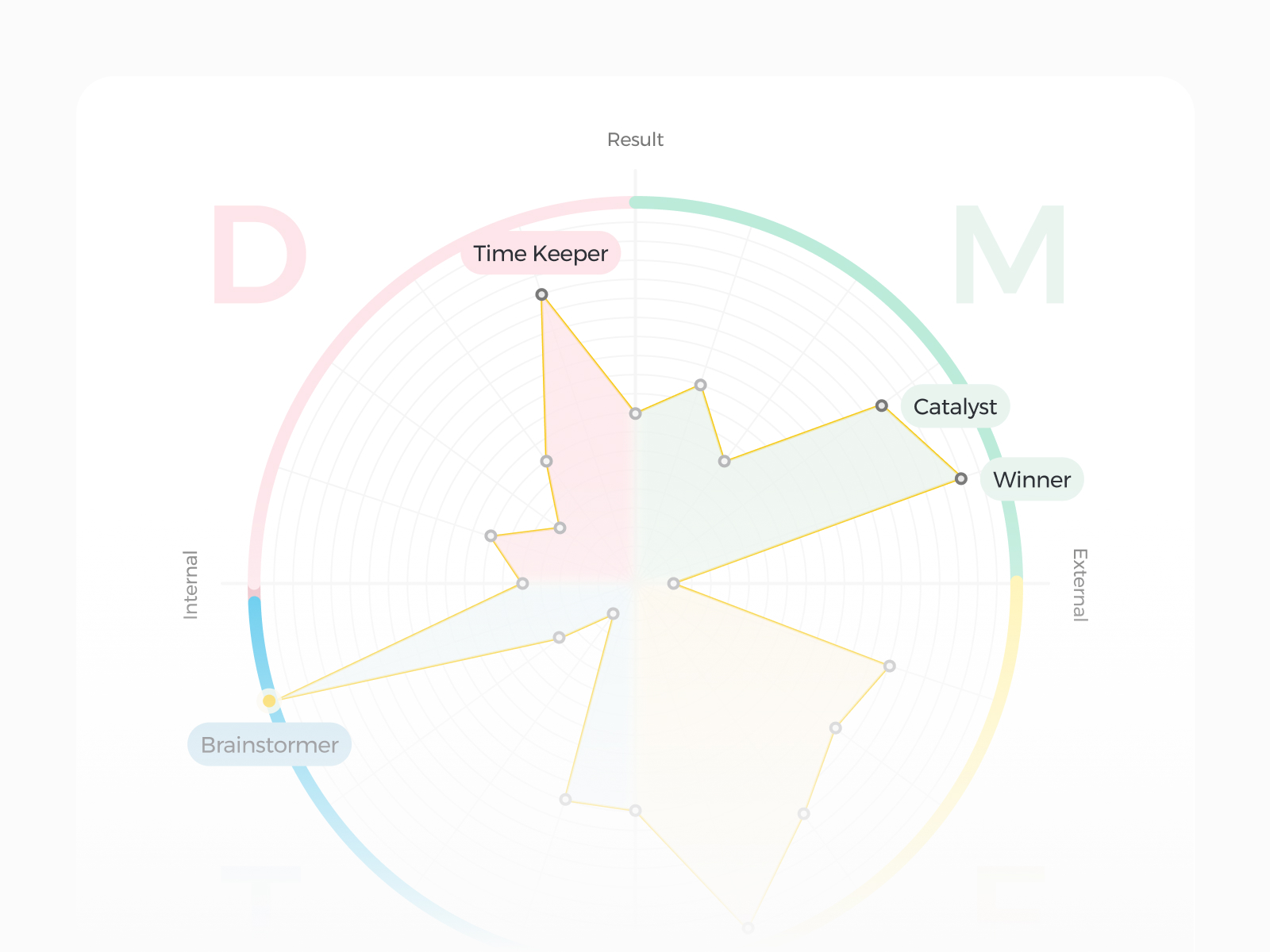
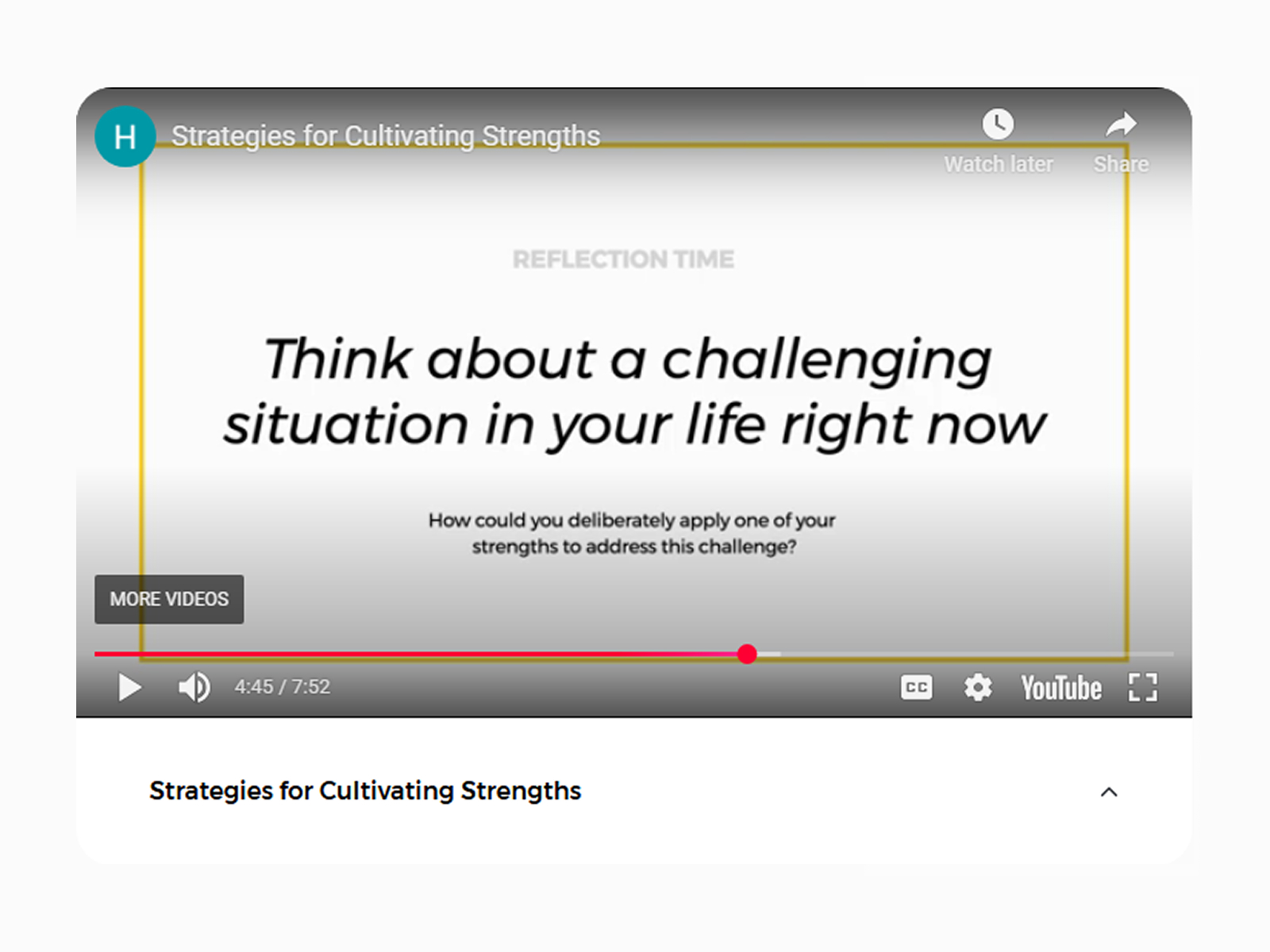
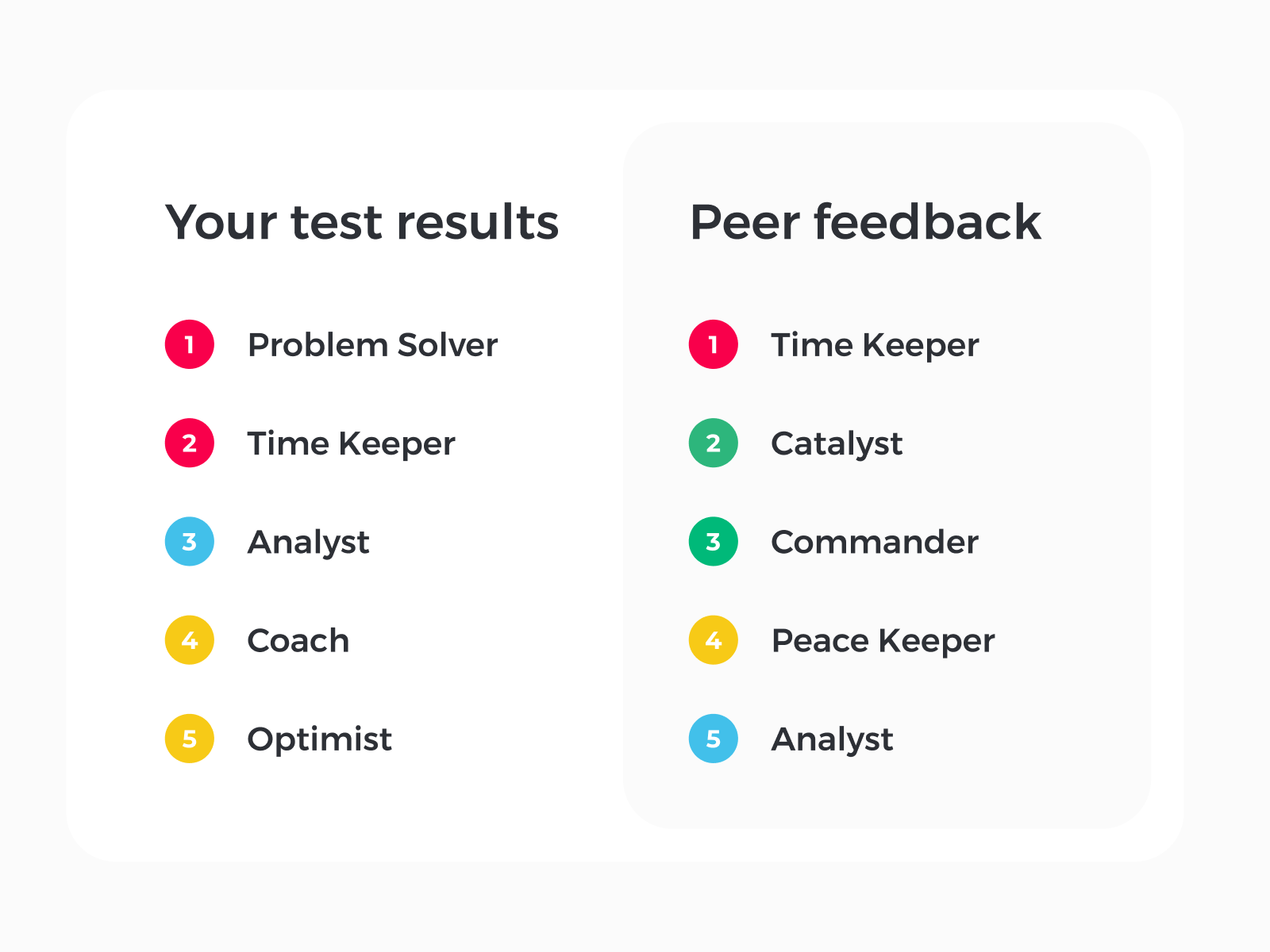
For free, you’ll get your top 5 strengths, access to a video course on how to use strengths, and the option to collect 360 feedback from peers.
If you upgrade, you can choose a report based on your goal:
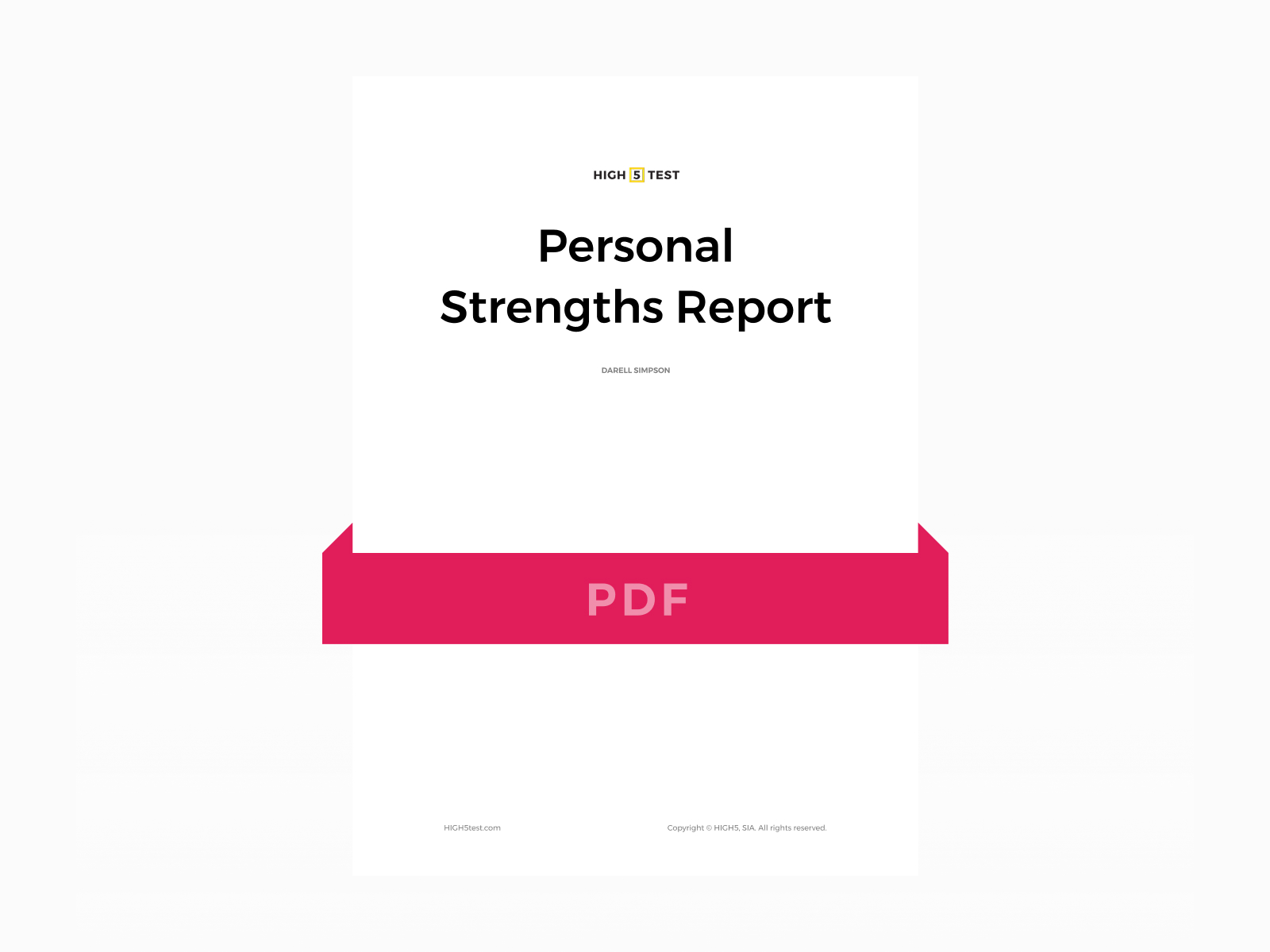
- Personal Strengths Report ($29): development strategies, watch‑outs, and best complementary partners
- Career Strengths Report ($29): matching careers and company cultures, interview & CV tips, and guidance for career change and setbacks
- Student Strengths Report ($19): academic superpowers, development insights, likely blind spots, group dynamics guidance, and future pathway recommendations
What makes HIGH5 a good alternative to MBTI?
MBTI can be helpful for understanding preferences, but it often stays at the “description” level. HIGH5 focuses on actionable strengths – so you walk away with a clearer sense of what to lean into, how to develop it, and how to use it in real situations.
Can I use HIGH5 for career decisions or interviews?
Yes. Your strengths can help you make better decisions about roles, environments, and the way you present yourself. If career direction is your main goal, the Career Report is built specifically for that.
Can teams use HIGH5 too?
Yes. HIGH5 is designed for individuals, and it also scales well to teams by giving people a shared language to discuss collaboration, communication, and contributions – without turning results into labels.
Do I need to prepare anything before taking the test?
No preparation needed. The best approach is to answer honestly based on what feels most natural for you – not what you think you should be.
What happens after I click “Take the Free Test”?
You’ll be taken to our secure test platform to answer 120 questions. After you finish, you’ll see your results right away and can choose whether to explore the free learning resources or upgrade to a full report.
Ready to Try a Free MBTI Alternative That’s Actually Actionable?
Instant results • Free to start • Optional upgrades
MBTI Background (For Readers Who Want the Details)
What is the MBTI (Myers-Briggs Type Indicator) test?
The Myers-Briggs Type Indicator Test (MBTI) is one of the most used psychological tools aimed for a wide range of purposes. It is a self-report inventory, i.e., a specific type of psychological test that the tester completed to reveal their own personality type. The MBTI is based on Carl Jung’s theory on psychological types [1]. Jung’s theory was later extensively studied and extended by Katharine Briggs and her daughter Isabel Myers. The basics of the MBTI lie in the belief that some seemingly random personality traits can be analyzed and grouped into specific cognitive functions that determine a person’s type. Both women created the Myers-Briggs Type Indicator, categorizing people into 16 different personality types. The categories are based on four dichotomies that focus on four cognitive functions that deliver the personality type when combined in a specific cluster [2].
The dichotomies go as follows: Introversion-Extroversion, Sensing-Intuition, Thinking-Feeling, and Judging-Perceiving. After completing the assessment, each tester will be given a 4-letter result, aligning to each of the 4 dichotomies. The names of the 16 personalities, i.e., their acronyms, are delivered based on the specific combination of these functions, such as INTJ (Introverted, Intuitive, Thinking, Judging), or ESTJ (Extroverted, Sensing, Thinking, Judging). Combining these functions delivers somebody’s personality type, i.e., they point to a person’s interaction with the outer or inner world, their preferences, strengths and weaknesses, and how people make decisions.
Why should you take the MBTI assessment?
One of the greatest perks of the MBTI test is its non-judgemental nature. It has been designed in a way that reveals a person’s strengths and weaknesses without preferring one personality type over another.. The purpose of the test is to understand and cherish personality differences.
When a person knows their personality type, it can provide an insight into their personality on a much deeper level.It can help individuals understand why they behave the way they do without creating a feeling of incompetence or judgment.
It can explain the contrasting nature of family members, it can help people build meaningful relationships, boost their strengths and work on their weaknesses. The popularity of the MBTI is immense. Due to its simplicity, it’s one of the most well-known personality tests in the world [2]. It’s most often used to help testers understand how they interact with themselves and the world around them. Moreso, it can help with personal development activities.
Compared to HIGH5
While the MBTI provides a detailed personality type, the HIGH5 Test goes a step further by identifying your unique strengths. Rather than focusing on broad personality categories, the HIGH5 Test identifies your top strengths, helping you understand your natural tendencies and skills, and helping you leverage them in personal and professional settings. Moreso, the HIGH5 Test provides actionable insights tailored to help you thrive in your career and relationships.
How does the personality Test work?
The test is divided into two sections and a total of 60 questions. The first section offers questions that describe personalities on two opposite ends. The tester needs to select which statement best aligns with them [2]. The second section includes statements (e.g., I love spending time alone), and participants have to rate the level of applicability to their personality on a Likert Scale, usually from agree to disagree. Once the answers are submitted, the participant receives their results on the screen or via email. Overall, the assessment takes about 10 to 20 minutes to complete [2]. The MBTI is not a psychological diagnosis, and its purpose is to give people an in-depth insight into their personality type.
What do results tell me?
Once you complete the assessment, you will get information about your personality type. Essentially, you will be assigned one of 16 possible personality types, based on the four dichotomies (Introversion-Extroversion, Sensing-Intuition, Thinking-Feeling, and Judging-Perceiving) [2]. Once you know your type, you can find out how you see yourself and how you usually interact with the world around you.
Compared to HIGH5
While the MBTI provides a glimpse into your personality type, the HIGH5 assessment provides and even more practical perspective by highlighting your top strengths. Instead of simply describing how you see yourself or interact with others, HIGH5 focuses on actionable insights that help you build confidence, improve relationships, and achieve your goals, both in and outside of work. The HIGH5 test provides clear, strengths-based guidance to help you take the next step.
Can your MBTI personality type change overtime?
The primary personality type can’t change, and no one can have two personality types. It is believed that individuals are born with innate cognitive functions that determine preferences and perceptions. However, at specific points in your life, some aspects of your personality can get modified, particularly if the environment or circumstances around the individual impose using learned but not natural skills. Take, for example, someone who is a natural introvert and gets energized by spending time alone. If this person gets a job that requires extensive communication with other people, this individual might try to blend in and develop communication skills.
However, if they switch to another job position that fits their introverted profile, they will feel like their normal selves. There have been individuals who received different MBTI personality types in different periods of time [3]. Since MBTI is a tool that delivers results based on a person’s answers, it might happen that those people were differently influenced when they did the assessment. Even in such cases, there’s usually one function that gets slightly changed or borderline with another function.
How accurate is the MBTI?
The Myers-Briggs company claims that the MBTI test is very accurate provided the test takers give honest answers to the questions. Actually, the website boasts it is one of the most accurate and reliable personality tests currently available as it has a 90% accuracy rating. Within the last 40 years, the test has been continuously updated, there have been hundreds of studies on this assessment, but many scientific professionals question its scientific accuracy [4].
References:
- (n.d.). (2024). The history of the MBTI® assessment. The Myers-Briggs Company. https://eu.themyersbriggs.com/en/tools/mbti/myers-briggs-history
- (n.d.). (2024). All about the Myers-Briggs (MBTI) Assessment. The Myers-Briggs Company. https://www.themyersbriggs.com/en-US/Campaigns/All-About-the-MBTI-Assessment
- Querengässer, J., & Schindler, S. (2014). Sad but true? – How induced emotional states differentially bias self-rated Big Five personality traits. BMC Psychology, 2(1). https://doi.org/10.1186/2050-7283-2-14
- Grant, A. (2013). Goodbye to MBTI, the Fad That Won’t Die. Psychology Today United Kingdom. PsychologyToday. https://www.psychologytoday.com/gb/blog/give-and-take/201309/goodbye-to-mbti-the-fad-that-wont-die
Disclaimer: HIGH5 does not intend to replicate or to substitute MBTI Myers Briggs test as both tests follow different methodologies, yet bring value in similar ways. Both tests help test takers be more aware of their own personality. HIGH5 does not dispute or diminish the value of MBTI Myers Briggs test and encourages test takers to go through both assessments. If you have any questions, please do not hesitate to reach us at hello(at)high5test.com
Myers-Briggs, MBTI, the MBTI logo are trademarks of their respective owners. All other trademarks not owned by HIGH5 Test that appear on this Web site are the property of their respective owners, who may or may not be affiliated with HIGH5 Test.