
Job growth statistics help explain where the U.S. labor market is expanding, which industries are adding the most jobs, and how employment trends are shifting over time. In 2024, the U.S. economy continued to add jobs at a steady pace, with growth concentrated in major sectors such as healthcare, construction, and other service-based industries. For employers, job seekers, and researchers, tracking U.S. job growth data is essential for understanding labor market demand, identifying high-growth fields, and evaluating the broader direction of the economy.
12 most interesting job growth statistics
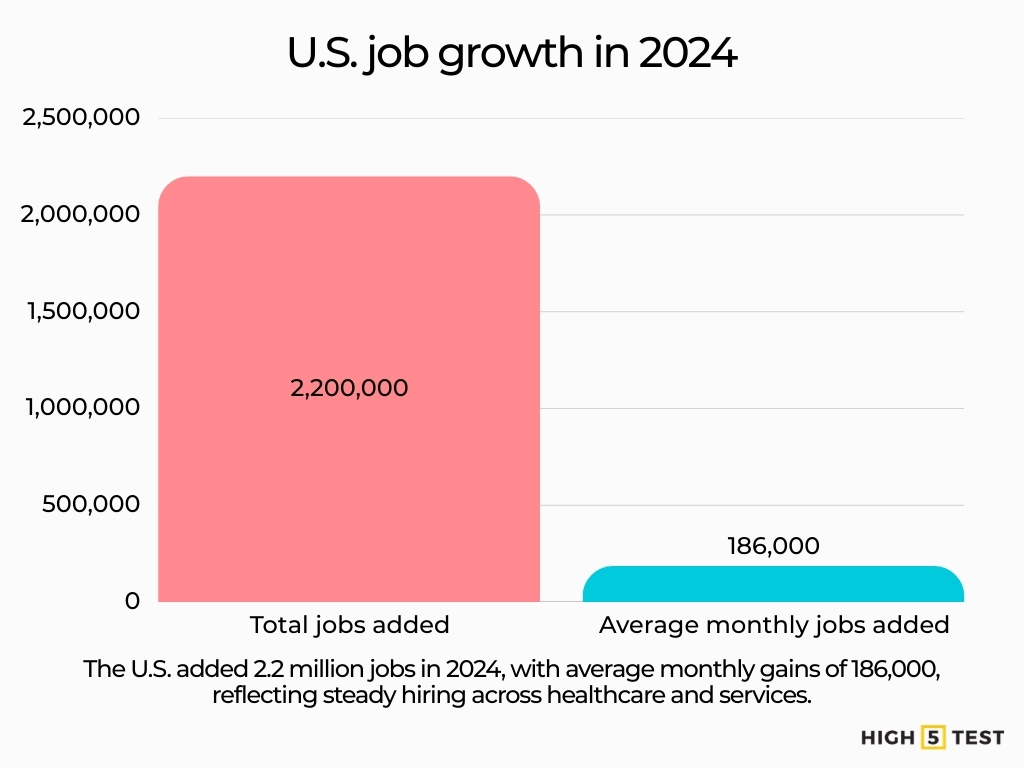
- The U.S. economy added about 2.2 million jobs in 2024, with an average monthly increase of 186,000 jobs. This indicates steady hiring across multiple industries.
- Total nonfarm payroll employment declined by 92,000 in February 2026. Short-term drops occur periodically and do not always signal long-term employment decline.
- In December 2024, employers added 256,000 jobs. Strong hiring at the end of the year reflected sustained labor demand.
- The economy added 303,000 jobs in March 2024, pushing total nonfarm payroll employment to 158.1 million workers. This highlights the size of the U.S. workforce.
- Healthcare employment increased by 72,000 jobs in March 2024. The sector averaged around 60,000 new jobs per month during the previous year, making it one of the largest contributors to employment growth.
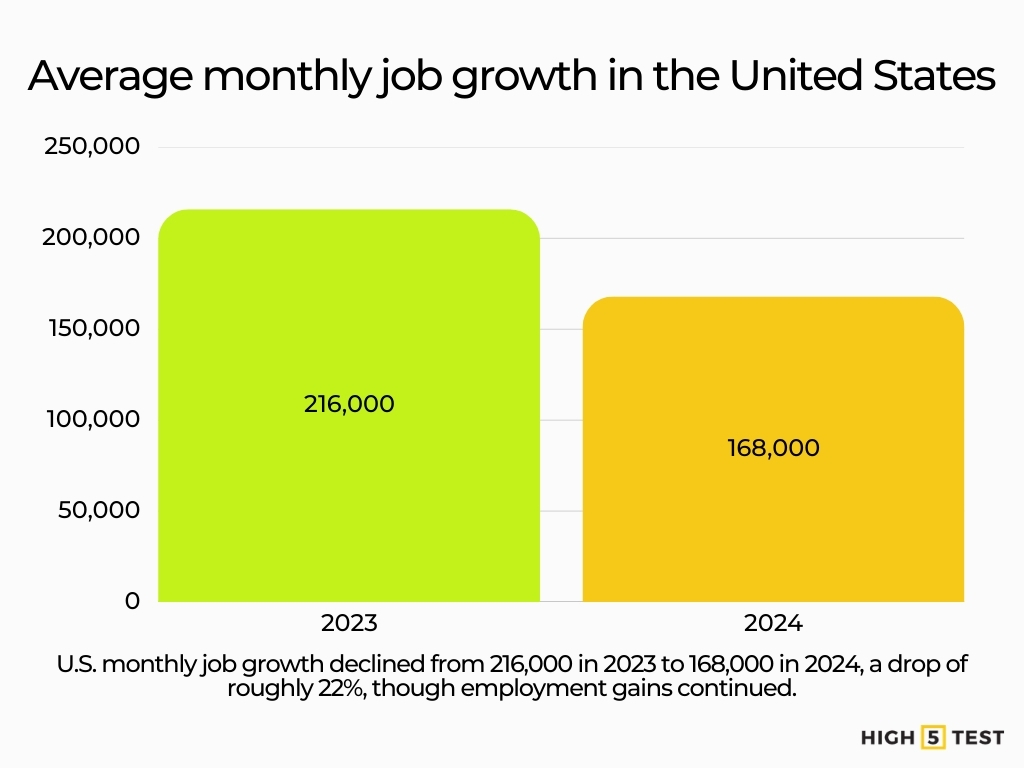
- Average monthly job gains slowed to 168,000 jobs in 2024, compared with 216,000 per month in 2023. Hiring remained steady despite slower growth.
- The U.S. economy is projected to add about 5.2 million new jobs between 2024 and 2034. Healthcare and social assistance are expected to generate the largest share of new jobs.
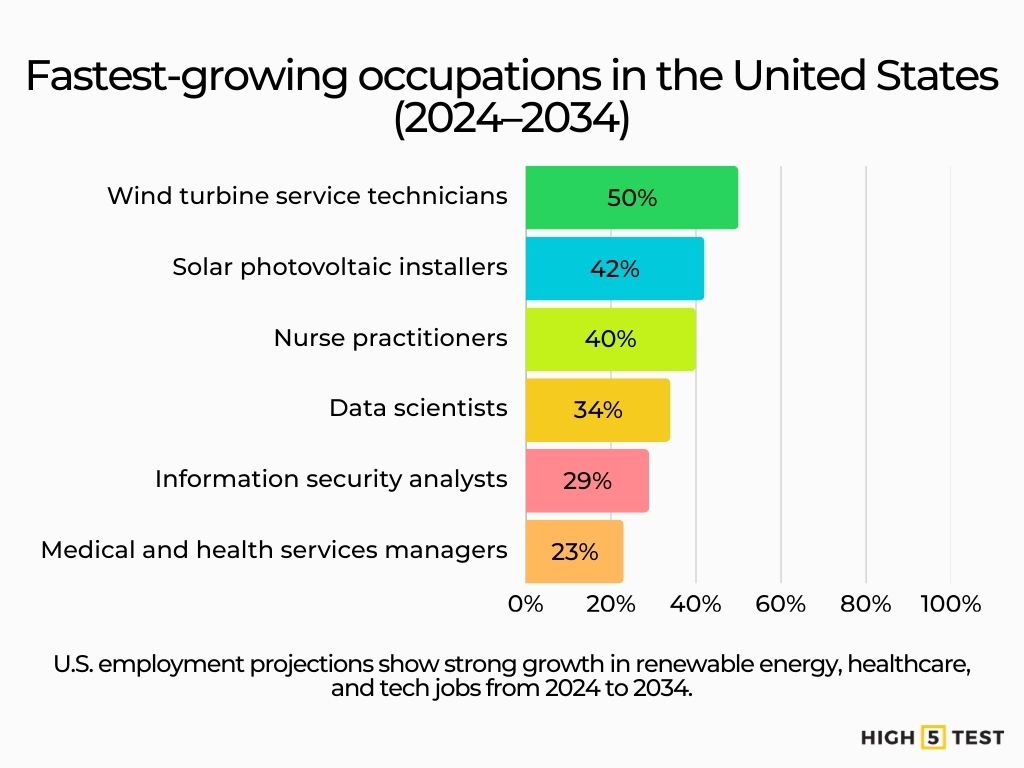
- Wind turbine service technician jobs are projected to grow about 50 percent between 2024 and 2034, the fastest growth rate among major occupations.
- Solar photovoltaic installer employment is projected to grow by about 42 percent from 2024 to 2034. Growth reflects the expansion of solar power infrastructure.
- Nurse practitioner employment is projected to grow about 40 percent between 2024 and 2034, adding more than 128,000 jobs.
- Data scientist employment is expected to increase by about 34 percent from 2024 to 2034, adding more than 82,000 jobs.
- Information security analyst jobs are projected to grow about 29 percent between 2024 and 2034 as organizations expand digital security teams.
What does job growth mean?
Job growth refers to the increase in the number of employed workers in an economy over time.
In the United States, employment growth is measured primarily through the Current Employment Statistics (CES) survey, which tracks nonfarm payroll employment across industries.
Economists evaluate labor market conditions using several key indicators.
- Total nonfarm payroll employment
- Monthly job creation
- Year-over-year employment changes
- Industry-specific employment growth
These metrics help identify expanding industries and track changes in workforce demand.
20+ job growth statistics in the U.S. (2024-2026)
The U.S. labor market continued expanding during 2024. Hiring slowed compared with the rapid growth between 2021 and 2023, though employment gains remained steady.
Major job growth statistics for 2024
The U.S. economy added about 2.2 million jobs in 2024, with an average monthly gain of 186,000 jobs. Hiring remained strong across healthcare, government, and service industries.
Source: U.S. Bureau of Labor Statistics | The Economics Daily
Employment increased by about 3.0 million jobs in 2023, with 251,000 jobs added per month on average. The comparison shows slower growth in 2024.
Source: U.S. Bureau of Labor Statistics | The Economics Daily
Average monthly job growth declined to 168,000 in 2024, compared with 216,000 per month in 2023. Hiring continued despite slower momentum.
Source: U.S. Bureau of Labor Statistics | Monthly Labor Review
Total nonfarm payroll employment reached 158.1 million workers in March 2024. The figure reflects a large and active labor market.
Source: U.S. Bureau of Labor Statistics | The Economics Daily
Statistics on major job gains by industry
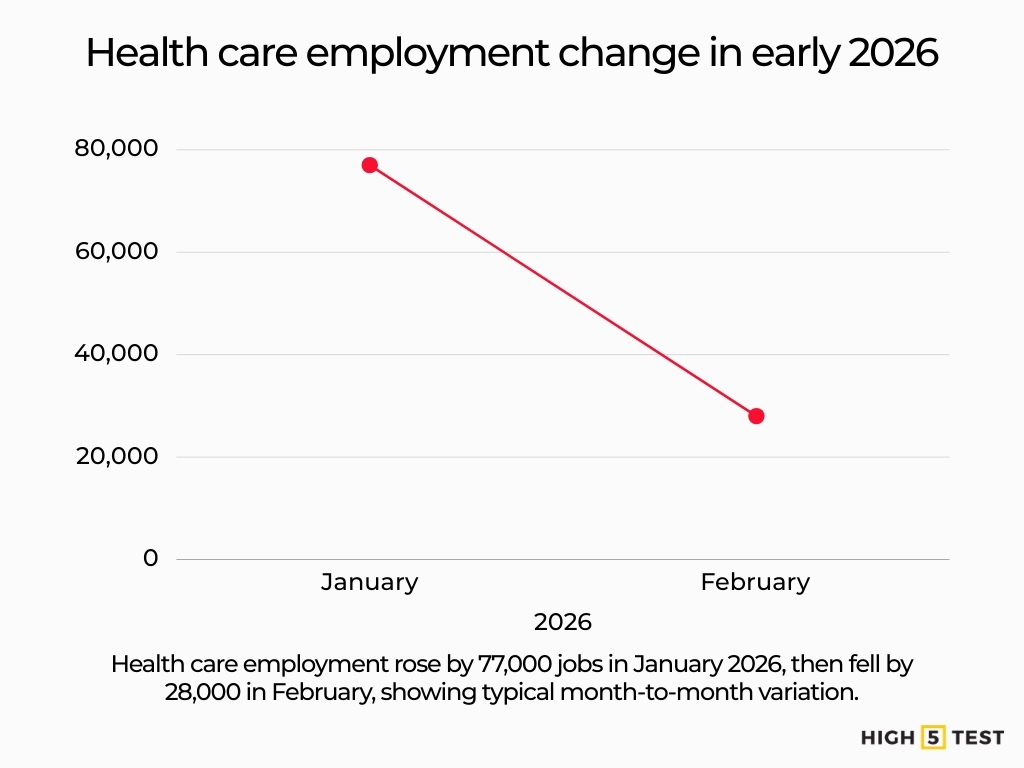
Health care employment declined by 28,000 in February 2026 after a strong increase in January (+77,000). Month-to-month changes often occur in large industries.
Source: U.S. Bureau of Labor Statistics | The Employment Situation
Employment in the information sector declined by 11,000 in February. The industry lost an average of 5,000 jobs per month during the previous year.
Source: U.S. Bureau of Labor Statistics | The Employment Situation
Construction employment increased by 33,000 jobs in early 2026. Infrastructure investment and development projects continue to support hiring.
Source: U.S. Bureau of Labor Statistics | The Economics Daily
Statistics on the fastest-growing jobs in the United States
Government employment projections identify several occupations expected to expand rapidly between 2024 and 2034.
Top fast-growing occupations
- Wind turbine service technicians are projected to see employment growth of about 50% from 2024 to 2034, making them the fastest-growing occupation in the U.S. labor market.
- Solar photovoltaic installers are expected to experience about 42% employment growth over the same decade, driven by expanding renewable energy deployment.
Source: U.S. Bureau of Labor Statistics | Occupational Outlook Handbook
- Nurse practitioners are projected to grow about 40% between 2024 and 2034, adding roughly 128,400 jobs nationally.
- Data scientists are expected to see about 34% employment growth, adding more than 82,500 jobs due to demand for analytics and machine learning expertise.
Source: U.S. Bureau of Labor Statistics | Occupational Outlook Handbook
- Information security analysts are projected to grow about 29% between 2024 and 2034, reflecting rising cybersecurity needs across industries.
- Medical and health services managers are projected to grow about 23% over the decade, adding roughly 142,900 new jobs.
Source: U.S. Bureau of Labor Statistics | Occupational Outlook Handbook
Job growth statistics by industry
Several industries are expected to generate significant employment gains during the next decade.
Healthcare and social assistance
Healthcare employment averaged about 36,000 new jobs per month during the past year. The sector remains a major contributor to employment growth.
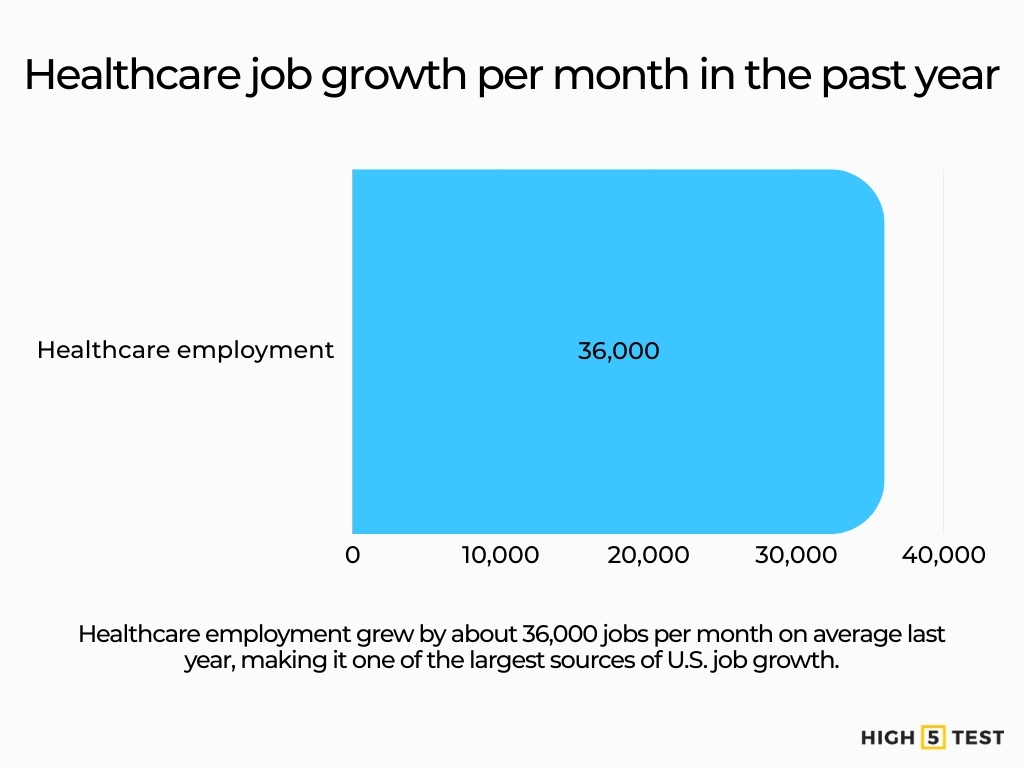
Healthcare and social assistance are projected to generate the largest share of new jobs through 2034.
Source: U.S. Bureau of Labor Statistics | The Employment Situation
Renewable energy
Wind turbine technician employment is projected to average 2,300 openings per year during the decade.
Source: U.S. Bureau of Labor Statistics | Occupational Outlook Handbook
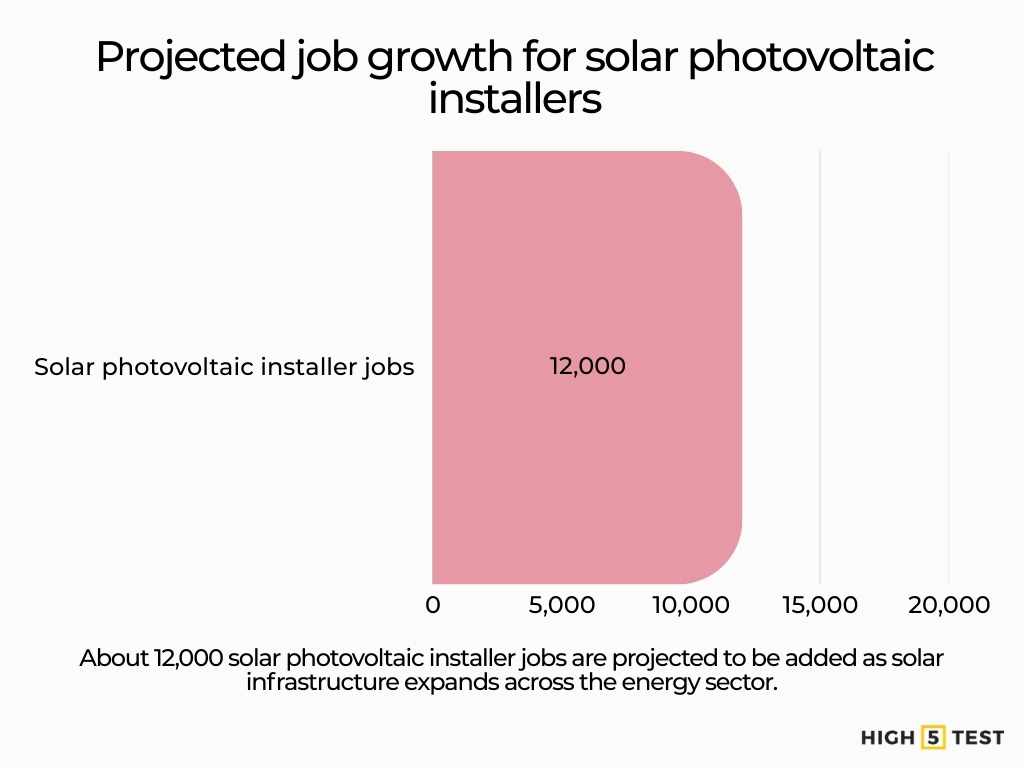
Solar photovoltaic installer jobs are projected to add about 12,000 positions due to continued solar expansion.
Source: U.S. Bureau of Labor Statistics | Occupational Outlook Handbook
Technology and data
Data scientist employment is expected to increase by about 34 percent from 2024 to 2034, with 23,400 job openings per year on average.
Source: U.S. Bureau of Labor Statistics | Occupational Outlook Handbook
Information security analyst employment is projected to increase by 52,100 jobs as cybersecurity demand grows.
Source: U.S. Bureau of Labor Statistics | Occupational Outlook Handbook
Long-term employment outlook
Labor market projections point to continued employment growth across the U.S. economy. The U.S. economy is projected to add about 5.2 million jobs between 2024 and 2034.
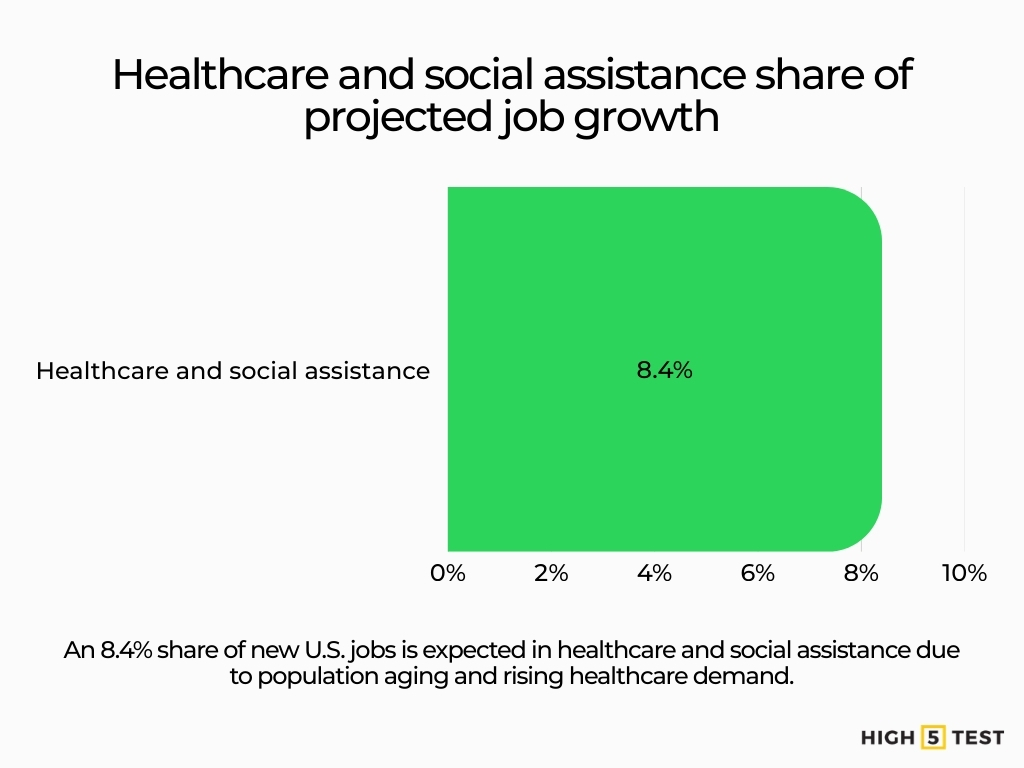
Healthcare and social assistance are expected to generate the largest share of new jobs over the decade (8.4%), driven primarily by population aging and increased demand for healthcare services.
Renewable energy occupations such as wind turbine technicians and solar installers are projected to grow more than 10 times faster than the average occupation. Although fast-growing, the two occupations combined will add fewer than 20,000 new jobs.
Demand for artificial intelligence systems, software development, data processing, and consulting services will drive hiring in the professional, scientific, and technical services sector as well as the information sector.
Source: U.S. Bureau of Labor Statistics | Employment Projections
Conclusion
U.S. job growth remained steady in 2024. The economy added about 2.2 million jobs and averaged roughly 186,000 new jobs per month, according to the U.S. Bureau of Labor Statistics. Hiring slowed compared with earlier recovery years, yet the labor market continued to expand across many sectors.
Industry trends show where employment growth is strongest. Healthcare continues to generate large numbers of jobs due to the rising demand for medical services. Technology occupations such as data scientists and information security analysts are also expanding as organizations rely more on data analysis, digital infrastructure, and cybersecurity.
Long-term projections point to continued expansion in the U.S. workforce. The economy is expected to add about 5.2 million jobs between 2024 and 2034, with healthcare and social assistance expected to generate the largest share of new positions. Renewable energy occupations, including wind turbine technicians and solar photovoltaic installers, are also projected to grow rapidly as clean energy projects expand.
Overall, current employment data highlights several structural shifts in the labor market. Healthcare services, digital technology, and renewable energy continue to drive new job creation. These trends provide a clear picture of where workforce demand and career opportunities are likely to develop during the coming decade.