
Working from home has become a permanent part of the U.S. labor market, but questions about remote work productivity remain top of mind for employers and employees alike. In 2024 and 2025, organizations are increasingly relying on data, not assumptions, to understand whether working from home improves or hinders performance.
This research-driven report analyzes the latest working from home productivity statistics in the United States, drawing on authoritative sources. With a primary focus on U.S. data and select global benchmarks for comparison, the findings reveal how remote and hybrid work impact productivity, efficiency, engagement, and long-term workforce trends.
10 most interesting working from home productivity statistics
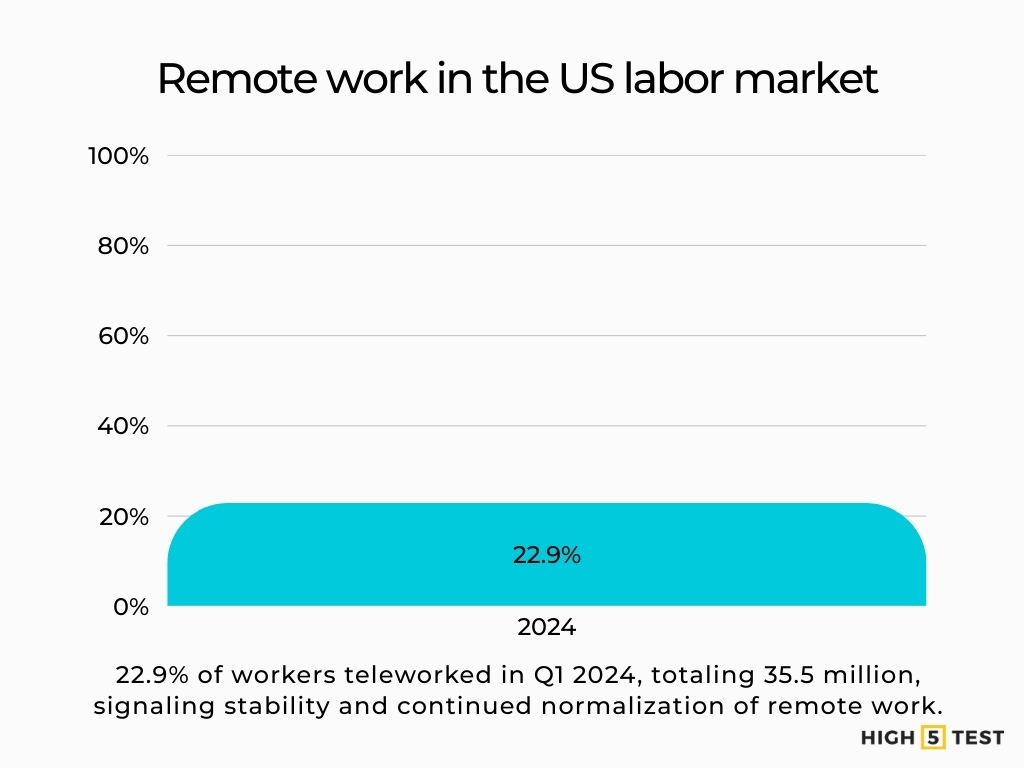
- 22.9% of U.S. employees worked remotely at least partially as of March 2025, equal to roughly 35.5 million workers, showing remote work is a sustained labor force trend.
- Remote work participation remains consistently above pre-pandemic levels, when only about 6.5% of workers worked mainly from home — highlighting a structural shift in work arrangements.
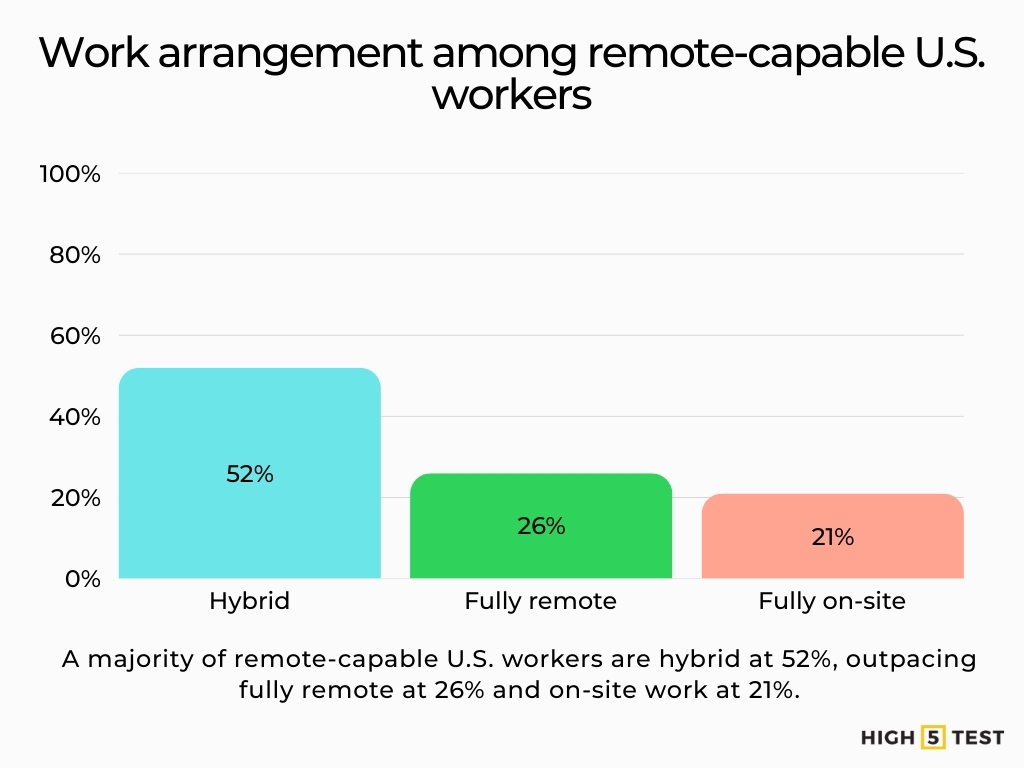
- 52% of remote-capable U.S. workers are in hybrid arrangements, with 26% fully remote and 21% fully on-site, indicating hybrid work dominance.
- Remote employees show 35–40% higher productivity than office-based peers, alongside 40% fewer mistakes, underscoring significant performance advantages.
- Remote workers save an average of ~72 minutes per day by eliminating commuting, contributing to focused work or rest.
- A 1 percentage-point rise in remote work share aligns with about a 0.08 percentage-point increase in total factor productivity, connecting remote work adoption with broad economic output gains.
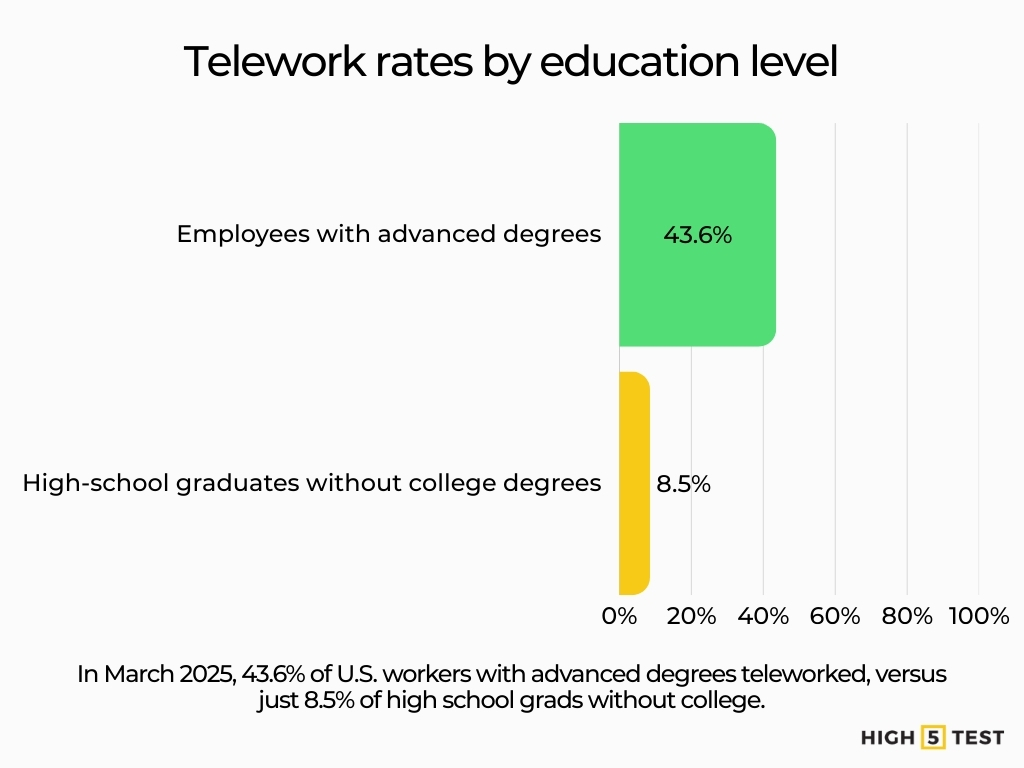
- 43.6% of U.S. employees with advanced degrees teleworked in March 2025, compared with only 8.5% of high-school graduates, showing remote access is tied to educational level.
- Remote workers spend about 4.15 more hours per week in a focused state of work, roughly a 22% gain in concentration time compared to in-office workers.
- 82% of employees say flexible work location options increase happiness, and 6 in 10 report improved productivity and work quality with remote/hybrid work.
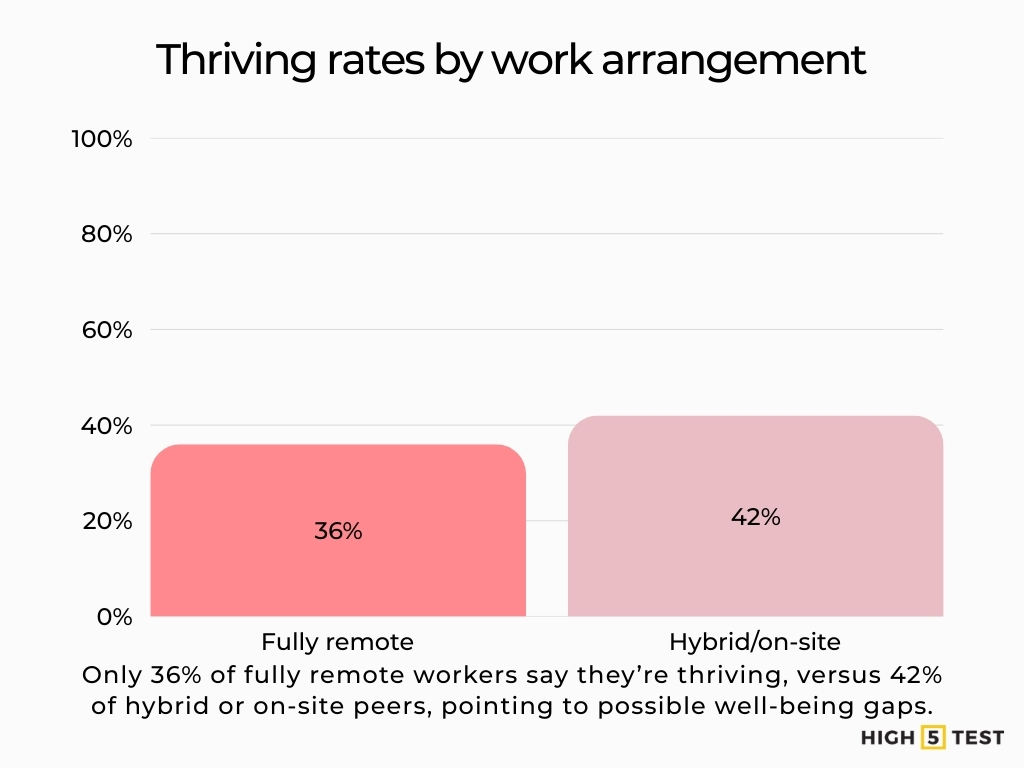
- Only 36% of fully remote workers report “thriving” overall, compared with 42% of hybrid or on-site workers, highlighting well-being and engagement gaps that can impact long-term output.
Working from home (WFH) productivity statistics in the U.S. (2024-2025)
Remote work participation
22.9% of U.S. employees worked remotely (at least partially) as of March 2025, equivalent to roughly 35.5 million workers.
Source: U.S. Bureau of Labor Statistics
As of December 2025, the U.S. remote work rate was 22.5%.
Source: U.S. Bureau of Labor Statistics
Remote work participation remains far above pre-pandemic levels, when about 6.5 percent of workers mainly worked from home. This suggests remote work has shifted from a short-term response to a lasting work structure.
Hybrid, fully remote, and on-site work models
52% of remote-capable U.S. workers are in hybrid arrangements (mix of home and office), with 26% fully remote and 21% fully on-site.
Source: Gallup
Other estimates show 27% hybrid, 11% fully remote, and 62% on-site, reinforcing hybrid as the dominant model.
Source: Owl Labs
Hybrid work leads across multiple surveys, even though reported percentages vary by source. The consistency points to flexible schedules as the preferred option for many knowledge-based roles.
Productivity comparisons between remote and office work
Productivity gains from remote work
Studies indicate remote employees show 35-40% higher productivity than office-based peers, with 40% fewer mistakes.
Source: ActivTrak
Remote workers save an average of ~72 minutes per day by cutting out commutes, which contributes to productivity gains.
Source: NBER Research (Aksoy, et. al)
Saved commute time often shifts into focused work or rest. Both outcomes can support higher quality output and sustained performance over time.
Output and efficiency
A 1 percentage point rise in remote work share links to about a 0.08 percentage point increase in total factor productivity.
Source: U.S. Bureau of Labor Statistics
This relationship does not confirm direct cause and effect. It does suggest that higher remote work adoption aligns with broader gains in economic output.
Hours worked and daily work patterns
Weekly hours and work intensity
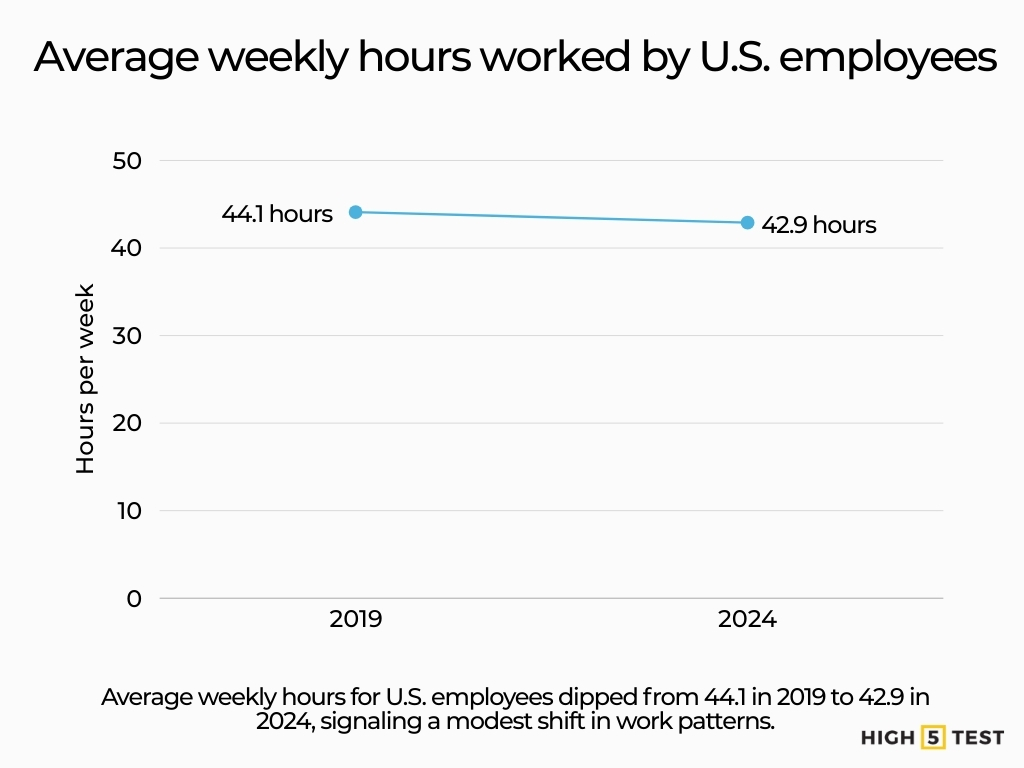
U.S. employees worked an average of 42.9 hours per week in 2024, down from 44.1 hours in 2019.
Source: Gallup
Teleworkers in early 2024 averaged 27.2 hours per week from home, representing 16.3% of all weekly hours.
Source: U.S. Bureau of Labor Statistics
Fewer hours do not appear to reduce output for many remote workers. This points to better concentration and fewer interruptions during work time.
Demographic patterns in remote work
Education and access to remote jobs
43.6% of U.S. employees with advanced degrees teleworked in March 2025, compared with only 8.5% of high-school graduates without college degrees.
Source: U.S. Bureau of Labor Statistics
Education level strongly aligns with remote work access. Many remote roles depend on digital skills and independent task management.
Productivity-related benefits of remote and hybrid work
Time and focus gains
An average remote team member will spend 4.15 more hours in a focused state of work, about a 22% gain compared to the average in-office worker.
Source: Hubstaff
Fewer interruptions and more schedule control help employees sustain concentration. This often leads to faster task completion and fewer revisions.
Hybrid and remote satisfaction
82% of employees report greater happiness due to flexible work location options, and 6 in 10 employees say productivity and quality of work have improved.
Source: Cisco
Higher satisfaction often supports retention and consistent performance. Employees who feel trusted tend to manage their time with more care.
Productivity limits and well-being concerns
Differences across work arrangements
Only 36% of fully remote workers report “thriving” overall, compared with 42% for hybrid or on-site peers. This suggests remote work may come with social or well-being trade-offs that could affect long-term productivity.
Source: Gallup
Lower well-being scores among fully remote workers point to social and support gaps. Over time, these gaps can influence engagement and output.
Global preferences and context
International views on flexible work
Globally, surveys find that ~83% of employees prefer hybrid work, signaling broad support for mixes of remote and office work.
Source: Zoom
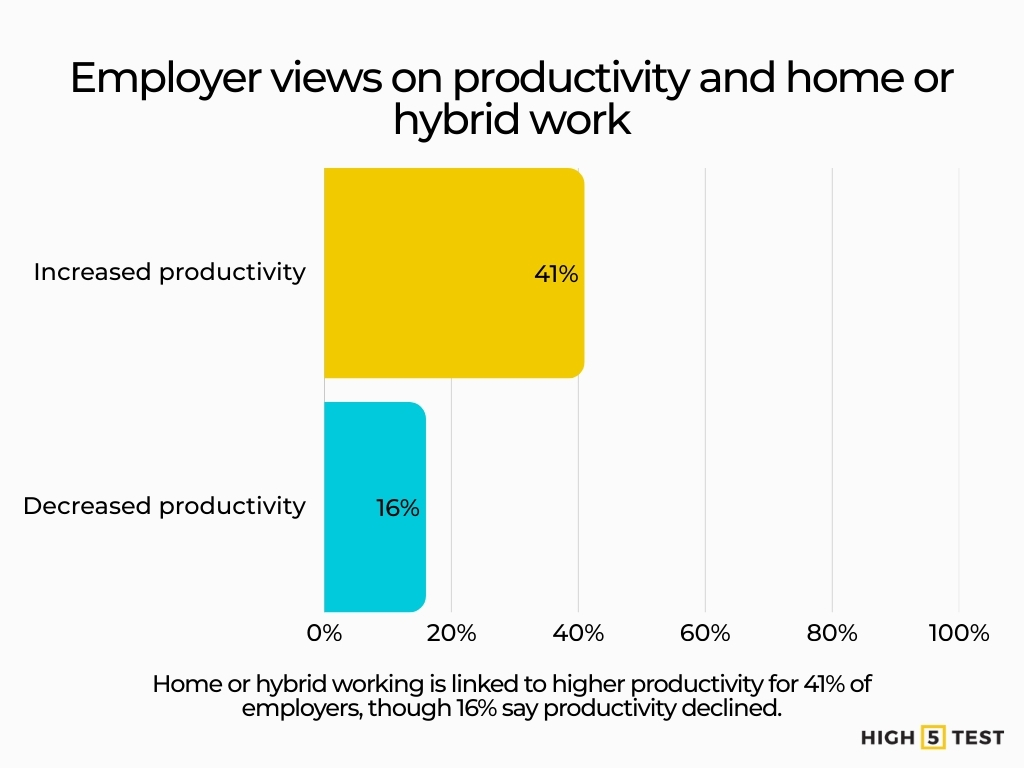
41% of employers believe that an increase in home/hybrid working has led to increased productivity/efficiency in their organization, although 16% believe it has decreased productivity/efficiency.
Source: CIPD
Global preference trends align with U.S. data. Workers often value flexibility while still wanting some in-person interaction.
Conclusion: What the data tells us
The data shows that working from home remains both widespread and productive in the U.S. through 2024 and 2025. With more than one-fifth of American workers participating in remote or hybrid work, productivity metrics consistently indicate equal or higher output compared to traditional office settings, largely driven by reduced commute time, flexible schedules, and improved focus.
However, the research also highlights important nuances. Fully remote work may introduce challenges related to engagement and well-being, while hybrid models increasingly emerge as the most sustainable balance between productivity and employee satisfaction. For organizations navigating the future of work, the evidence is clear: productivity is less about location and more about flexibility, outcomes-based management, and supportive work environments.