
Job fairs remain a measurable hiring channel across the United States. Recruiters continue to rely on them despite the growth of remote work and digital applications. The reason is simple. Job fairs attract candidates who are actively searching and prepared to speak with employers.
This guide compiles verified U.S. job fair statistics for 2024 and 2025. The data covers attendance levels, event formats, hiring outcomes, and return on investment. Each section includes practical commentary so you can apply the insights to real hiring decisions.
10 most interesting job fair statistics
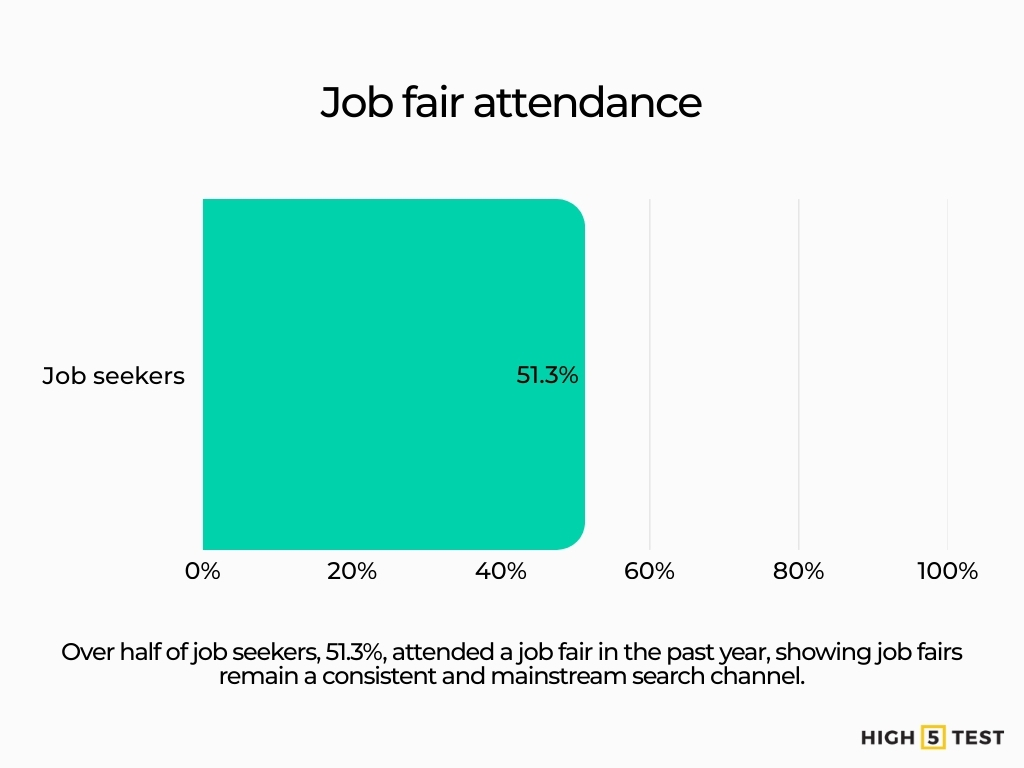
- 51.3% of job seekers have attended a job fair in the past 12 months, showing career fairs remain a mainstream search method.
- 93.9% of U.S. colleges and universities host in-person career fairs for the 2024–2025 academic year.
- Median employer participation at in-person job fairs increased to 109 employers (from 98.5 previously), indicating stronger recruiter engagement.
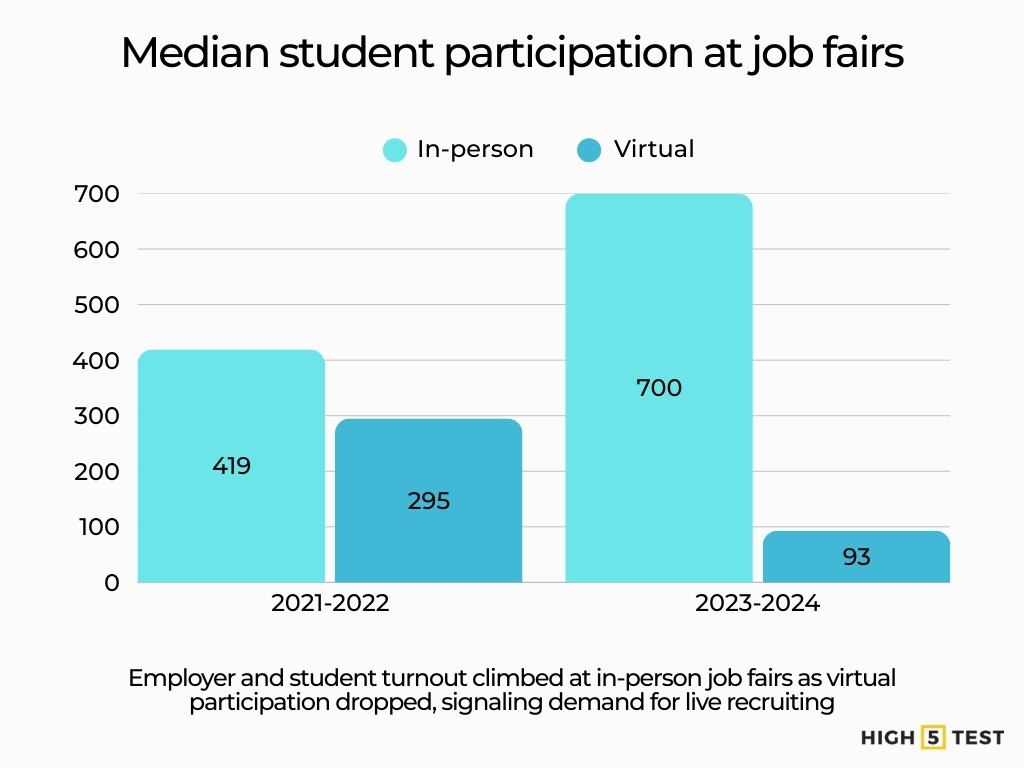
- Median student attendance at in-person fairs jumped from 419 to 700, while virtual attendance declined sharply from 295 to 93.
- 33.2% of institutions host virtual job fairs, maintaining digital engagement.
- 6.3% of institutions offer hybrid job fairs, combining in-person and virtual participation.
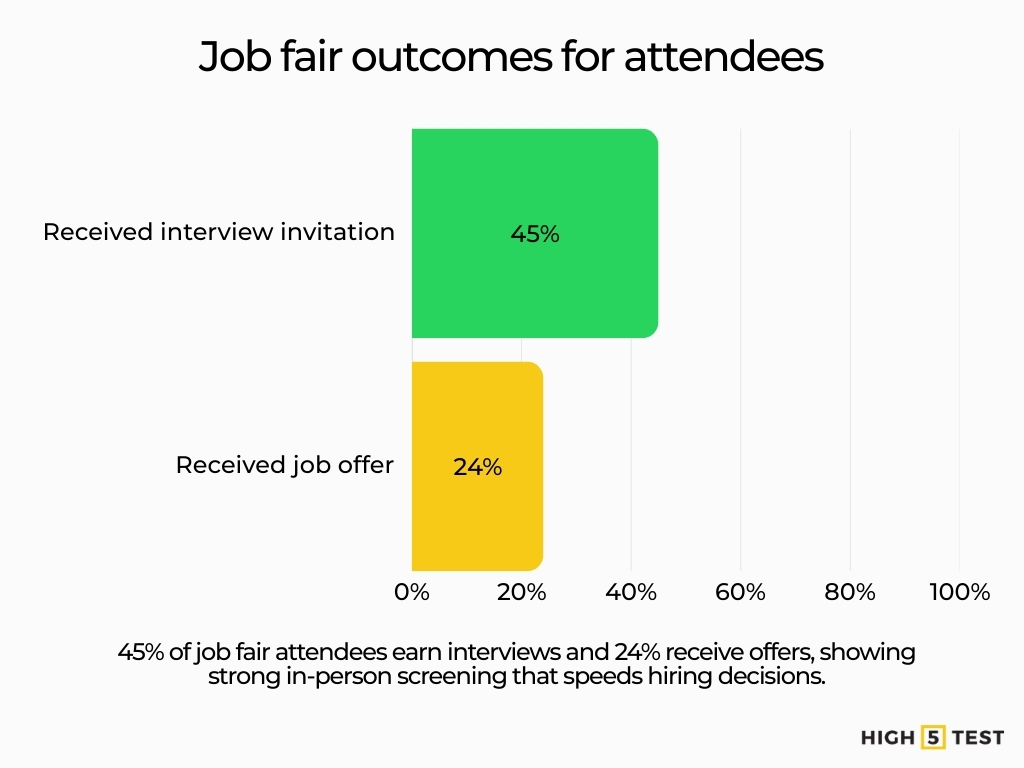
- 45% of job fair attendees receive at least one interview invitation, a strong conversion rate compared to online applications.
- 24% of job fair attendees receive a job offer, meaning nearly one in four converts to a hire.
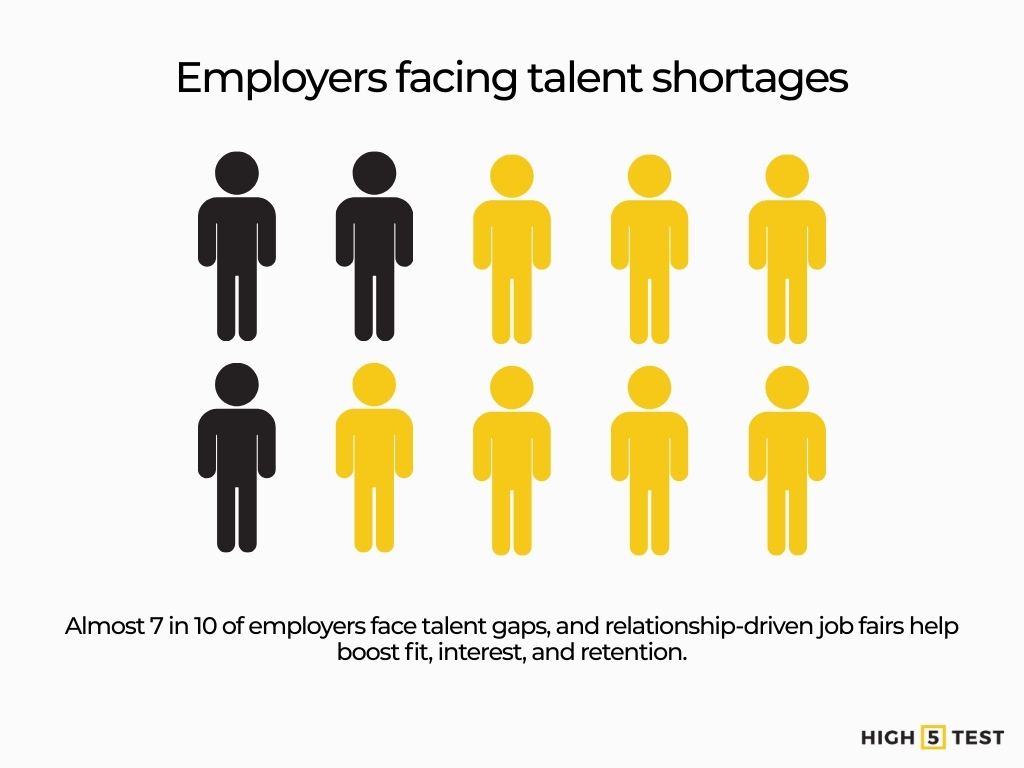
- 69% of employers report difficulty recruiting full-time candidates, highlighting labor market pressures that drive job fair relevance.
- Virtual job fair platforms are projected to grow at a 12.9% CAGR through 2033, underscoring the expanding role of digital hiring events.
20+ job fair statistics in the U.S. (2024-2025)
Job seeker participation in career fairs
51.3% of job seekers have attended a job fair within the past 12 months. This statistic shows that job fairs remain a mainstream job search activity. Attendance at this level indicates consistent interest rather than occasional participation.
Employers benefit because attendees usually arrive with resumes, clear goals, and a readiness to interview. This contrasts with online applicants who may apply casually or in high volume.
Source: National Association of Colleges and Employers (NACE)
In-person vs virtual job fair statistics
In-person job fairs continue to lead
93.9% of U.S. colleges and universities host in-person career fairs for the 2024–2025 academic year. Schools continue to invest in in-person events because student attendance and employer participation remain high. Face-to-face interaction still drives stronger engagement.
Source: National Association of Colleges and Employers (NACE)
Median number of employers at in-person job fairs increased to 109 from 98.5 in 2021 to 2022. Employer participation continues to rise as hiring demand grows. A higher employer count creates more competition for candidates, which increases urgency in hiring conversations. For job seekers, this also means greater opportunity in a single setting.
Source: National Association of Colleges and Employers (NACE)
Median student attendance at in-person fairs increased from 419 to 700, while virtual attendance dropped from 295 to 93. This shift highlights changing preferences among students. Many candidates value direct conversations and immediate feedback. Virtual attendance declined as in-person access returned, signaling a clear behavioral pattern.
Source: National Association of Colleges and Employers (NACE)
These trends show that in-person job fairs generate scale for early career hiring. They also support faster screening and stronger first impressions.
Virtual and hybrid job fair adoption
33.2% of institutions host virtual career fairs. Virtual fairs remain part of the hiring mix. Institutions use them to reach remote students and alumni. They also support specialized hiring needs that do not require physical presence.
Source: National Association of Colleges and Employers (NACE)
6.3% offer hybrid job fairs combining in-person and virtual participation. Hybrid events allow employers to expand reach while keeping a physical presence. This format works well for organizations hiring across multiple regions. It also supports accessibility for candidates unable to attend in person.
Source: National Association of Colleges and Employers (NACE)
While in-person events lead in volume, virtual and hybrid fairs support flexibility and targeted hiring strategies.
Job fair hiring outcomes and success rates
Interview and job offer conversion rates
45% of job fair attendees receive at least one interview invitation. This conversion rate is strong compared to online applications. Recruiters often identify fit within minutes during a live conversation. This shortens screening time and increases follow-up activity.
24% of job fair attendees receive a job offer. Nearly one in four attendees receiving an offer shows the hiring impact of job fairs. These candidates already passed the initial screening during the event. That early evaluation improves decision speed.
Source: National Association of Colleges and Employers (NACE)
90% of employers see career services as important to their success. These results outperform many digital channels where interview rates often remain very low.
Source: National Association of Colleges and Employers (NACE)
Statistics on employer hiring challenges
Talent market pressure
69% of employers report difficulty recruiting full-time candidates. This statistic reflects tight labor conditions. Employers must compete harder for qualified candidates. Job fairs provide access to talent pools that are already motivated and available.
Source: SHRM
50% of employers report increased competition for talent year over year. Rising competition increases hiring costs and time to fill. Events that allow early engagement help employers stand out before candidates accept other offers.
Source: SHRM
Why job fairs convert better than job boards
Job fairs allow recruiters to:
- Pre-screen candidates in real time
- Assess communication skills instantly
- Build employer brand trust face-to-face
These factors move candidates through the hiring process faster than online sourcing alone. Recruiters can prioritize follow-up based on live interactions rather than resume keywords.
Data on job fair ROI and cost efficiency metrics
Recruitment cost and time metrics
Employers using structured recruitment process outsourcing (RPO) tracking reduce cost per hire by up to 30%. This data highlights the value of structured recruitment processes. When job fairs are tracked properly, they reduce wasted spend. Clear attribution improves planning and budget decisions.
Source: Randstad
Statistics on virtual job fair market growth
Market size and expansion
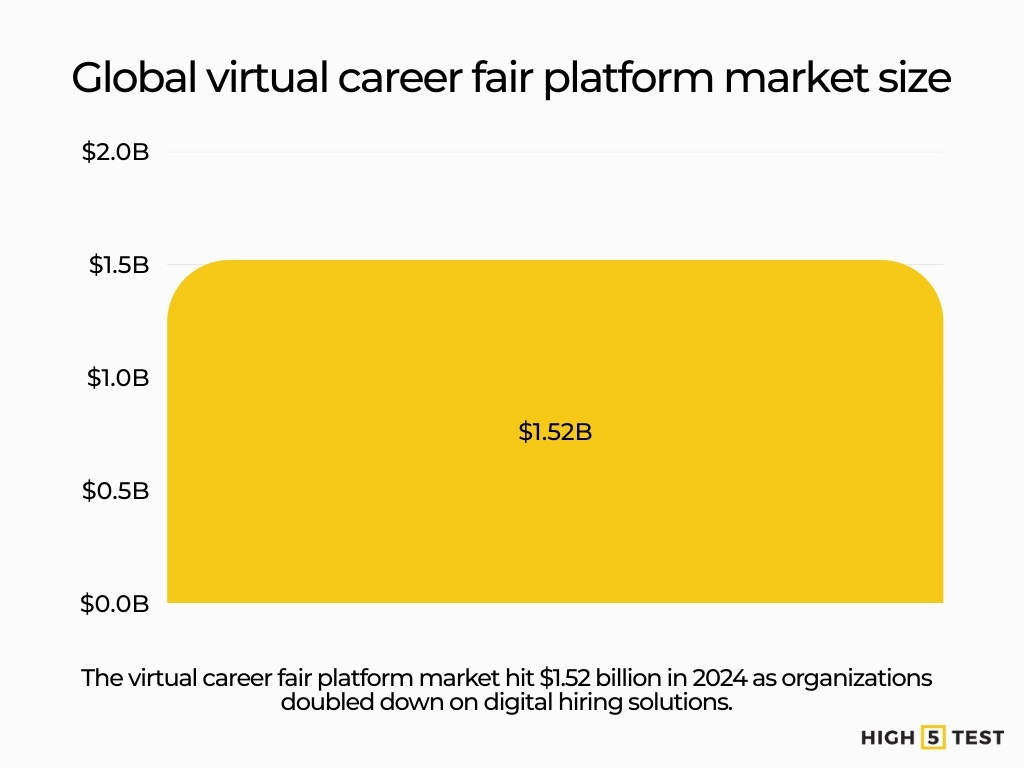
The global virtual career fair platform market size reached $1.52 billion in 2024. This growth reflects sustained demand for digital hiring tools. Organizations continue to invest in platforms that support remote engagement and scalable events.
Source: Data Intelo
Virtual career fair platforms are projected to grow at a CAGR of 12.9% through 2033. Continued growth shows that virtual events remain a long-term option. They support international hiring, remote roles, and cost-conscious recruiting teams.
Source: Data Intelo
Cost savings of virtual job fairs
Virtual job fairs reduce recruitment and event costs by 60–70% compared to in-person events. Lower costs come from reduced travel, venue, and staffing expenses. These savings make virtual events attractive for smaller teams or frequent hiring needs.
Source: Beamian
Demographic and sector statistics
Students and early-career candidates
Job fairs remain one of the top channels for entry-level hiring. Entry-level candidates rely on job fairs to build connections. Interview and offer rates remain higher than cold online applications. Employers benefit from early relationship building.
Source: SHRM
Employers and workforce trends
Nearly 7 in 10 employers are struggling to find quality talent. Job fairs support relationship-based recruiting. They allow employers to engage candidates earlier and build interest before formal interviews. This approach improves candidate quality and retention.
Source: SHRM
Are job fairs worth the investment?
The data confirms that job fairs continue to deliver measurable hiring value in the United States. Over half of job seekers attend career fairs. Nearly half secure interviews. Almost one quarter receive job offers.
In-person job fairs remain dominant, with strong attendance and employer participation. Virtual and hybrid formats add flexibility and cost savings. With most employers reporting hiring difficulty, job fairs provide a scalable method for sourcing, screening, and hiring talent across 2024 and 2025.