
Automation and artificial intelligence are reshaping the U.S. labor market at an accelerating pace. From AI-driven corporate restructuring to robotics in manufacturing and task automation in office roles, measurable workforce changes are already visible in 2024, 2025, and early 2026 data.
This research compiles verified statistics on jobs lost to automation in the United States, examines how many workers are at risk, and analyzes how AI adoption is influencing layoffs, skill requirements, and long-term employment trends. By separating confirmed job losses from projected automation exposure, this report provides a clear, evidence-based view of how technology is transforming work in America.
10 most interesting jobs lost to automation
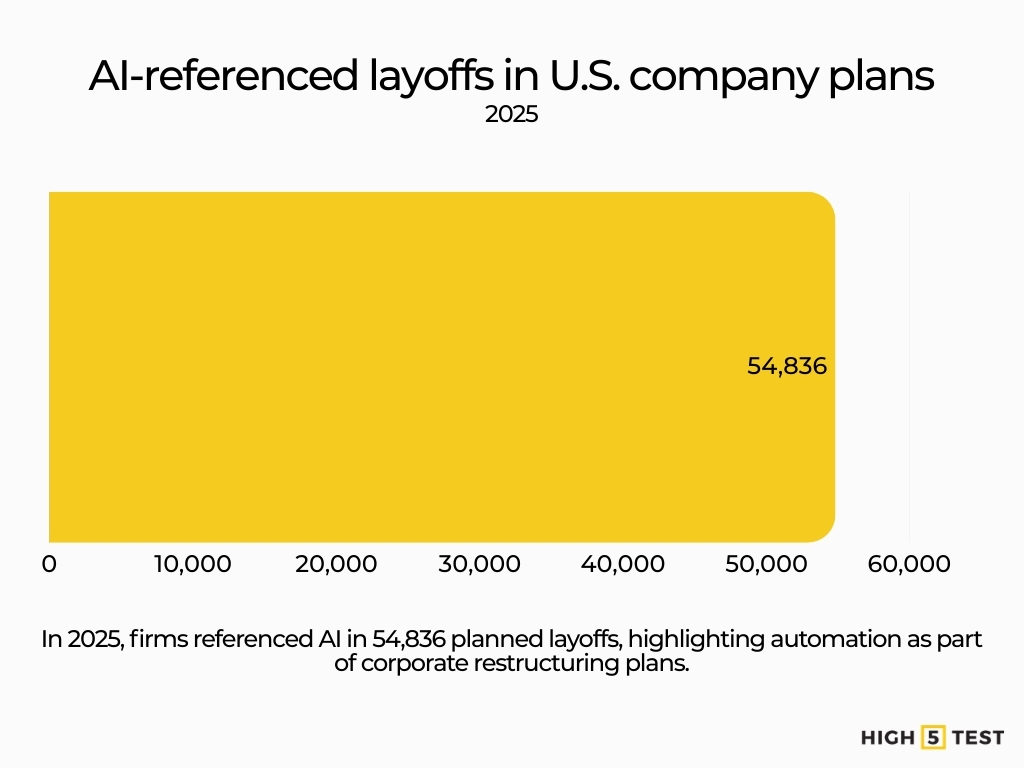
- ~55,000 jobs were linked to AI-related cuts through 2025, and over 75% of those happened after 2023, showing that automation-driven layoffs have accelerated dramatically in just the last two years.
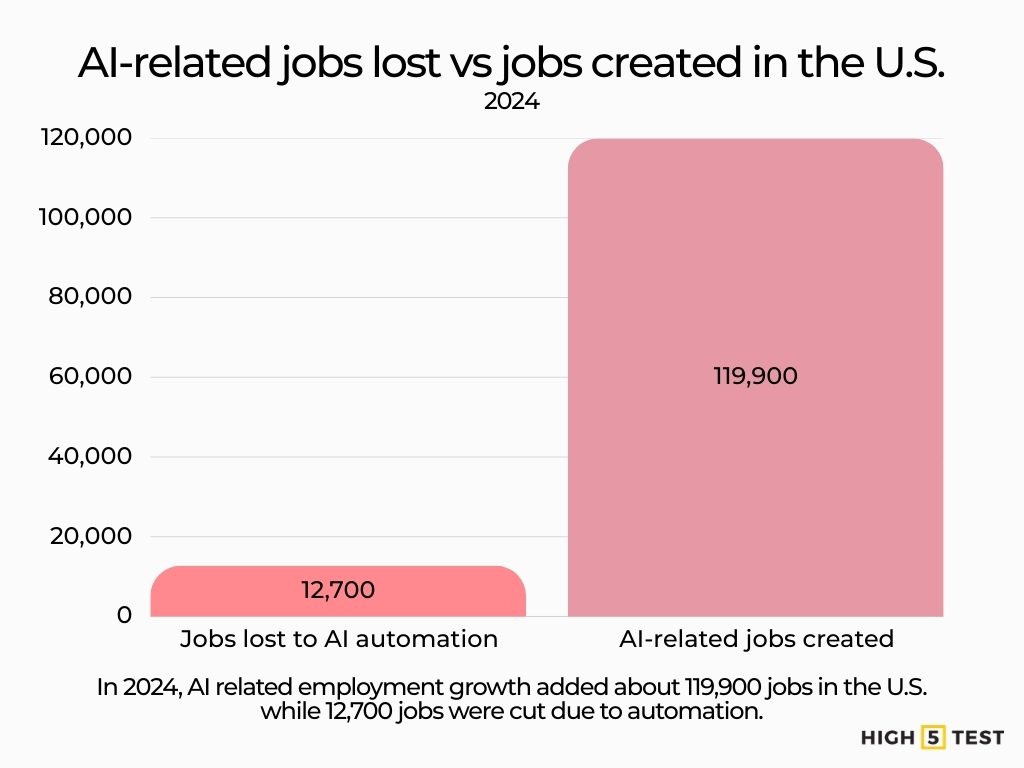
- AI-related job creation reached ~119,900 roles in 2024, exceeding confirmed AI-driven job losses, highlighting that early AI adoption is still creating more jobs than it eliminates.
- AI can technically perform work equivalent to ~11.7% of U.S. jobs, meaning a significant portion of the workforce is already exposed to automation at the task level.
- 66% of enterprises are reducing entry-level hiring due to AI, signaling a major shift where automation is cutting off the traditional career entry pipeline for new workers.
- 91% of companies report that roles have already changed or been eliminated due to automation, indicating that AI is reshaping nearly every organization—not just a few industries.
- 51% of American workers worry that AI will replace their jobs by 2026, showing that fear of automation is now mainstream across the workforce.
- Global projections estimate up to 92 million jobs could be eliminated by AI, illustrating the potential scale of automation-driven disruption worldwide.
- Industries with high AI exposure saw revenue per employee grow by 27% (vs. 9% in low-exposure industries), proving that automation significantly boosts productivity—even as it reshapes jobs.
- Automation is expected to displace about 6–7% of the U.S. workforce in the coming years, indicating structural change rather than short-term layoffs.
- Automation and AI could still result in a net gain of ~78 million jobs globally by 2030, showing that job transformation, not just job loss, is the dominant long-term trend.
20+ automation job loss statistics in the U.S. (2024-2026)
2024: First signs of automation-related job change
In 2024, about 12,700 jobs were lost to AI-related automation. The figure reflects confirmed cases where companies attributed job cuts to artificial intelligence.
Source: Challenger, Gray & Christmas
During the same year, around 119,900 AI-related jobs were created. These positions appeared across technology development, infrastructure, and oversight functions.
Source: Information Technology & Innovation Foundation
These figures indicate that early adoption removed some positions while also generating new technical and supervisory jobs.
2025: Rising AI references in workforce cuts
In 2025, U.S. companies referenced AI in 54,836 planned layoffs. Firms cited automation as part of restructuring plans and workforce adjustments.
Source: Challenger, Gray & Christmas
These AI-related layoffs represented about 4.5% of all job-cut announcements in 2025, highlighting that automation and AI were cited in a measurable minority of workforce reductions.
Source: Challenger, Gray & Christmas
Across the entire economy, total job cut announcements exceeded 1.2 million in 2025. Automation formed one factor within a broader cycle of workforce changes.
Source: Challenger, Gray & Christmas
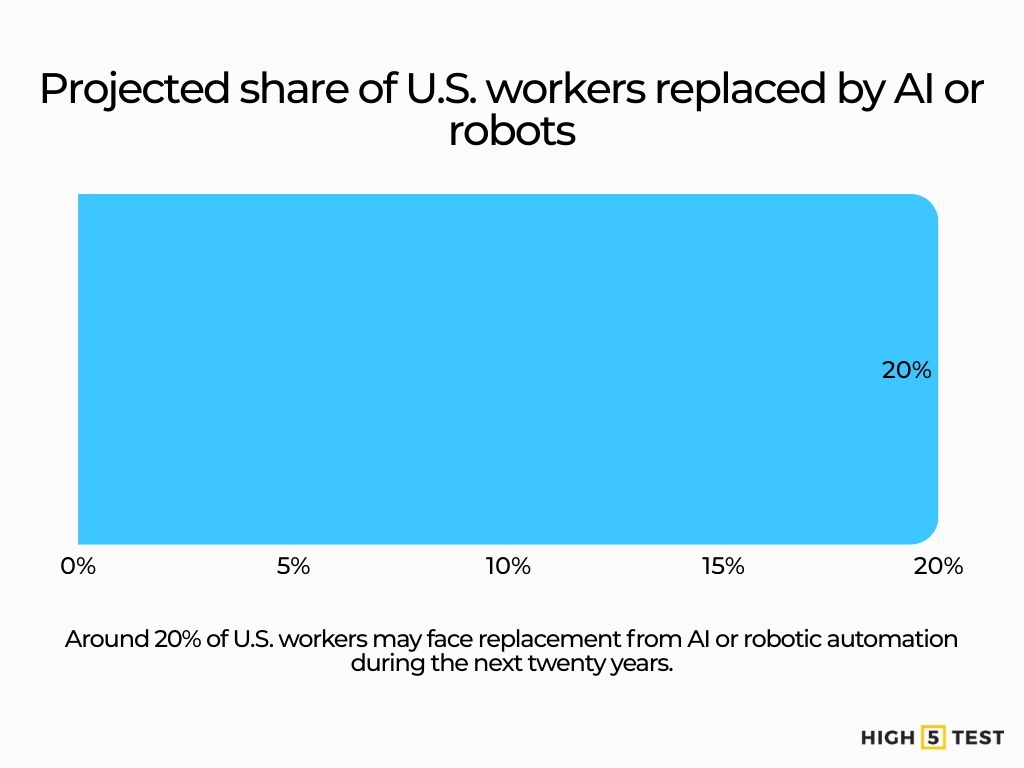
According to separate labor market research, about 20% of U.S. workers could be replaced by a robot or AI-related automation in the next two decades.
Source: Oxford Economics | CBS News
Taken together, these 2025 figures mark a distinct step up from 2024 in the visibility and scale of automation’s role in layoffs.
Early 2026: Automation remains a layoff driver
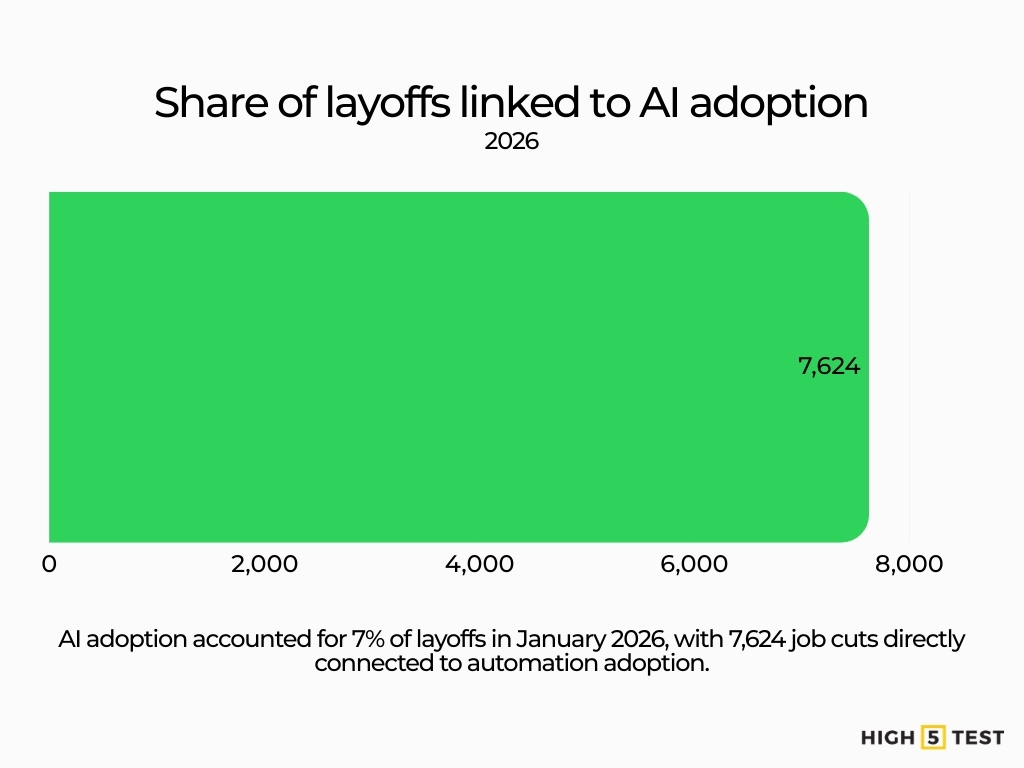
In January 2026 alone, 7,624 layoffs (approximately 7% of announced cuts for the month) were directly linked to AI adoption, suggesting that early 2026 continued the trend of automation-attributed job impacts.
Source: Challenger, Gray & Christmas
The early data suggests companies now reference automation more often in workforce planning and restructuring.
Statistics on automation risk and exposure to jobs in the U.S.
Job losses represent one part of the broader picture. Many positions face exposure to automation even when the jobs still exist.
AI exposure and worker risk
Research on occupational exposure estimates that about 70% of highly AI-exposed workers remain in positions where adaptation is possible. This group represents roughly 26.5 million workers. Exposure signals a potential change in job tasks. It does not guarantee job loss.
Source: Brookings
Data on what automation could mean through 2030
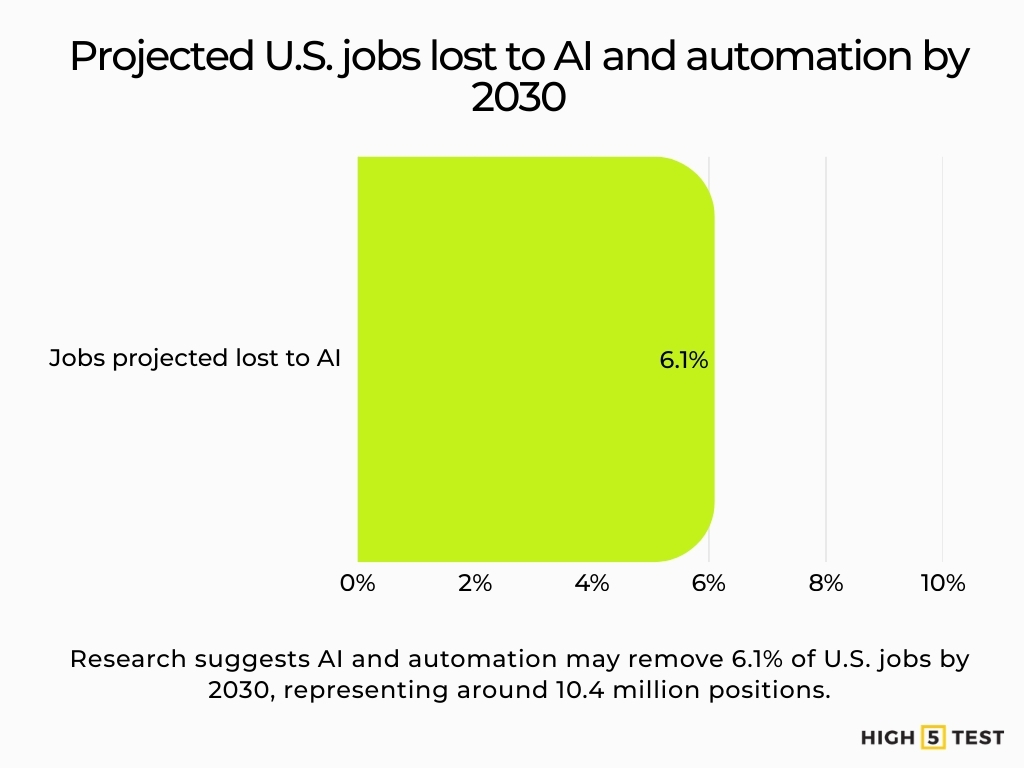
An analysis projects that approximately 6.1% of U.S. jobs (equivalent to about 10.4 million positions) could be lost to AI and automation by 2030 under certain assumptions, illustrating the long-term structural impact of these technologies.
Source: Forrester
Other research indicates that AI could automate up to 57% of U.S. work hours across industries.
Source: McKinsey
Automation of work hours does not equal the same share of job losses. Many positions may shift tasks instead of disappearing.
Statistics on automation impact across industries
Manufacturing and routine roles
Manufacturing and routine work sectors have long been cited for automation risk:
Through the early 2000s and ongoing, automation tools (including robotics and machine systems) have contributed to significant job shifts in manufacturing, especially in roles centered on repetitive physical tasks. The share of manufacturers that plan to significantly automate critical processes is forecast to climb from 18% to 50% by 2030, more than doubling over the decade.
Source: PwC
Tech and office roles
AI adoption also affects professional and administrative work. Tech companies report workforce adjustments connected to automation.
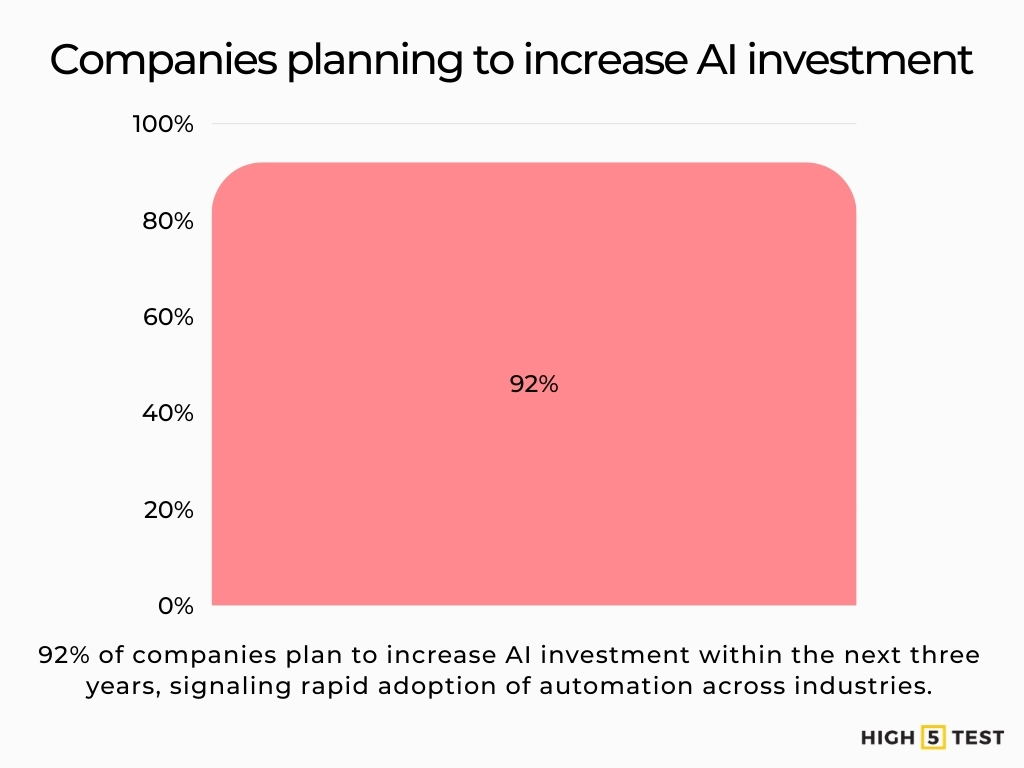
Research shows 92% of companies plan to increase investment in AI during the next three years. This signals a broad shift toward automation across many sectors.
Source: McKinsey
Service and entry-level positions
Service and entry-level positions often involve routine tasks. Automation tools and digital systems can replace or change these duties.
Shifts in hiring patterns may also reduce demand for some entry-level roles.
Net job dynamics: Automation vs. growth
Automation does not occur in isolation. Some sectors shrink while others expand. Technology development, software engineering, and data infrastructure show strong hiring growth. These fields support the development and maintenance of AI systems.
The labor market, therefore, shows mixed effects. Some roles disappear. Other jobs expand or change.
Public perception and workforce anxiety
Surveys and research reflect widespread worker concerns. Several studies indicate that a significant proportion of U.S. workers worry about job loss due to robots or AI, even if actual confirmed automation job losses remain a modest share of workforce churn.
Source: Chen, et. al. (2025)
Public concern influences policy debates and demand for job training programs.
What this means for policymakers and employers
The available evidence suggests:
- Automation and AI contribute to workforce restructuring.
- Layoff announcements linked to AI provide one measurable signal of automation impact.
- Exposure research shows that task changes may affect many more workers than direct layoffs.
- Automation-related job loss still forms a small portion of total workforce turnover.
- Risk levels differ across industries and occupations.
Conclusion: Automation and the future of work
Data from 2024 through early 2026 shows that automation already influences hiring and layoffs across multiple industries. Thousands of layoffs now include direct references to artificial intelligence. At the same time, broader exposure estimates suggest millions of workers could see job tasks change.
New technical roles continue to appear as companies adopt AI systems. The labor market, therefore, shows redistribution of work rather than the simple elimination of jobs.
Clear distinctions between confirmed layoffs, automation exposure, and workforce restructuring help explain the real impact of artificial intelligence on employment. These distinctions will guide future decisions from employers, policymakers, and workers as automation adoption expands.