
The landscape of leadership is evolving rapidly in the mid-2020s. U.S. organizations are navigating a polycrisis of economic uncertainty, technological disruption, and shifting workforce expectations. Research indicates that strategic, adaptable, and creative leadership is now paramount to organizational success in this complex environment.
At the same time, artificial intelligence (AI) has leapt from a future consideration to a present reality in business, speeding up decisions while raising new ethical and human challenges. Leaders must balance embracing innovation with addressing employee well-being and flatter, more collaborative organizational structures. This leadership report examines the state of leadership in the United States from 2024 through 2026, highlighting key trends and data-driven insights.
5 most interesting leadership trends in the U.S. (2024-2025)
- AI leadership adoption outpaces organizational readiness
- Human-centered leadership and emotional intelligence are now core competencies
- Adaptive and continuous learning leadership is essential
- Trust and engagement gaps reveal hidden leadership weaknesses
- Succession planning and talent pipelines are insufficiently mature
The current state of leadership in the US
Many executives feel confident about the strategic direction. Leadership systems inside organizations often lag behind that confidence.
- Executives show high adoption of AI tools, with 87% using AI at work.
- Employee trust tells a different story, as trust in managers dropped from 46% to 29% since 2022.
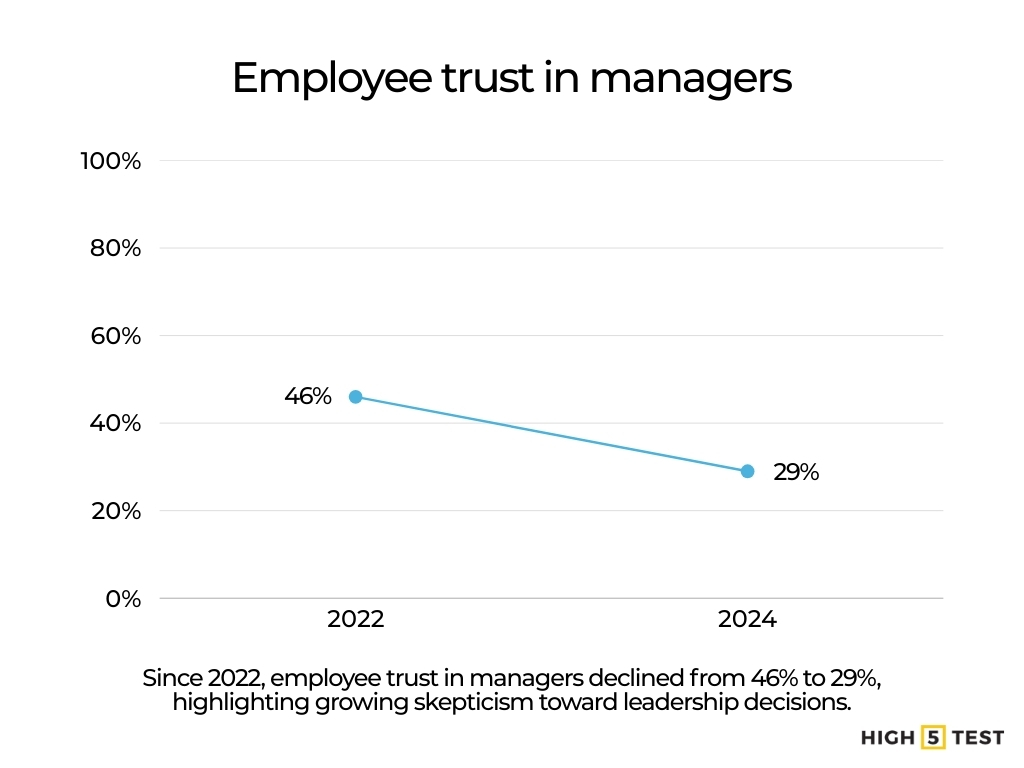
That gap suggests confidence can sit with individuals while the broader leadership bench remains uneven. It also points to a communication gap between leaders and teams.
Trust, engagement, and perception gaps
Gallup’s leadership indicators show that a significant portion of U.S. employees question whether leadership is aligned with workplace realities.
Trust metrics trail engagement, which signals a credibility problem rather than a simple morale dip. Teams often notice inconsistency between stated priorities and lived experience.
Leadership pressure and turnover
High-profile turnover in senior positions points to rising strain on leadership teams. CEO departure trends also reflect shorter tenures and higher expectations in many sectors.
Turnover creates strategic drift when priorities change too often. It also increases the cost of rework as teams reset plans, processes, and relationships.
Leadership trends shaping 2024–2026
Most of us can feel the shift at work. Leaders are expected to move faster, communicate more clearly, and keep teams steady through constant change.
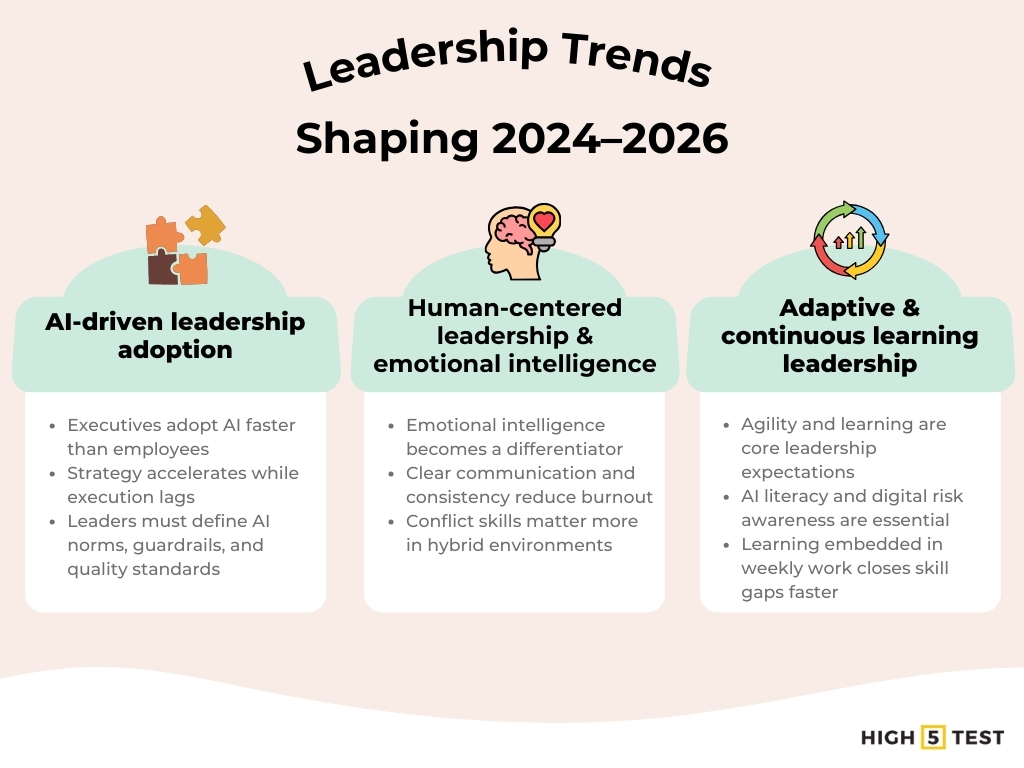
AI-driven leadership adoption
Executive AI adoption outpaces employee usage. That split can speed up strategy decisions while slowing execution on the ground.
Leaders are using AI for forecasting, drafting, and operational planning. Teams still need guidance on safe use, quality standards, and when human judgment must lead. That creates a new expectation for leaders to set clear AI norms instead of leaving each team to improvise.
Human-centered leadership and emotional intelligence
Research links emotional intelligence and human connection as leadership differentiators in 2025 and 2026. Teams respond better to leaders who communicate clearly, listen, and show consistency under stress. These behaviors also reduce burnout by making priorities and boundaries easier to follow.
Leaders also need better conflict skills. Hybrid work increases misunderstanding, and small issues escalate faster when people do not share the same space.
Adaptive and continuous learning leadership
Fast technology change pushes leaders to prioritize agility and learning. Learning now includes AI literacy, digital risk awareness, and change leadership habits.
Organizations that treat learning as part of weekly work tend to adapt faster. They also reduce skill gaps because development does not depend on annual programs alone.
Core leadership capabilities for the future
AI fluency and decision-making
Leadership success increasingly depends on fluency with AI and data-driven decision-making, as well as ethical governance of AI systems.
Leaders need to understand model limits, bias risks, and the difference between speed and accuracy.
A practical benchmark is decision transparency. Teams should understand what inputs shaped a decision, what risks were considered, and how outcomes will be monitored.
Emotional and relational intelligence
Research shows that leaders with strong emotional intelligence build more effective and aligned teams. This capability shows up as clear feedback, steady expectations, and real listening.
Leaders also need to spot early warning signs. Low participation in meetings and rising friction across functions often signal trust decline before performance drops.
Succession-oriented leadership
A disconnect between leadership transitions and long-term readiness creates risk. Boards and executives need succession systems that identify future leaders earlier and prepare them with real stretch work.
Strong succession planning also protects execution. It reduces disruption when leaders leave and keeps strategic priorities stable through change.
Succession planning and leadership pipelines
Leadership turnover across sectors, including record CEO departures in 2024, highlights the need for deeper succession planning.
Pipeline gaps and talent mobility
Leadership turnover highlights the need for deeper pipelines. Internal mobility is a direct input to leadership strength because it expands experience faster than hiring alone.
LinkedIn’s learning data suggests that higher promotion rates into leadership positions support healthier pipelines when organizations develop leaders early.
Promotion without development still fails, since new leaders may inherit responsibility without the skills to manage people and priorities.
Diversity, equity, and inclusion trends in leadership
DEI as a strategic leadership priority
At many organizations, inclusion remains a strategic priority linked to engagement and retention. Leaders can make progress faster when inclusion is treated as a measurable leadership expectation.
Inclusion also supports better decision quality. Teams raise more risks and alternatives when they feel safe, which improves planning and execution.
Ways to improve inclusive leadership beyond representation
Representation matters, yet outcomes depend on day-to-day leadership behaviors that people experience directly.
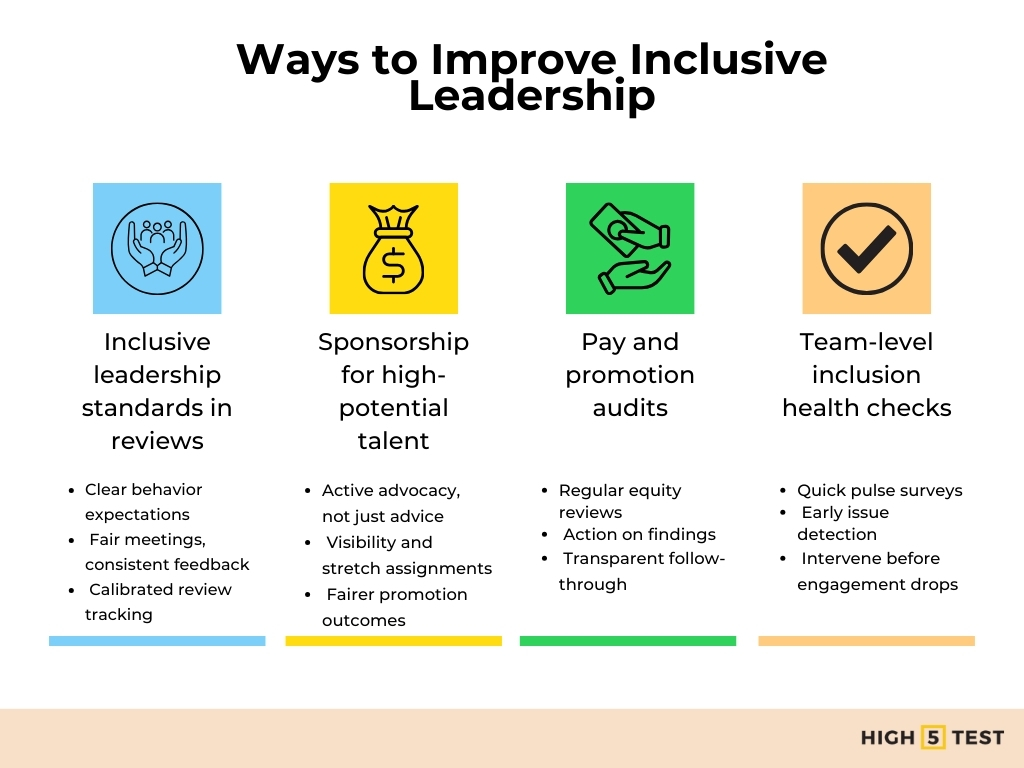
1. Inclusive leadership standards in performance reviews
Define specific behaviors such as fair meeting practices and consistent feedback. Track progress with calibrated reviews.
2. Sponsorship programs for high-potential talent
Sponsorship differs from mentoring because it includes advocacy for assignments and visibility. It also improves promotion fairness.
3. Pay and promotion audits with clear follow-through
Audits build credibility when leaders act on results. Communication matters, since silence can reduce trust.
4. Team-level inclusion health checks
Short pulse surveys identify friction early. Leaders can address issues before they affect engagement.
Leadership trends in a hybrid and distributed workplace
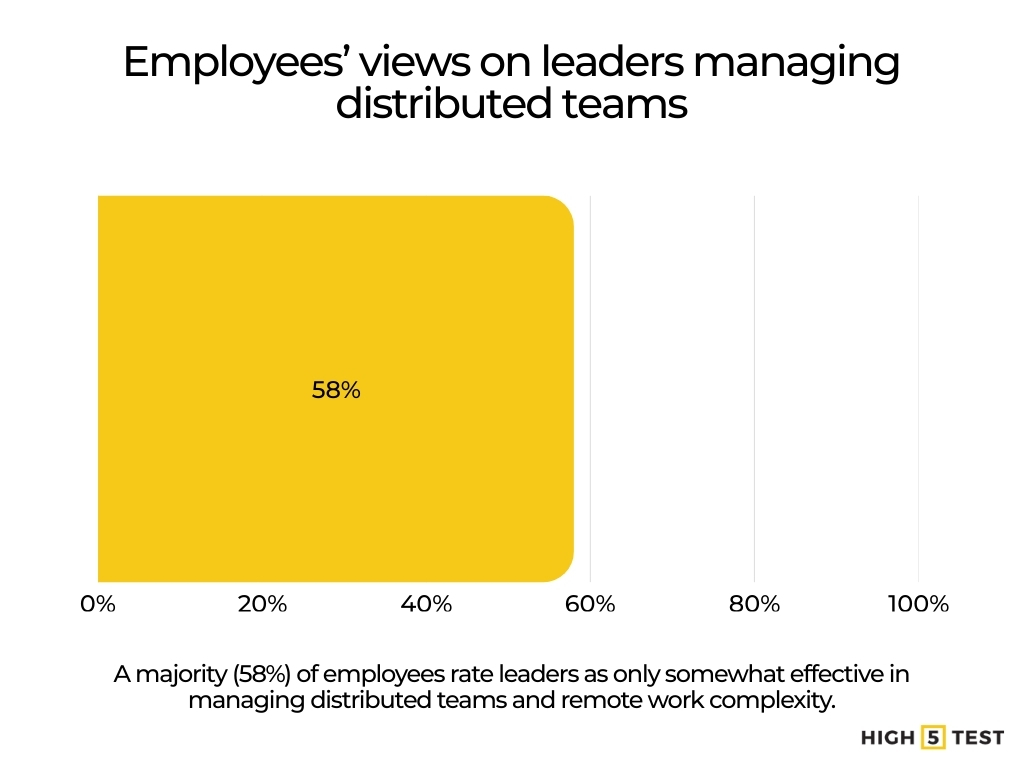
Recent reporting highlights that 58% of employees believe leaders are only somewhat effective in managing distributed teams. That signal points to gaps in communication, coordination, and workload management.
Leaders need clearer operating rhythms. Teams work better with consistent meeting rules, defined response times, and shared ownership of documentation.
Workforce engagement and leadership
Gallup data shows employee engagement continues to lag at 31%. Low engagement makes change harder because people give less discretionary effort.
Leaders can improve engagement with small, repeatable habits. Weekly priority clarity and regular recognition often matter more than large campaigns.
Comparative US vs. global leadership trends
Global leadership forecast benchmarks
Global leadership research emphasizes adaptability and future skill development as universal leadership priorities – matching many U.S. trends.
Many organizations also emphasize AI literacy and stronger people leadership as linked demands.
The shared pattern is clear. Leaders must manage technology change while keeping teams aligned and motivated.
US leadership strengths and weaknesses
US organizations often show strength in innovation and speed. Many still struggle with long-term preparedness, consistent feedback habits, and reliable inclusion practices.
A frequent gap sits in leadership development coverage. High performers get training while mid-level managers receive less support, even though they drive most employee experience.
Looking ahead: Leadership priorities
Priority set drawn from trend reports
Several priorities show up repeatedly across leadership research and industry reporting.
- AI integration with clear use standards
- Emotional intelligence and conflict skill development
- Flexible leadership models for hybrid operations
- Inclusion practices tied to manager expectations
- Succession depth and internal mobility systems
Each priority connects to execution, not just culture. Organizations that act on these areas tend to reduce turnover costs and improve delivery speed.
What organizations must do
Organizations can close readiness gaps with a mix of interventions. The best plan usually includes more than one.
- Expand benchmarking and leadership assessment
- Combine AI training with people leadership practice
- Strengthen succession systems with real movement
- Build trust through transparency and follow-through
- Upgrade manager enablement for hybrid execution
Conclusion
Leadership in the United States shows a widening gap between confidence and capability. Many leaders feel prepared for uncertainty. Data points to uneven readiness across AI fluency, succession depth, and adaptive leadership habits.
Strong leadership through 2026 will be measured through adaptability, trust, and sound judgment with technology in the workflow. Organizations that invest in objective assessment, future-ready capability building, and inclusive leadership habits will be better positioned for volatility and sustained performance.
Leadership is no longer a static position. It works best as a dynamic system that improves through practice, feedback, and ongoing development. Organizations that treat leadership as a living capability, rather than a one-time appointment, will set the pace for the next phase of US leadership.