Leadership assessments come in many forms, but not all tools measure leadership effectiveness in the same way. From 360-degree feedback and behavioral assessments to competency-based and strengths-based leadership assessments, each approach evaluates different dimensions of leadership performance, potential, and impact.
Understanding the types of leadership assessments available helps organizations choose the right method for leadership development, succession planning, and employee engagement. In this article, we break down the most common leadership assessment types, how they work, and when each is most effective, so you can align leadership measurement with real-world performance and long-term growth.
The four main types of leadership assessments are:
- 360-degree feedback assessments – collect feedback from peers, managers, and subordinates.
- Behavioral assessments – measure how leaders act and communicate.
- Competency-based assessments – evaluate leadership skills against a competency model.
- Strengths-based assessments – identify natural talents and authentic leadership styles.
Each type offers distinct insight that supports leader growth.

Organizations rely on steady leadership to guide teams, support engagement, and improve performance. But how can you identify who has true leadership potential – or where your leaders need support to grow?
That’s where leadership assessments come in. These tools evaluate leadership style, personality strengths and tendencies, decision patterns, and emotional awareness. The results show how a leader functions and where improvement may help.
In this article, we’ll explore the four main types of leadership assessments: 360-degree, behavioral, competency-based, and strengths-based – to help you understand their purposes, advantages, and best uses.
What are leadership assessments?
A leadership assessment is a structured tool that reviews leadership potential, style, and impact. It focuses on how someone guides, influences, and supports others.
These assessments often explore areas such as:
- Emotional awareness and communication
- Problem solving
- Adaptability
- Collaboration and motivation
They help organizations identify strengths, areas for development, and readiness for future opportunities. Many companies use them in succession planning, coaching, and talent development.
Did you know? Companies that invest in leadership development are 2.4x more likely to hit performance targets.
1. 360-degree leadership assessments
A 360-degree assessment collects feedback from multiple perspectives. It compares a leader’s self-view with the experiences of peers, supervisors, and direct reports.
How it works
Participants rate specific leadership behaviors related to communication, empathy, accountability, and collaboration. The feedback shows alignment or gaps between internal and external perceptions.
What it measures
- Emotional awareness
- Collaboration and trust
- Communication quality
- Decision patterns
Benefits
- Offers a broad view of leadership behavior
- Builds self-awareness and supports growth
- Useful for performance reviews and development efforts
Limitations
- Results can be subjective
- Requires a respectful environment to ensure candid feedback
Best for
Organizations that value regular feedback and development, especially for mid to senior-level managers.
2. Behavioral leadership assessments
Behavioral leadership assessments focus on how leaders act, not just what they intend to do. These tools identify behavioral patterns that shape communication, motivation, and team dynamics.
How it works
Participants answer situational or reflective questions. The responses reveal consistent patterns in communication, teamwork, and decision-making. Common frameworks include DISC, MBTI, and the Big Five model.
What it measures
- Communication style and interpersonal skills
- Conflict management approach
- Team motivation and engagement drivers
- Adaptability and stress response
Benefits
- Helps leaders and teams understand behavior patterns
- Connects behavioral traits directly to performance outcomes
Limitations
- Focuses on current behavior, not untapped potential
- May be influenced by context or recent experiences
Best for
Teams and leaders who want to strengthen communication and relationships.
3. Competency-based leadership assessments
Competency-based assessments compare leader performance to a defined set of competencies that represent successful leadership in the organization.
What is a leadership competency model?
A leadership competency model outlines the skills and qualities expected of strong leaders. Common categories include:
- Strategic Thinking and Vision – aligning teams with long-term goals
- Emotional Intelligence (EQ) – self-awareness and relationship management
- Decision-Making and Accountability – sound judgment and integrity
- Innovation and Change Leadership – fostering adaptability and creativity
- People Development – mentoring, coaching, and empowerment
This model provides a consistent leadership competency framework for assessment, development, and succession planning.
How it works
These assessments include self-ratings, manager feedback, and scenario-based exercises. Results reveal strengths, gaps, and readiness for new responsibilities.
Benefits
- Creates a standardized leadership competency framework
- Enables data-driven leadership development
- Supports succession planning and training prioritization
Limitations
- Dependent on how well the model reflects real organizational needs
- May overlook unique personal qualities or emerging leadership traits
Best for
Organizations seeking structure, consistency, and scalable evaluation practices.
4. Strengths-based leadership assessments
Strengths-based assessments help leaders understand their natural talents – the recurring patterns of thought and behavior that drive their best performance. Instead of focusing on weaknesses, it amplifies what leaders naturally do best.
How it works
Participants complete an assessment such as the HIGH5 Leadership assessment or CliftonStrengths. Results highlight top strengths and ways to use them in leadership.
What it measures
- Core strengths and motivators
- Engagement and fulfillment drivers
- Leadership authenticity and influence style
Benefits
- Promotes positive self-awareness and confidence
- Boosts employee engagement and team performance
- Builds authentic leaders who inspire through natural strengths
Limitations
- Focuses less on weaknesses directly
- Works best when paired with ongoing coaching or development plans
Best for
Organizations that value self-awareness, authentic leadership, and employee engagement.
Try it now: Take the HIGH5 Leadership Test to discover your top leadership strengths and unlock your full potential.
Comparing the different types of leadership assessments
| Type | Measures | Best For | Limitation | Example Tools |
|---|---|---|---|---|
| 360-Degree | Multi-source feedback on behavior | Leadership development and feedback culture | Subjectivity | Qualtrics, SurveySparrow |
| Behavioral | Observable actions and tendencies | Coaching and team alignment | Focuses on current behavior | DISC, MBTI |
| Competency-Based | Predefined skills and competencies | Succession planning and development | Framework-dependent | Korn Ferry, SHL |
| Strengths-Based | Natural talents and motivators | Engagement and authentic leadership | Less focus on weaknesses | HIGH5, CliftonStrengths |
When comparing leadership assessment tools, it’s important to align your method with your organization’s goals and leadership development strategy.
Pro Tip: Many organizations use more than one type to create a complete picture of their leadership pipeline.
How to choose the right leadership assessment
Selecting an assessment depends on your goals and your organization’s culture.
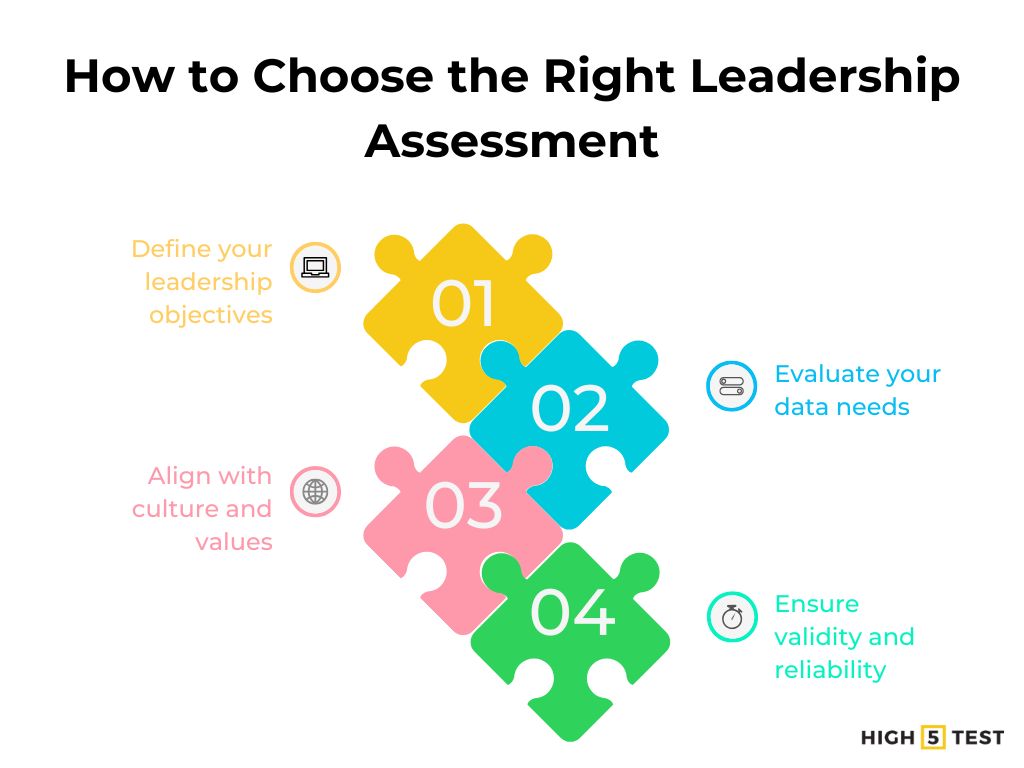
1. Define your leadership objectives
Clarify whether you want to identify potential, support performance, or build self-awareness.
2. Evaluate your data needs
Decide if you need feedback from multiple sources or insight into personal strengths.
3. Align with culture and values
Select tools that reflect how your organization views leadership and growth.
4. Ensure validity and reliability
Select scientifically validated leadership assessment tools backed by research and positive psychology. For a full guide on selecting the assessment that fits your needs, see How to Choose the Right Leadership Assessment (Expert Guide). On the other hand, here is a complete guide on how to conduct a leadership assessment.
Final thoughts
Leadership assessments help organizations support leader growth and identify potential. 360-degree assessments and competency-based tools offer structure, while behavioral and strengths-based assessments provide personal insight. Blending these approaches can create a clear and helpful picture of leader performance and development opportunities.