Cultivating a teamwork culture is essential for modern organizations. Research shows office workers spend nearly 42% of their time collaborating, and poor teamwork can cost companies hours of productivity each week. In this outline, we cover why teamwork matters and practical ways leaders and team members can build trust, communication, and shared purpose. You’ll find expert-backed tips, activities (for both in-office and virtual teams), and actionable takeaways to strengthen collaboration and engagement.
Why a teamwork culture matters
- Boosts productivity & retention: Teams that work well together innovate faster and stay engaged. For example, 76% of employees stay longer at companies that invest in growth and collaboration. Conversely, 64% of workers report losing 3+ hours/week to poor collaboration.
- Improves morale & loyalty: A positive team culture leads to higher job satisfaction and loyalty (e.g., cross-functional teams build trust and break down silos). Leaders who nurture connection see less turnover – when employees feel heard and valued, teamwork becomes part of the culture.
- Fosters innovation: Diverse teams that respect each other’s ideas are more creative. Inclusive teamwork ensures every voice is heard, turning different perspectives into strength. Strong collaboration also reduces errors and speeds decision-making.
Core elements of a teamwork culture
Strong teamwork doesn’t happen by chance; it’s built through shared practices and consistent behaviors. When teams have the right structure and support, collaboration becomes more natural and productive. The elements below create the conditions for better alignment, trust, and collective progress.
Shared vision and goals
Define a clear mission that everyone understands. When “one team” rallies around a common objective, cooperation follows. Make goals visible (e.g., dashboards or progress boards) so each milestone contributes to the bigger vision.
Open, two-way communication
Encourage honest dialogue and active listening. Teams thrive when feedback flows freely in all directions. Leaders should hold regular inter-department check-ins and use tools (like intranet channels) to keep everyone on the same page.
Trust and respect
Trust is the foundation of teamwork. Team members must believe colleagues will deliver on their commitments. Leaders build this by asking for input, being transparent, and treating people fairly. For example, ask yourself: “Am I consistently listening and including my team’s ideas?”. When trust is high, work moves faster and people support each other.
Diversity and inclusion
Actively include different backgrounds and working styles. Diverse teams generate better solutions, but only if all voices are valued. Create psychological safety so quieter or remote colleagues share ideas. Train managers to spot bias and make space for everyone.
Recognition and appreciation
Regularly thank and reward the team. Simple shout-outs, notes of thanks, or intranet kudos reinforce a collaborative spirit. Formal rewards (like peer-nominated awards) boost morale and show that teamwork is valued. For example, celebrating a team milestone together increases motivation.
Continuous learning
Encourage skill-sharing and development. When people learn from each other’s strengths, gaps shrink. Teams can hold lunch-and-learns or cross-training sessions so members understand each other’s roles and work more effectively.
How leaders can strengthen collaboration
Effective teamwork begins with leadership. The way leaders communicate, support, and structure their teams has a direct impact on collaboration. The following strategies help create an environment where trust grows, people feel valued, and teams perform well together – regardless of location.
1. Use personality and strengths assessments
One of the most effective ways leaders can boost collaboration and build trust quickly is by helping team members understand each other’s natural strengths and working styles. Tools like the HIGH5 personality quiz for team building give leaders a data-driven map of their team’s collective strengths, blind spots, and communication patterns.
- Gain clarity on individual strengths: Each team member gets a personalized profile showing how they think, decide, and contribute best.
- Spot collaboration gaps early: The HIGH5 team report highlights potential friction points (e.g., some members may prefer structured planning, while others thrive on big-picture ideation).
- Build complementary partnerships: Leaders can intentionally pair people with complementary strengths to increase productivity and reduce conflict.
- Foster appreciation & trust: When team members see the unique value their colleagues bring, they develop respect and empathy — the foundation of a strong teamwork culture.
2. Model teamwork from the top
Leaders set the tone. Demonstrate the behaviors you want: collaborate openly, admit mistakes, and prioritize team success over personal credit. As Indeed advises, when executives live the vision, it cascades down through management.
3. Communicate the big picture
Regularly share how team projects align with company goals. Tie each person’s work to the “one team, one vision” narrative. This clarity motivates people to work together.
4. Listen actively
Seek real-time feedback, not just annual surveys. Hold one-on-ones and team discussions to uncover roadblocks. When employees feel listened to, small issues get fixed before they fester, strengthening trust.
5. Promote cross-functional collaboration
Break down silos by creating mixed-project teams. Pair marketing with product, or sales with R&D, so members learn each other’s processes. This builds rapport and ensures departments cooperate naturally.
6. Organize team-building activities
Make time for remote team-building ideas and bonding (not just work). For example, hold friendly contests or retreats tied to team goals, or schedule weekly team lunches where members connect outside meetings. Social interactions (even non-work ones) build personal ties and trust.
7. Empower and trust your team
Give autonomy over tasks and support decision-making. As Gustavo Razzetti notes, remote leaders succeed by focusing on culture and trusting people to do what it takes. In practice, clarify expectations but allow team members flexibility to meet them.
8. Champion inclusion and fairness
In hybrid settings, ensure remote members aren’t disadvantaged. Rotate meeting times, invite input from all locations, and offer the same resources to everyone. Make sure career and learning opportunities are equally visible to onsite and offsite staff.
Practices for team members
Great teams aren’t built by leaders alone. Every team member contributes to building a collaborative and supportive environment. The following practices help individuals contribute to a stronger, more connected team.
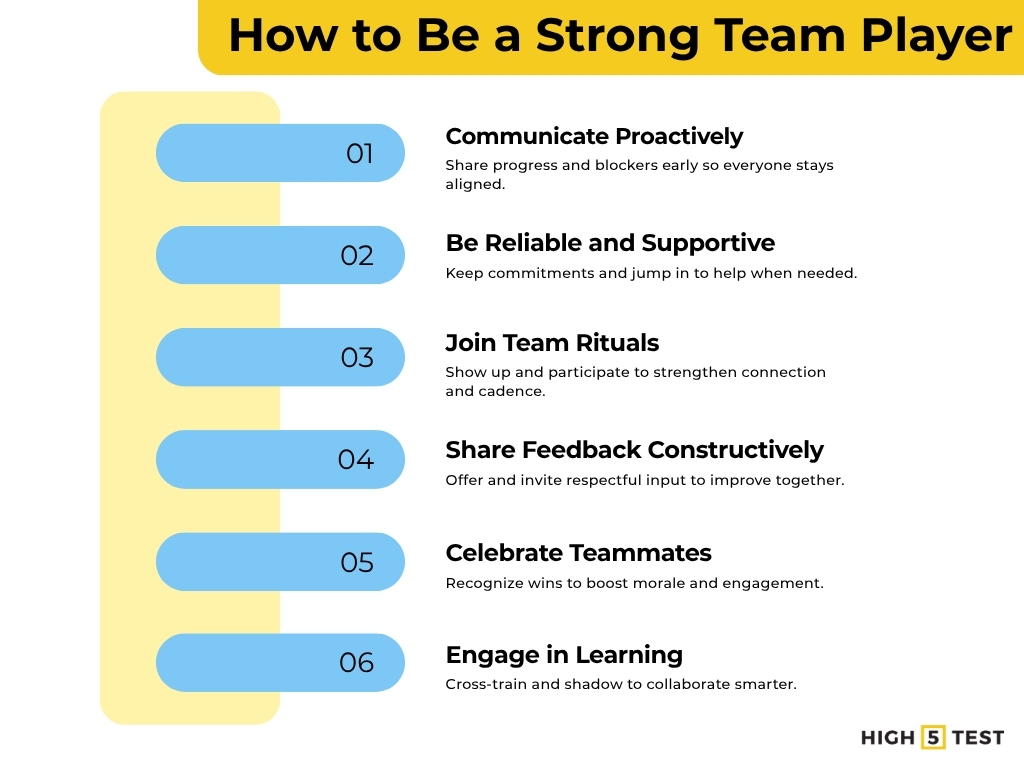
- Communicate Proactively: Keep colleagues informed about your progress and challenges. Use chat tools, shared docs, or status updates so everyone knows what’s happening. This helps teammates offer help early. Clear communication builds the two-way dialogue that team culture needs.
- Be reliable and supportive: Meet your commitments and ask for help if you can’t. When everyone does their part, trust flourishes. Step up to assist others when possible – collaborative problem-solving builds camaraderie.
- Join team rituals: Participate in regular meetings, stand-ups, retrospectives, and any social events (even virtual ones). Engaging in these rituals (like a “wins and challenges” round or daily check-in) reinforces belonging.
- Share feedback constructively: Give peers honest but respectful feedback and be open to receiving it. Constructive suggestions help the whole team improve. Active listening to coworkers’ ideas (not just your own) is a hallmark of a good team member.
- Celebrate teammates: Acknowledge others’ achievements. Post a “kudos” message in Slack or thank someone in a meeting. Even a brief note of appreciation can boost morale. Peers who feel appreciated are more engaged.
- Engage in learning: Volunteer to learn new skills or cross-train. Understand how others’ jobs work – for instance, shadow a teammate or join a client meeting outside your department. This knowledge makes collaboration smoother and shows you care about team success.
Activities and rituals to enhance teamwork
In-person team activities
Organize events that get people working side-by-side:
- Offsite retreats or team outings: A day of volunteering, a local hike, or an escape-room challenge builds bonds.
- Friendly competitions: Contests tied to work goals (e.g., “highest customer satisfaction score” team wins a prize) turn team-building into fun.
- Sports or clubs: Form a lunchtime sports team or book club. Shared non-work interests can deepen connections.
- Regular social rituals: Weekly team lunches, breakfasts, or “coffee connect” meetups help break down barriers. Starting meetings with a casual ice-breaker (e.g., “one good thing that happened this week”) can also warm up the group.
Virtual/hybrid team activities
Keep remote members connected with creative online rituals:
- Virtual coffee chats and lunches: Schedule informal video calls where work talk is off-limits. These casual hangs reduce isolation and humanize teammates (even across time zones).
- Online games and icebreakers: Use trivia, scavenger hunts, or quick quizzes to spark fun. For example, the “Desert Island” survival game or Jackbox party games invite laughter while teaching collaboration. These lighten the mood and let people unwind together.
- Theme happy hours or events: Host a themed virtual happy hour, complete with a mixology demo or costume theme. Structured fun (like virtual cocktails or group music sessions) helps remote teams bond as well as in-person ones.
- Interactive workshops or classes: Organize a short virtual workshop (e.g., art class, fitness session, or coding tutorial). Learning something new as a group promotes teamwork and gives people a shared achievement.
- Fitness and wellness challenges: Start a team step challenge or group meditation break. Shared health goals can bring people together.
- Personality quizzes and discussions: Have everyone take a personality or strengths assessment and then discuss results. Learning about each other’s styles fosters empathy and improves communication.
Choosing the right tools for team productivity
Unified communication platforms
Use tools like Slack, Microsoft Teams, or Zoom for chat, video, and file sharing in one place. Over 65% of professionals say having integrated messaging and video on the same platform boosts productivity. Centralized channels (e.g., a “team wins” Slack channel) keep everyone engaged and in the loop.
Project management systems
Adopt software (Trello, Asana, Jira, Monday.com) to track tasks and deadlines. Companies that utilize project management tools see improved project visibility and the right tools can increase efficiency by up to 30%. Clear task boards mean less confusion and fewer missed handoffs.
Shared collaboration spaces
Digital whiteboards (Miro, Mural) or shared docs (Google Drive, Notion) let team members brainstorm together in real time. Virtual sticky notes or collaborative diagrams mimic the in-room experience.
Recognition and feedback tools
Leverage platforms like Bonusly, 15Five, or Officevibe for regular peer recognition and quick pulse surveys. These tools streamline saying “thanks” or checking in on morale. Formalizing recognition (even digitally) keeps appreciation consistent across remote locations.
Learning and culture platforms
Use an intranet or culture platform (e.g., Simpplr, Workvivo) to highlight team achievements and share stories. Central hubs where employees post successes, learn about other teams, or give feedback reinforce a connected culture.
Regular standups and check-ins
Establish a routine (daily or weekly) via video or chat stand-ups. Even a 5–10 minute kickoff meeting where everyone says what they did yesterday/plan today fosters accountability and team awareness.
Actionable takeaways
For leaders
- Define and communicate the “why.” Clearly explain how each project supports bigger goals.
- Listen actively and respond to feedback. Don’t wait for annual surveys—ask for input on collaboration regularly.
- Set the tone by delegating tasks and sharing credit. Show trust through your actions.
- Provide resources, training, and social time (fund team events or lunches).
- Celebrate collaboration. Publicly thank teams, reward group successes, and build recognition into meetings.
For team members
- Communicate openly. Update others on your status and ask questions when something isn’t clear.
- Support your peers. Offer help on tasks and acknowledge their contributions publicly.
- Build relationships. Join team activities, even virtual ones like coffee chats. Use personality tools, such as HIGH5, to understand work styles and show interest in colleagues beyond tasks.
- Use collaboration tools consistently. Teams that rely on shared platforms are more aligned and waste less time.
- Practice gratitude. A simple thank-you in a team chat can boost morale more than you might expect.
FAQ
What are the 5 C’s of teamwork?
The 5 C’s of teamwork are communication, collaboration, commitment, compromise, and confidence. Together, they ensure teams stay aligned, work toward shared goals, remain flexible, and trust one another to succeed.
What are the 7 C’s of teamwork?
The 7 C’s of teamwork are clarity, connection, commitment, contribution, communication, cooperation, and creativity. These qualities help teams set clear goals, build trust, share strengths, support each other, and innovate effectively.
Conclusion
When employees feel heard, valued, and connected, teamwork becomes part of the culture. Shared purpose, clear communication, mutual trust, and consistent tools help leaders and teams create a thriving culture of teamwork in any workplace, whether in-person, remote, or hybrid.